



All about the other Congo


The Democratic Republic of Congo, or the DRC, is where they have an on and off civil war. The Republic of Congo (RoC) is where they have an uneasy peace – and from the RoC I most recently returned.
Pointe Noire is a coastal town and we landed there four hours out of Johannesburg. When our lift finally arrived, we plunged into the traffic. The word ‘plunge’ is accurately used, but ‘carved our way into’ would be even more accurate and ‘risked death by inches to get into the traffic stream’ even more so.
There are very few privately owned cars in Pointe Noire and most of the cars are blue and white taxis, not mini cabs. The traffic is very dense and either breakneck or very slow. My all-time record for traffic slowness was when I travelled through Nairobi and it took five hours to travel 8 km. In this competition, Pointe Noire is a definite runner-up. The main route out of the city runs through a 3-km-long street market that creates le embouteillage (the traffic jam) and there is nothing to do but just crawl through it and enjoy the view.
In fact, if you need supplies, this is the place to get them – in Pointe Noire, there are two supermarkets (one, oddly, called The Casino) and they are about as good as the local Spar with sky-high prices. In our case, once we left Pointe Noire, we travelled to an exploration camp about 30 km outside the city.
Following the civil war of 1997–1999, there is not much livestock or animals to be seen in the bush which surrounds the coastal plain – in ten days, I saw one cow, one goat and two sheep – and I visited 13 villages. It is hard to know what the locals do for food – there is some fish.
The RoC was a French colony and this is evident everywhere – the way the vegetables are laid out in the market stalls, the decor of the villages and the fact that education standards, even at the lowest levels, are very high.
French is the language. Now, in French, there is a certain way to say certain words, like most languages. But, further, if certain words follow in a sentence, then the words are pronounced differently. For example, les amis (the friends) is not pronounced ‘les Amiss’, but ‘le zam ee’ – all as one word – and you have a ‘z’ somehow. On the other hand, comment allez vous is not ‘comment allez vu’, but ‘common talley vou’ – all as one word, with no ‘z’.
To understand RoC French, you have to further realise that they pronounce every sentence as a single no-pause-for-breath word, and sentences are exchanged like bursts of sniper fire. Even worse, they use a great number of idiomatic expressions which are very difficult to translate. For example, Un tiens vaut mieux que deux tu l’auras does not mean that what you are holding will be better than two you will have (which is the translation) but rather the bird in the hand is worth two in the bush. Get it? Knew you would.
But in the camp we got to watch French Television. Now I know for a fact that the French TV people have their own rating system for employees. If you apply to be a newsreader and you have a BA in communication or media or media studies, an MA in visual arts or a PhD in drama . . . forgetaboutit. French TV announcers and continuity people are chosen on one criteria only – their beauty. They are stunning, both women and men. “Bon jour” (she says) and all the staff at the exploration camp say, silently: “Oh bon jour baby . . .” You do not get the deeply concerned BBC pretty but sensible on French TV.
Back to the country. It is an interesting place. It is a bit down right now but that won’t be forever. The RoC is very rich in minerals. To all intents, it can only get better. I would not visit it as a tourist – well, not yet. But you get the feeling that, one day . . . even just to see those French announcers again. One day.
Article Enquiry
Email Article
Save Article
Feedback
To advertise email advertising@creamermedia.co.za or click here
Research Reports

Projects


Latest Multimedia

Latest News

Showroom
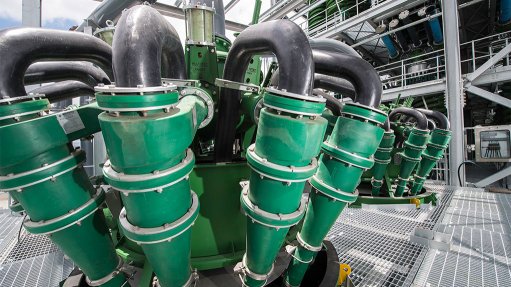
Multotec, recognised industry leaders in metallurgy and process engineering help mining houses across the world process minerals more efficiently,...
VISIT SHOWROOM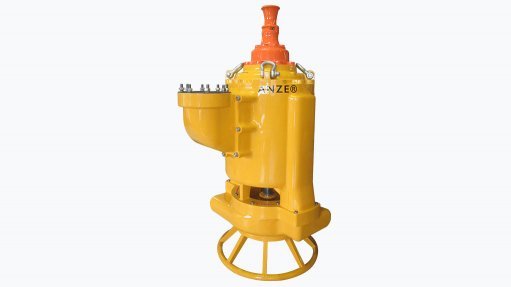
Goodwin Submersible Pumps Africa is sole distributors for Goodwin electrically driven, submersible, abrasion resistance slurry pumps.
VISIT SHOWROOM



Press Office
Announcements
What's On
Subscribe to improve your user experience...
Option 1 (equivalent of R125 a month):
Receive a weekly copy of Creamer Media's Engineering News & Mining Weekly magazine
(print copy for those in South Africa and e-magazine for those outside of South Africa)
Receive daily email newsletters
Access to full search results
Access archive of magazine back copies
Access to Projects in Progress
Access to ONE Research Report of your choice in PDF format
Option 2 (equivalent of R375 a month):
All benefits from Option 1
PLUS
Access to Creamer Media's Research Channel Africa for ALL Research Reports, in PDF format, on various industrial and mining sectors
including Electricity; Water; Energy Transition; Hydrogen; Roads, Rail and Ports; Coal; Gold; Platinum; Battery Metals; etc.
Already a subscriber?
Forgotten your password?
Receive weekly copy of Creamer Media's Engineering News & Mining Weekly magazine (print copy for those in South Africa and e-magazine for those outside of South Africa)
➕
Recieve daily email newsletters
➕
Access to full search results
➕
Access archive of magazine back copies
➕
Access to Projects in Progress
➕
Access to ONE Research Report of your choice in PDF format
RESEARCH CHANNEL AFRICA
R4500 (equivalent of R375 a month)
SUBSCRIBEAll benefits from Option 1
➕
Access to Creamer Media's Research Channel Africa for ALL Research Reports on various industrial and mining sectors, in PDF format, including on:
Electricity
➕
Water
➕
Energy Transition
➕
Hydrogen
➕
Roads, Rail and Ports
➕
Coal
➕
Gold
➕
Platinum
➕
Battery Metals
➕
etc.
Receive all benefits from Option 1 or Option 2 delivered to numerous people at your company
➕
Multiple User names and Passwords for simultaneous log-ins
➕
Intranet integration access to all in your organisation
