


AECOM grounds its solutions approach with geotechnical expertise


This article has been supplied.
Integrating geotechnical engineering with its structural and civil engineering expertise is helping AECOM deliver the most cost-effective and efficient solutions for its clients in Africa from an Engineering, Procurement and Construction (EPC) perspective.
The consulting engineering company underlines the importance of geotechnical engineering in its total service offering, according to Dr. Kim le Roux, Environment and Ground Engineering Lead for Africa. She has worked as a geotechnical professional for the past 20 years, most recently in Western Australia, with a particular focus on the mining industry.
A truly multidisciplinary company like AECOM is much more capable of developing total solutions for its clients. “I have a core understanding of geotechnical engineering and the benefits of integrating it with our structural and civil engineering capabilities. Working together, we are able to optimise solutions make our construction projects far more cost-effective from an EPC perspective,” Dr. le Roux elaborates.
Rather than constituting a specialist service, geotechnical engineering is deployed in support of AECOM’s overall civil infrastructure capabilities. “Essentially such an integrated solutions approach allows us to offer our clients a means of managing any attendant risk, due to the smooth interface between the different disciplines,” Dr. le Roux highlights.
Geotechnical or ground engineering involves quantifying the material parameters of a site, which can range from different soil types to rock. Important considerations here are strength, deformation, and variability. As an example, Dr. le Roux points to a recent construction project in Centurion that consists of a high-risk dolomitic site. “Here we had to liaise closely with the client in order to optimise the foundations to perform according to expectations, while remaining cost-efficient.”
Given the cost associated with foundation work, a balance has to be struck between the expense incurred versus the property value of the development site itself. “This is where ground engineering plays such a crucial role in terms of initial site ‘screening’,” Dr. le Roux adds. A detailed geophysical investigation may be called for in order to determine the exact nature of the material. This is followed by an intrusive geotechnical investigation to obtain a better idea of the variability of the material, and its precise parameters.
Another consideration is how this material will support the structure to be built, and whether or not it can be used as construction backfill. The details of such an investigation are then submitted to AECOM’s engineering team, which runs various models as to how any structure will perform. Ground, structural, and civil engineering input is combined in order to optimise the best solution.
The current trends in ground engineering are refining the technology for non-intrusive investigation, and improving the predictability of the results obtained. In collaboration with the larger Middle East and Africa region, AECOM has developed a high-end sensing capability that is ideal for larger sites. Innovation has also focused on foundation design itself, whereby technology applied successfully to the mining industry is redeployed in civil infrastructure and vice versa, in order to maximise any synergies.
Growth opportunities for geotechnical engineering are aligned with AECOM’s overall strategy for growth in Africa, which focuses on largescale civil infrastructure requirements in Southern and East Africa, particularly in terms of ancillary infrastructure such as road, rail, and port developments for oil and gas expansion projects. Le Roux reveals that AECOM has submitted a number of geotechnical-specific tenders.
There is a general shortage of expertise in the rest of Africa, where skilled engineers are often capable, but limited by their localised experience, with little exposure to alternative materials and methods. “In this situation, it becomes more difficult to introduce new technology, because innovation is not supported. A distinct opportunity exists for AECOM in this regard, which has the institutional capacity to collaborate with local service providers to expand their technical capability,” Dr. le Roux concludes.
Article Enquiry
Email Article
Save Article
Feedback
To advertise email advertising@creamermedia.co.za or click here
Research Reports

Projects


Latest Multimedia


Latest News

Showroom
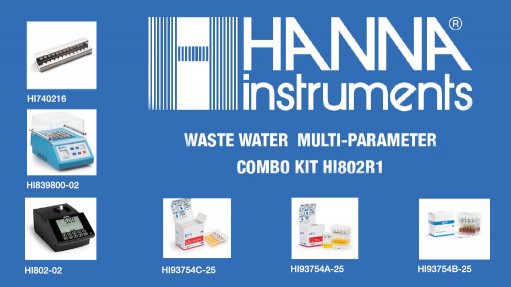
We supply customers with practical affordable solutions for their testing needs. Our products include benchtop, portable, in-line process control...
VISIT SHOWROOM
CMTS is a leading, well-established EC&I contractor with 37+ years of mining and industrial experience. We execute full-scope EC&I projects with...
VISIT SHOWROOM



Announcements
What's On
Subscribe to improve your user experience...
Option 1 (equivalent of R125 a month):
Receive a weekly copy of Creamer Media's Engineering News & Mining Weekly magazine
(print copy for those in South Africa and e-magazine for those outside of South Africa)
Receive daily email newsletters
Access to full search results
Access archive of magazine back copies
Access to Projects in Progress
Access to ONE Research Report of your choice in PDF format
Option 2 (equivalent of R375 a month):
All benefits from Option 1
PLUS
Access to Creamer Media's Research Channel Africa for ALL Research Reports, in PDF format, on various industrial and mining sectors
including Electricity; Water; Energy Transition; Hydrogen; Roads, Rail and Ports; Coal; Gold; Platinum; Battery Metals; etc.
Already a subscriber?
Forgotten your password?
Receive weekly copy of Creamer Media's Engineering News & Mining Weekly magazine (print copy for those in South Africa and e-magazine for those outside of South Africa)
➕
Recieve daily email newsletters
➕
Access to full search results
➕
Access archive of magazine back copies
➕
Access to Projects in Progress
➕
Access to ONE Research Report of your choice in PDF format
RESEARCH CHANNEL AFRICA
R4500 (equivalent of R375 a month)
SUBSCRIBEAll benefits from Option 1
➕
Access to Creamer Media's Research Channel Africa for ALL Research Reports on various industrial and mining sectors, in PDF format, including on:
Electricity
➕
Water
➕
Energy Transition
➕
Hydrogen
➕
Roads, Rail and Ports
➕
Coal
➕
Gold
➕
Platinum
➕
Battery Metals
➕
etc.
Receive all benefits from Option 1 or Option 2 delivered to numerous people at your company
➕
Multiple User names and Passwords for simultaneous log-ins
➕
Intranet integration access to all in your organisation
