Western Cape municipalities increasingly outshining other provinces – MFS Index

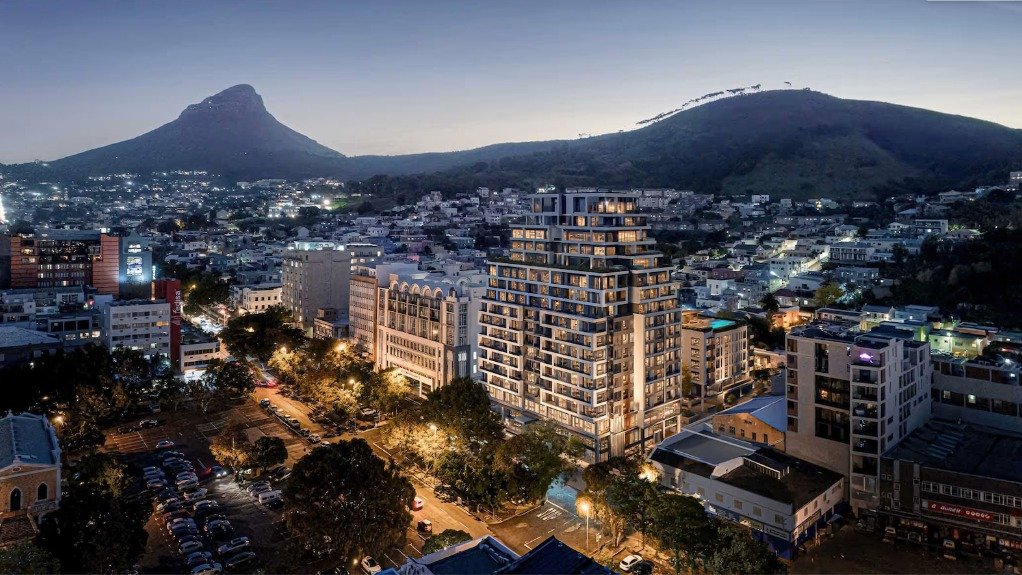



Independent governance ratings agency Ratings Afrika’s newest yearly Municipal Financial Sustainability Index (MFSI) confirms the severe financial distress facing the majority of South Africa’s municipalities, with the notable exception being most of the Western Cape’s municipalities, as well as Midvaal, in Gauteng.
“The experience of Western Cape municipalities shows that South Africa’s current municipal funding model is not fundamentally flawed or broken,” states the report.
“Rather, what is needed is greater accountability from elected councillors and municipal executive management to ensure effective financial governance and responsible stewardship of public resources.
“If left unchecked, South Africa faces a growing risk of systemic municipal failure with profound social and economic consequences.”
The MFSI assesses the financial performance of South Africa’s 120 largest local municipalities and eight metropolitan municipalities, based on the results for the financial year ended June 2025.
The MFSI weighs the financial sustainability of a municipality across six components: operating performance, liquidity management, debt governance, budget practices, affordability and infrastructure development.
Each component is individually scored and weighted to produce an overall index score. This score is measured against a benchmark of 100, which represents a municipality with the highest level of financial sustainability.
The newest index shows that the average financial sustainability score of South Africa’s municipalities has fallen to 27 out of 100 – down from an MFSI score of 31 in 2021 – with the combined operating deficit increasing to R39-billion in 2025, up from R35-billion in 2024.
The cumulative impact of these losses has resulted in an aggregate liquidity shortfall of R128.7-billion across the 128 municipalities, highlighting a significant deterioration in financial resilience.
These trends are not only indicators of financial distress, they are also evidence of a systemic failure that is increasingly undermining service delivery, infrastructure sustainability and economic growth, states the index report.
“Ratings Afrika has consistently warned of this deteriorating trend since 2011. The consequences are increasingly evident.
“Residents and businesses are experiencing poor, and in some cases near-total, service delivery failure.
“Municipalities are struggling to maintain existing infrastructure, let alone invest in future development, placing economic growth and investment at risk.
“The financial sustainability of Eskom and the water utilities is also under pressure, given their dependence on municipal payments.
“This reality requires far greater attention from national government,” warns the index report.
Western Cape Improving, Rest of the Country Declining
The average financial sustainability score of the Western Cape’s municipalities is 57, up from 2021’s 54.
In the Eastern Cape the average score has declined from 34 in 2021, to 32 in 2025.
The Free State is down from 20 to 17, with Gauteng down from 31 to 29 over the same time period.
KwaZulu-Natal’s score has decreased from 41 in 2021, to 33 in 2025, and Limpopo’s from 41 to 37.
Mpumalanga has declined from 27 to 22, and the Northern Cape from 26 to 23.
The North West is down from 21 to a score of 18.
With an average score of 57, the Western Cape remains the highest-performing province within the index by a considerable margin, notes the MFSI report.
“It is the only province with an average score above 50 and the only province where municipalities can, on average, be regarded as financially sustainable.
The MFSI report also singles out the best-performing municipalities – all of them in the Western Cape.
The five highest-scoring municipalities in the newest index, in alphabetical order, are Drakenstein, Hessequa, Overstrand, Saldanha Bay and Swartland.
Cape Town also remains the only metropolitan municipality classified as highly financially sustainable in 2025.
“A common characteristic of the lowest-scoring municipalities is severe liquidity distress,” highlights the report.
“Their operating expenditure consistently exceeds operating revenue, resulting in persistent deficits and growing cash flow pressures.
“At the same time, inadequate spending on repairs and maintenance is accelerating infrastructure deterioration, further undermining long-term service delivery and financial sustainability.
“In many cases, the ability of these municipalities to continue operating as going concerns is increasingly questionable.”
The report regards the apparent inability of most provincial administrations to improve municipal financial sustainability through effective oversight and intervention as equally concerning.
Failure to Collect Revenue
The MFSI report notes that the major contributing factor to the current municipal liquidity crisis is the low average revenue collection rate of 83.9%.
This means that municipalities fail to collect roughly 16% of the revenue they bill each year, effectively writing off a substantial portion of their income.
“Unless revenue collection improves significantly, many municipalities will continue their downward financial spiral and ultimately face collapse,” warns the report.
“The Western Cape municipalities’ collection rate, at 94.5%, is the only [province] approaching the 95% benchmark.
“Metropolitan municipalities perform only marginally better than local municipalities, with an average collection rate of 85.3%, while Cape Town stands out with a collection rate of 98%.
“These weak collection rates point to either an inability or unwillingness by municipal administrations and political leadership to collect revenue due for services rendered, and property rates.
“Without decisive intervention, municipalities will remain trapped in a cycle of operating losses, worsening liquidity shortages and declining service delivery.”
Cape Town Mayor Geordin Hill-Lewis has welcomed the report, with Cape Town’s overall 71 index score significantly higher than the average score of 36 for the other metros.
Article Enquiry
Email Article
Save Article
Feedback
To advertise email advertising@creamermedia.co.za or click here
Research Reports
Projects


Latest Multimedia



Showroom
Complete range of security sealing solutions including security seals bags and labels.
VISIT SHOWROOM
As a reticulator, Egoli Gas provides natural gas to homes and businesses via underground pipes.
VISIT SHOWROOM



Press Office
Announcements
What's On
Subscribe to improve your user experience...
Option 1 (equivalent of R125 a month):
Receive a weekly copy of Creamer Media's Engineering News & Mining Weekly magazine
(print copy for those in South Africa and e-magazine for those outside of South Africa)
Receive daily email newsletters
Access to full search results
Access archive of magazine back copies
Access to Projects in Progress
Access to ONE Research Report of your choice in PDF format
Option 2 (equivalent of R375 a month):
All benefits from Option 1
PLUS
Access to Creamer Media's Research Channel Africa for ALL Research Reports, in PDF format, on various industrial and mining sectors
including Electricity; Water; Energy Transition; Hydrogen; Roads, Rail and Ports; Coal; Gold; Platinum; Battery Metals; etc.
Already a subscriber?
Forgotten your password?
Receive weekly copy of Creamer Media's Engineering News & Mining Weekly magazine (print copy for those in South Africa and e-magazine for those outside of South Africa)
➕
Recieve daily email newsletters
➕
Access to full search results
➕
Access archive of magazine back copies
➕
Access to Projects in Progress
➕
Access to ONE Research Report of your choice in PDF format
RESEARCH CHANNEL AFRICA
R4500 (equivalent of R375 a month)
SUBSCRIBEAll benefits from Option 1
➕
Access to Creamer Media's Research Channel Africa for ALL Research Reports on various industrial and mining sectors, in PDF format, including on:
Electricity
➕
Water
➕
Energy Transition
➕
Hydrogen
➕
Roads, Rail and Ports
➕
Coal
➕
Gold
➕
Platinum
➕
Battery Metals
➕
etc.
Receive all benefits from Option 1 or Option 2 delivered to numerous people at your company
➕
Multiple User names and Passwords for simultaneous log-ins
➕
Intranet integration access to all in your organisation