Been there . . .


Done that, got the T-shirt. The seven-word adage consists of three parts: ‘been there’, ‘done that’, and ‘got the T-shirt’.
The ‘been there’ originated in nineteenth-century America and is used to indicate personal experience with a topic, particularly hardship or vice. The ‘done that’ addition originated in late-1970s Australia as a tribute to a high-profile cricketer/commentator in that country. The ‘got the T-shirt’ bit emerged in the early 1990s, reinforcing the notion that a T-shirt was a souvenir representing an experience.
The obvious question is: When was the last time you bought a T-shirt to remind yourself of a memorable experience? Was that not the obvious question, or are you rather intrigued by my multiple imaginary T-shirt collection? Truth be told, multiple T-shirt tributes are not warranted for a singular experience.
In a word, ‘localisation’. Its mere mention is reminiscent of the flu, which recurs yearly, primarily because the virus mutates rapidly and constantly, allowing it to evade the immune system’s defences developed from previous infections or vaccinations. This is also known as ‘antigenic drift’, which produces new strains of the virus every year, making the previous year’s antibodies ineffective.
When I took my very first step into formal employment in the early 1990s at Industry III at the then Department of Trade and Industry, my first task was to lead a Structural Adjustment Programme, or SAP – not the infamous motor industry or clothing and textile programmes, but the lesser-known third sector: television and radio. Spoiler alert: these were little more than localisation programmes.
Along the way, a number of SAPs have perished, while others have been transformed, with the famous two transformations being automotive and clothing.
To acquaint yourself with 1980s and 1990s SAPs, take a step back into history, or is it ‘theirstory’ now? These were primarily designed to shift the economy from State-led, inward-orientated policies towards a free-market, and export-led model.
The main aims included macroeconomic stabilisation – reducing high inflation and addressing balance-of-payments deficits; reduced State involvement – cutting government spending (austerity), reducing public-sector employment, and privatising State-owned enterprises to eliminate fiscal deficits; market liberalisation – deregulating economies to promote free-market competition, lifting trade barriers, and removing price controls; export-led growth – shifting production away from domestic consumption and towards export-orientated industries to obtain foreign currency; and foreign investment promotion – easing regulations to attract foreign direct investment and ease the repatriation of profits.
These reforms were generally imposed to address the structural problems leading to low savings, investment, and inefficiency. While proponents argued that these measures would encourage self-sufficiency and growth, critics were of the view that they often brought reduced public spending on health and education.
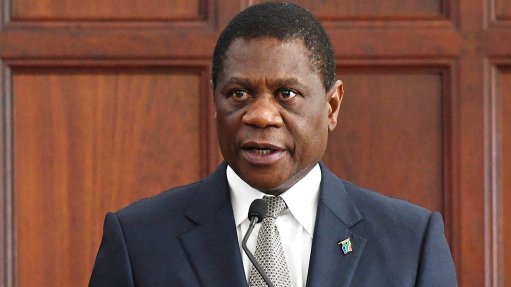
Fast-forward back to the future – by about 46 years – to March 17, to the now renamed Department of Trade, Industry and Competition’s media release headlined ‘Localisation: A national imperative to drive industrialisation and economic growth’, in which the Deputy Minister, addressing delegates on the first day of a two-day Buy Local Summit & Expo, argued that “localisation must be embraced as a national commitment to rebuild productive capacity, deepen value chains and ensure that economic growth translates into real opportunities for South Africans”.
The Deputy Minister highlighted the importance of distinguishing between supporting local industry, localisation, and protectionism. “Supporting local production should not mean insulating our economy to the point where our industries lose the incentive to compete globally. South African products should succeed in international markets because they are innovative, reliable and of world-class quality, not simply because they are shielded from competition. The objective of localisation is therefore not to create permanent protection, but to strengthen the conditions under which local firms can compete and grow.”
The Deputy Minister noted the strategic national commitment to rebuild South Africa’s productive economy, restore industrial capability and secure inclusive economic growth, adding that if government, business and consumers act with shared purpose, the choice to buy local will become a powerful engine for investment, jobs and long-term prosperity.
Been there, done that, and got multiple T-shirts to boot. Or is it rather in the words of Jean-Baptiste Alphonse Karr in 1849: “The more things change, the more they stay the same”?
Article Enquiry
Email Article
Save Article
Feedback
To advertise email advertising@creamermedia.co.za or click here
Research Reports

Projects


Latest Multimedia

Latest News

Showroom

Sweet-Orr, established in 1871, is a global leader in superior protective workwear, known for quality, innovation, and performance.
VISIT SHOWROOM
Rio Carb is an OEM (Original Equipment Manufacturer) of R-C700 Chromium Carbide (CrC) alloy clad wear plates and pipes used for heavy materials...
VISIT SHOWROOM

Press Office
Announcements
What's On
Subscribe to improve your user experience...
Option 1 (equivalent of R125 a month):
Receive a weekly copy of Creamer Media's Engineering News & Mining Weekly magazine
(print copy for those in South Africa and e-magazine for those outside of South Africa)
Receive daily email newsletters
Access to full search results
Access archive of magazine back copies
Access to Projects in Progress
Access to ONE Research Report of your choice in PDF format
Option 2 (equivalent of R375 a month):
All benefits from Option 1
PLUS
Access to Creamer Media's Research Channel Africa for ALL Research Reports, in PDF format, on various industrial and mining sectors
including Electricity; Water; Energy Transition; Hydrogen; Roads, Rail and Ports; Coal; Gold; Platinum; Battery Metals; etc.
Already a subscriber?
Forgotten your password?
Receive weekly copy of Creamer Media's Engineering News & Mining Weekly magazine (print copy for those in South Africa and e-magazine for those outside of South Africa)
➕
Recieve daily email newsletters
➕
Access to full search results
➕
Access archive of magazine back copies
➕
Access to Projects in Progress
➕
Access to ONE Research Report of your choice in PDF format
RESEARCH CHANNEL AFRICA
R4500 (equivalent of R375 a month)
SUBSCRIBEAll benefits from Option 1
➕
Access to Creamer Media's Research Channel Africa for ALL Research Reports on various industrial and mining sectors, in PDF format, including on:
Electricity
➕
Water
➕
Energy Transition
➕
Hydrogen
➕
Roads, Rail and Ports
➕
Coal
➕
Gold
➕
Platinum
➕
Battery Metals
➕
etc.
Receive all benefits from Option 1 or Option 2 delivered to numerous people at your company
➕
Multiple User names and Passwords for simultaneous log-ins
➕
Intranet integration access to all in your organisation