



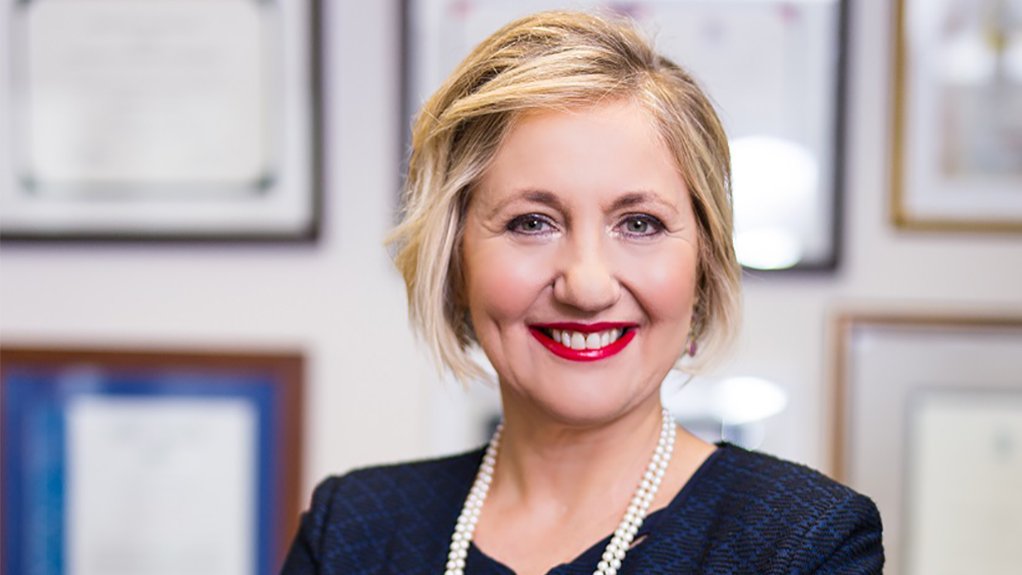
“We need hero teachers and hero parents” - Professor Glenda Gray



This article has been supplied.
Though many across the country have celebrated the easing of lockdown to level two, the Covid-19 crisis is by no means behind us and South Africans must continue to be vigilant.
Speaking at a webinar held today as part of PSG’s Think Big series, Professor Glenda Gray, Chief Executive Officer and President of the South African Medical Research Council (SAMRC), said the virus is still very much with us, and will be for months to come.
Nevertheless Gray, who trained as a paediatrician, came down strongly in support of returning children to school. “One of the biggest tragedies of the pandemic is the long-lasting impact on children who have missed months of schooling.
“We need hero teachers, hero parents, and a system that understands that we absolutely have to get our children back to school. We need to find ways to give teachers, parents and children the confidence to safely navigate being back at school.
“There are a number of ways to keep classrooms safe, and we should get younger teachers into the classrooms, while older teachers and those with co-morbidities, continue to work from home.
“Allowing education to grind to a halt is an avoidable tragedy, since we all know that the only way out of poverty and joblessness is education.”
The education conundrum aside, Gray said that one of the most positive things to come out of the pandemic is the level of engagement by the public. “Our politicians, policymakers and ordinary citizens are all obsessing over numbers, learning about the science, and taking a key interest in the issues around health and livelihoods – I think this is a really positive development.”
Regarding a vaccine, Gray said there is an unprecedented race to find one, and a lot of promising research is happening, but at this stage we still can’t accurately predict how soon we, in South Africa, could have widespread access to a vaccine.
Developing vaccines typically takes years. The time between reading a headline about a potential vaccine to when it has been through all the safety testing and regulatory approval, and then produced and distributed in the order of billions of doses is still anyone’s guess.
“What we know with more certainty is that we are going to be putting out veldfires all over the world, until a vaccine is available globally,” said Gray.
Could the world have been better prepared for a pandemic? Gray says we could have done better with surveillance and taking pandemic preparedness more seriously.
“When we first heard about this unknown pneumonia in China, we thought it would be contained in Asia, and we watched from afar, without a proper understanding of how contagious this virus was and how quickly it could spread around the globe thanks to global travel.
“Because it’s hard to predict what the pathogen will be, it’s difficult to be ready with biomedical interventions for a pandemic,” said Gray.
“It can be difficult to fathom that the most effective tools we’ve had now are the same tools that were effective in the ‘Spanish’ flu 100 years ago. These robust tools - masks, hand hygiene and social distancing – have been the mainstay of the way we’ve approached this epidemic,” said Gray.
“What is different 100 years later, however, is the huge rush to find solutions in the biomedical space, as well as our ability to characterise the virus. We know what it looks like, we’ve been able to analyse it, we can see where each strain of virus came from, we can track footprints in our sewer system and so on.”
Thanks to scientific development, we can expect to find a vaccine. This is just as well given our chances of ending the pandemic through herd immunity, as we did with the flu 100 years ago, are not looking hopeful.
“This is a smart virus that has an evolutionary advantage,” said Gray. “We might be protected for six to eight months but then be vulnerable again.”
“We are hearing more reports of second infections, which is very scary for us as epidemiologists. As we wait for vaccine development, we have to hope that the non-pharmaceutical interventions (masks, hand hygiene and social distancing) will protect our more vulnerable citizens.”
Gray believes we also need to see this pandemic as a wake-up call, so that we can avoid or be better prepared for potentially more dangerous diseases in the future.
“We have to better understand the interplay between climate change and zoonotic evolution as viruses jump the species barrier from animal hosts to humans. We have to be more vigilant and understand the potential impacts of human interaction with exotic species and the environment at large.
Sylvester Appasamy, a financial adviser at PSG Wealth, thanked Professor Gray for her integrity and fearlessness in the fight against Covid-19.
Article Enquiry
Email Article
Save Article
Feedback
To advertise email advertising@creamermedia.co.za or click here
Research Reports

Projects


Latest Multimedia


Showroom
Axiom Hydraulics is a trusted leader in South Africa’s hydraulic industry, delivering world-class components, systems, and engineering expertise...
VISIT SHOWROOM
Your global lifecycle technology & service partner for materials & minerals processing equipment for coal, iron ore, copper, manganese & other...
VISIT SHOWROOM



Announcements
What's On
Subscribe to improve your user experience...
Option 1 (equivalent of R125 a month):
Receive a weekly copy of Creamer Media's Engineering News & Mining Weekly magazine
(print copy for those in South Africa and e-magazine for those outside of South Africa)
Receive daily email newsletters
Access to full search results
Access archive of magazine back copies
Access to Projects in Progress
Access to ONE Research Report of your choice in PDF format
Option 2 (equivalent of R375 a month):
All benefits from Option 1
PLUS
Access to Creamer Media's Research Channel Africa for ALL Research Reports, in PDF format, on various industrial and mining sectors
including Electricity; Water; Energy Transition; Hydrogen; Roads, Rail and Ports; Coal; Gold; Platinum; Battery Metals; etc.
Already a subscriber?
Forgotten your password?
Receive weekly copy of Creamer Media's Engineering News & Mining Weekly magazine (print copy for those in South Africa and e-magazine for those outside of South Africa)
➕
Recieve daily email newsletters
➕
Access to full search results
➕
Access archive of magazine back copies
➕
Access to Projects in Progress
➕
Access to ONE Research Report of your choice in PDF format
RESEARCH CHANNEL AFRICA
R4500 (equivalent of R375 a month)
SUBSCRIBEAll benefits from Option 1
➕
Access to Creamer Media's Research Channel Africa for ALL Research Reports on various industrial and mining sectors, in PDF format, including on:
Electricity
➕
Water
➕
Energy Transition
➕
Hydrogen
➕
Roads, Rail and Ports
➕
Coal
➕
Gold
➕
Platinum
➕
Battery Metals
➕
etc.
Receive all benefits from Option 1 or Option 2 delivered to numerous people at your company
➕
Multiple User names and Passwords for simultaneous log-ins
➕
Intranet integration access to all in your organisation
