



We must not hide S Africa's problems – Patel

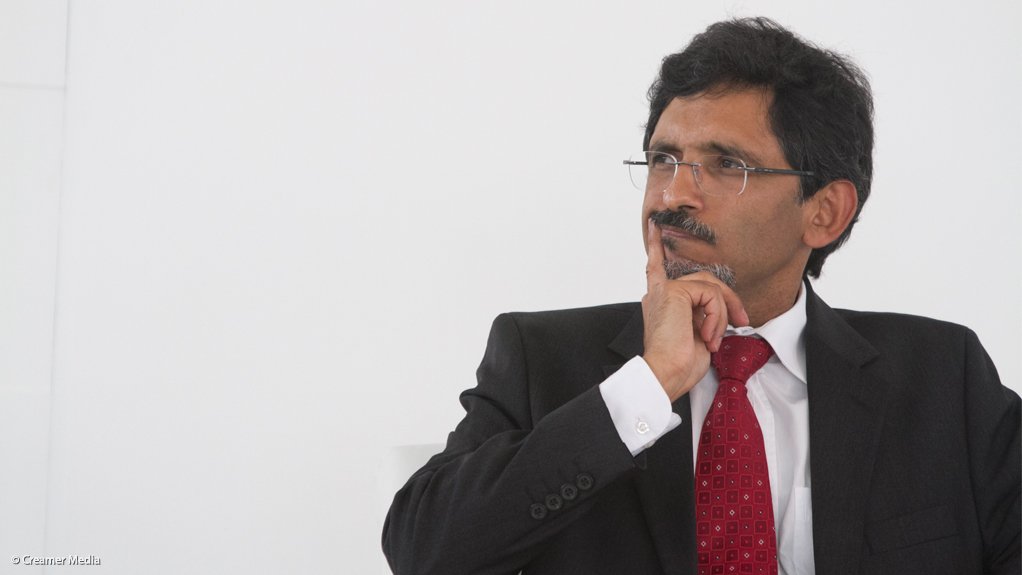


While there has been significant improvements in the country since it achieved democracy, it still has problems that must not be hidden away, Economic Development Minister Ebrahim Patel said on Thursday.
"In every area you want to look [in the country since 1994] there has been progress, but there are challenges," Patel told a South Africa Clothing and Textile Workers Union open school in Kempton Park.
"It doesn't help to hide those problems.
"We have many unresolved challenges... [that come] from more than 350 years of colonialism and apartheid rule, but there are others that are new and fresh and arose after 1994."
Patel looked at where South Africa had come in the last 21 years, especially in relation to the supply of electricity.
He said that in 1994 some parts of the country did not have electricity. Two years later, when the census was done it was found that 5.2 million households had electricity.
"Today, in the period from 1996 up to today, an additional amount of more than 7 million houses have been added to the electricity grid."
He said this was more than what was done under colonialism and apartheid.
However, having more people added more strain to the electricity grid.
"New challenges required us to build power stations faster to generate for South Africans who had had to operate with a primer stove, a gas stove or candles."
'We made a mistake'
He said that while these new power stations are being constructed, that work should have started a while ago.
"We made a mistake in not planning this earlier and building it earlier. You can't build a house five minutes before winter, you build it when the weather is good."
He also admitted that there were some aspects of the state that didn't work well yet.
"When you go to public hospital and wait for hours and are treated badly... or when you go a government department for a document and you have to wait the whole day - its working class communities that suffer."
Patel said some people saw the country's public entities as a place for loot, and others as a chance to privatise.
"Workers and the poor need public entities that are well run," he said.
"[However] when you privatise the energy, like other countries have done, it is the poor that will suffer."
Article Enquiry
Email Article
Save Article
Feedback
To advertise email advertising@creamermedia.co.za or click here
Research Reports

Projects


Latest Multimedia



Showroom

Design, Construction and Maintenance of Site Erected, Welded Bulk Storage Tanks for the Petrochemical, LNG, Ammonia and Sustainable fuel Sectors.
VISIT SHOWROOM
Sika South Africa is a trusted partner for the nation’s infrastructure, commercial, residential, and industrial sectors.
VISIT SHOWROOM



Press Office
Announcements
What's On
Subscribe to improve your user experience...
Option 1 (equivalent of R125 a month):
Receive a weekly copy of Creamer Media's Engineering News & Mining Weekly magazine
(print copy for those in South Africa and e-magazine for those outside of South Africa)
Receive daily email newsletters
Access to full search results
Access archive of magazine back copies
Access to Projects in Progress
Access to ONE Research Report of your choice in PDF format
Option 2 (equivalent of R375 a month):
All benefits from Option 1
PLUS
Access to Creamer Media's Research Channel Africa for ALL Research Reports, in PDF format, on various industrial and mining sectors
including Electricity; Water; Energy Transition; Hydrogen; Roads, Rail and Ports; Coal; Gold; Platinum; Battery Metals; etc.
Already a subscriber?
Forgotten your password?
Receive weekly copy of Creamer Media's Engineering News & Mining Weekly magazine (print copy for those in South Africa and e-magazine for those outside of South Africa)
➕
Recieve daily email newsletters
➕
Access to full search results
➕
Access archive of magazine back copies
➕
Access to Projects in Progress
➕
Access to ONE Research Report of your choice in PDF format
RESEARCH CHANNEL AFRICA
R4500 (equivalent of R375 a month)
SUBSCRIBEAll benefits from Option 1
➕
Access to Creamer Media's Research Channel Africa for ALL Research Reports on various industrial and mining sectors, in PDF format, including on:
Electricity
➕
Water
➕
Energy Transition
➕
Hydrogen
➕
Roads, Rail and Ports
➕
Coal
➕
Gold
➕
Platinum
➕
Battery Metals
➕
etc.
Receive all benefits from Option 1 or Option 2 delivered to numerous people at your company
➕
Multiple User names and Passwords for simultaneous log-ins
➕
Intranet integration access to all in your organisation
