Water intensity forces power sector to advance cooling technologies

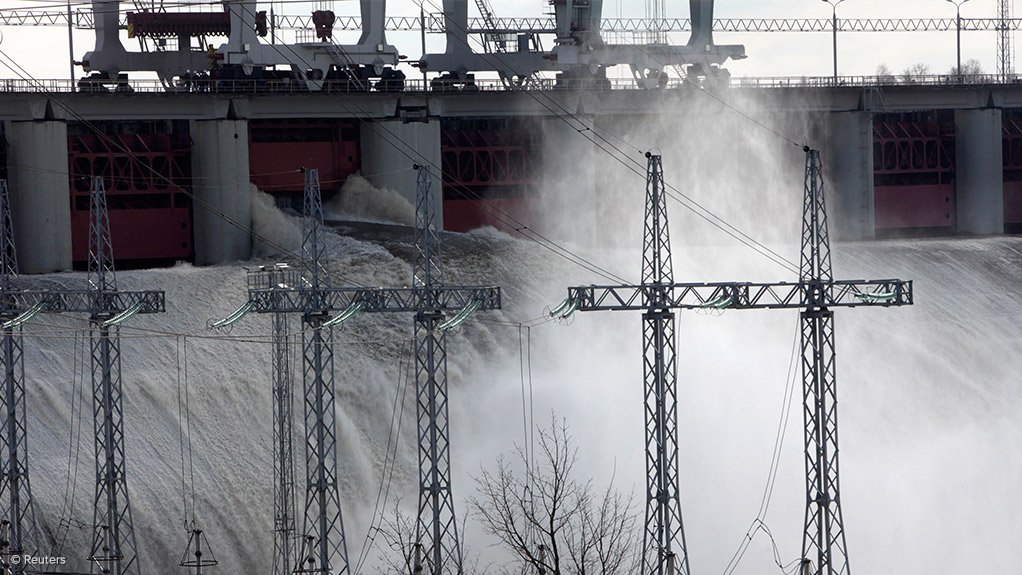


Water stress is forcing the global energy sector to redesign cooling infrastructure to manage declining water availability, research published by Wood Mackenzie reveals.
Thermoelectric, nuclear and hydro plants produced 80% of global power in 2025, and all depend on water for cooling.
By 2050, 31% of global GDP will be exposed to high water stress, up from 24% in 2010, threatening the thermal power plants and data centres that underpin modern economies.
The study highlights recent episodes across Europe where high river temperatures and low flows forced nuclear output cuts and temporary reactor curtailments, exposing a systemic vulnerability.
“Europe's recent experience with high river temperatures and low flows, leading to reactor curtailments, has accelerated a shift toward hybrid cooling, dry systems and low-risk catchment sitting. New power plant builds are increasingly favouring wind and solar, which require far less water to operate,” Wood Mackenzie said in a statement on Thursday.
The research points out that agriculture claims 70% of global water withdrawals, while power generation and industry use 22%; however, while farm irrigation can be scheduled around seasonal availability, thermal plants need continuous cooling to maintain dispatch reliability.
Traditional once-through cooling systems withdraw 132.5 m3/MWh but consume only 0.9 m3.
Wet recirculating towers, now the industry standard, reduce withdrawals to 4.6 m3/MWh but triple consumption to 3.1 m3 through evaporation.
Dry cooling eliminates water use entirely but carries a seven-percentage-point efficiency penalty and adds $160/kW in capital costs.
Air cooling is limited to 15 kW to 20 kW a rack, while modern AI training nodes exceed 120 kW to 200 kW a rack, a gap that cannot be bridged with more fans and pushes data centres toward liquid cooling systems.
“The explosion of AI computing is pushing data centres toward liquid cooling systems that can handle 250 kW a rack; ten times what air cooling can manage and creating a parallel demand spike just as water availability becomes volatile,” the firm explained.
“Hyperscalers are standardising single-phase direct-to-chip liquid cooling, which circulates warm water, 30 °C to 45 °C against 15 °C to 25 °C for air systems, through cold plates attached to GPUs and CPUs. The approach handles 60 kW to 150 kW a rack.”
Two-phase systems using refrigerants can exceed 250 kW a rack.
Vertiv, CoolIT, and Asetek are producing manifold and coolant distribution skids aligned to NVIDIA's H100, GB200, and GB300 platforms.
Liquid cooling is far more energy-efficient than air, and higher operating temperatures improve heat rejection.
“Enterprise facilities historically split power 60/40 between IT equipment and cooling; hyperscalers have pushed that to 90/10, meaning nearly all energy now goes to compute rather than facility overhead. Power use effectiveness is expected to drop to 1.2 by 2028.”
However, improved efficiency often comes at the cost of higher water use. Average water usage effectiveness is projected to rise 20% in the same period as operators use evaporative cooling to minimise power demand.
“AI clusters generate heat loads that air simply cannot handle at scale. Liquid cooling is not optional anymore, it is the foundation for next-generation compute,” said Wood Mackenzie scenarios and technologies principal analyst Jom Madan.
“The water question has not gone away; it has moved from the data hall to the power plant and that is where the real exposure sits. Thermal power generation remains 10 to 20 times more water-intensive than data centre on-site cooling.
As water stress intensifies, the case for wind, solar and dry cooling becomes operational, not just environmental.
“The technology exists. The pressure is mounting. What is missing is the policy framework to accelerate deployment at the speed the market demands,” Madan concluded.
Article Enquiry
Email Article
Save Article
Feedback
To advertise email advertising@creamermedia.co.za or click here
Research Reports
Projects

Latest Multimedia

Latest News

Showroom
Astore Keymak is one of South Africa’s leading suppliers of high-quality Thermoplastic Pipeline Systems, with branches in the major provinces.
VISIT SHOWROOM
We are responsible manufacturers of essential components. Manufacturing 80 million parts a week, we have over 1 billion parts in stock.
VISIT SHOWROOM


Press Office
Announcements
What's On
Subscribe to improve your user experience...
Option 1 (equivalent of R125 a month):
Receive a weekly copy of Creamer Media's Engineering News & Mining Weekly magazine
(print copy for those in South Africa and e-magazine for those outside of South Africa)
Receive daily email newsletters
Access to full search results
Access archive of magazine back copies
Access to Projects in Progress
Access to ONE Research Report of your choice in PDF format
Option 2 (equivalent of R375 a month):
All benefits from Option 1
PLUS
Access to Creamer Media's Research Channel Africa for ALL Research Reports, in PDF format, on various industrial and mining sectors
including Electricity; Water; Energy Transition; Hydrogen; Roads, Rail and Ports; Coal; Gold; Platinum; Battery Metals; etc.
Already a subscriber?
Forgotten your password?
Receive weekly copy of Creamer Media's Engineering News & Mining Weekly magazine (print copy for those in South Africa and e-magazine for those outside of South Africa)
➕
Recieve daily email newsletters
➕
Access to full search results
➕
Access archive of magazine back copies
➕
Access to Projects in Progress
➕
Access to ONE Research Report of your choice in PDF format
RESEARCH CHANNEL AFRICA
R4500 (equivalent of R375 a month)
SUBSCRIBEAll benefits from Option 1
➕
Access to Creamer Media's Research Channel Africa for ALL Research Reports on various industrial and mining sectors, in PDF format, including on:
Electricity
➕
Water
➕
Energy Transition
➕
Hydrogen
➕
Roads, Rail and Ports
➕
Coal
➕
Gold
➕
Platinum
➕
Battery Metals
➕
etc.
Receive all benefits from Option 1 or Option 2 delivered to numerous people at your company
➕
Multiple User names and Passwords for simultaneous log-ins
➕
Intranet integration access to all in your organisation