Wastewater treatment failures a symptom of fragmented governance model, deeper dysfunction


The outcomes of the Department of Water and Sanitation’s latest Green Drop report have laid bare how wastewater treatment infrastructure failures are not the root cause, but rather a more visible symptom, of deeper failures.
The failures of the infrastructure are just the visible surface of a fragmented governance model where financial constraints, procurement delays and tariffs do not reflect the actual costs required for long-term sustainability, said Water Institute of Southern Africa (Wisa) CEO Dr Lester Goldman.
Of the 848 wastewater treatment plants assessed across South Africa, 396 are in a critical state. Only about a quarter are performing well enough to meet required standards.
This means that poorly treated or untreated sewage is finding its way into rivers, dams and the water sources on which millions of people depend.
Wastewater treatment plants have been treated as invisible infrastructure, the "big toilets" of the country that only attract attention when they overflow, he said, noting that, with nearly half of the plants failing to meet basic standards, that invisibility becomes dangerous.
“The crisis is often blamed on ageing pipes and tight budgets. Both are real. But they are symptoms, not the root cause.
“Municipalities are being squeezed from every angle. But the squeeze alone does not explain everything.”
Some of what is broken is a matter of focus, he said, highlighting how many municipalities are operating through standards related to Regulation 2834, an older framework built around baseline compliance and paperwork. However, the current framework, Regulation 3630, demands measurable performance and real service delivery outcomes.
“The gap between where many municipalities think the bar is and where it actually sits is, in itself, a governance failure. We cannot manage what we do not accurately measure, and we cannot fix what we refuse to hold to modern standards.”
He further commented that the Green Drop report is a detailed picture of how infrastructure, finance, governance and operations interact, and what happens when that interaction breaks down.
“The fix has to be equally joined-up,” he said.
Reversing the situation requires enforced accountability, moving beyond tick-box compliance and attaching real consequences to performance failures at municipal leadership level.
This includes financial realism, funding models and tariffs that reflect the true cost of running and maintaining a modern water system, as well as institutional support that provides technical staff the authority and resources to match their expertise, so that “competence can actually translate into results”.
Cleaner rivers, lower public health costs, viable agriculture, functioning ecosystems, these are within reach, but only if governance catches up with expertise.
Goldman pointed out that Wisa is able to contribute to professionalising the sector, setting rigorous standards, certifying skills and amplifying the voices of practitioners.
“We ensure that when the necessary investment and political will arrive, there is a competent, ethical and empowered workforce ready to deliver.
“[However,] professional bodies alone cannot fix what governance, funding and enforcement have allowed to deteriorate.
“South Africa does not lack talent. We have skilled engineers, dedicated scientists and process controllers who are constantly upskilling, people who show up and carry the system even when the system does not carry them back,” he continued.
“Yet too many of them are working with one hand tied behind their backs. Decisions sit with people who are not present. Resources are trapped in processes that do not move. Institutional support, where it exists at all, is inconsistent.”
Further, accountability is not just about finding someone to blame when things go wrong, but also about building a system that enables people to do things right.
“At Wisa, we remain committed to professional excellence and to the practitioners who deliver it every day. Now we need the rest of the system to meet us there. Because this was never really just about wastewater. It is about whether South Africa can protect its water security, its public health and its future. And on current evidence, we are running out of time to get it right,” Goldman concluded.
Article Enquiry
Email Article
Save Article
Feedback
To advertise email advertising@creamermedia.co.za or click here
Projects


Latest Multimedia
Latest News
Showroom

Sika South Africa is a trusted partner for the nation’s infrastructure, commercial, residential, and industrial sectors.
VISIT SHOWROOM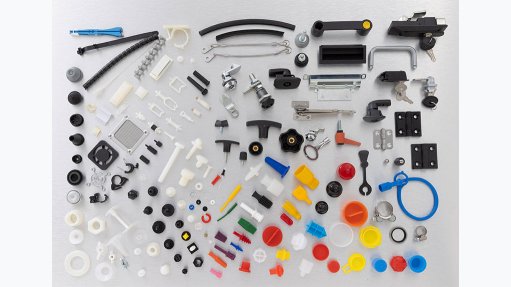
We are responsible manufacturers of essential components. Manufacturing 80 million parts a week, we have over 1 billion parts in stock.
VISIT SHOWROOM

Press Office
Announcements
What's On
Subscribe to improve your user experience...
Option 1 (equivalent of R125 a month):
Receive a weekly copy of Creamer Media's Engineering News & Mining Weekly magazine
(print copy for those in South Africa and e-magazine for those outside of South Africa)
Receive daily email newsletters
Access to full search results
Access archive of magazine back copies
Access to Projects in Progress
Access to ONE Research Report of your choice in PDF format
Option 2 (equivalent of R375 a month):
All benefits from Option 1
PLUS
Access to Creamer Media's Research Channel Africa for ALL Research Reports, in PDF format, on various industrial and mining sectors
including Electricity; Water; Energy Transition; Hydrogen; Roads, Rail and Ports; Coal; Gold; Platinum; Battery Metals; etc.
Already a subscriber?
Forgotten your password?
Receive weekly copy of Creamer Media's Engineering News & Mining Weekly magazine (print copy for those in South Africa and e-magazine for those outside of South Africa)
➕
Recieve daily email newsletters
➕
Access to full search results
➕
Access archive of magazine back copies
➕
Access to Projects in Progress
➕
Access to ONE Research Report of your choice in PDF format
RESEARCH CHANNEL AFRICA
R4500 (equivalent of R375 a month)
SUBSCRIBEAll benefits from Option 1
➕
Access to Creamer Media's Research Channel Africa for ALL Research Reports on various industrial and mining sectors, in PDF format, including on:
Electricity
➕
Water
➕
Energy Transition
➕
Hydrogen
➕
Roads, Rail and Ports
➕
Coal
➕
Gold
➕
Platinum
➕
Battery Metals
➕
etc.
Receive all benefits from Option 1 or Option 2 delivered to numerous people at your company
➕
Multiple User names and Passwords for simultaneous log-ins
➕
Intranet integration access to all in your organisation