



South Africa’s just energy transition hinges on integrated policy approach

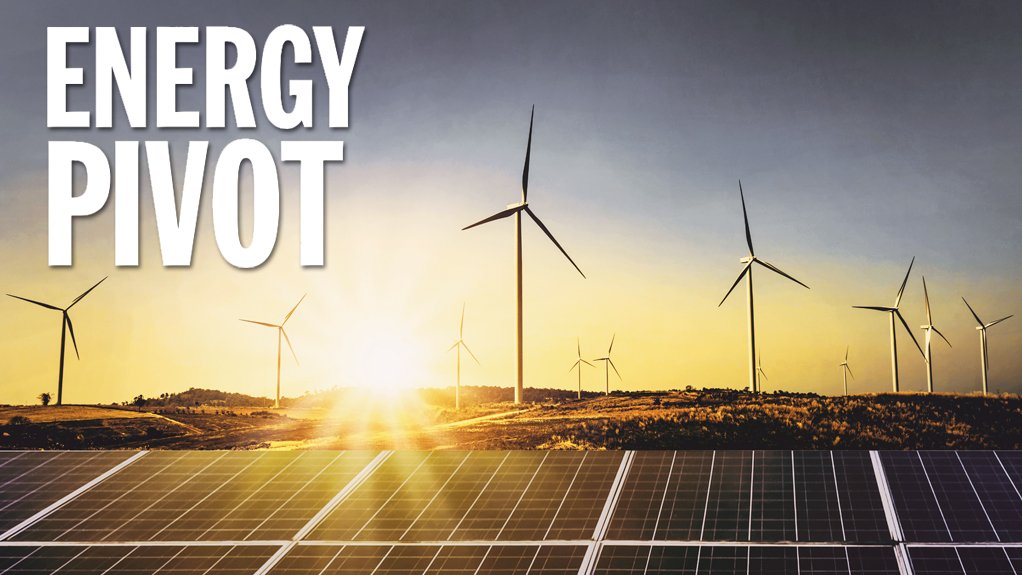
POLICY IN PROGRESS Eskom CEO André de Ruyter calls for policy alignment and complementarity among four major policy streams: energy, fiscal, industrial and environmental


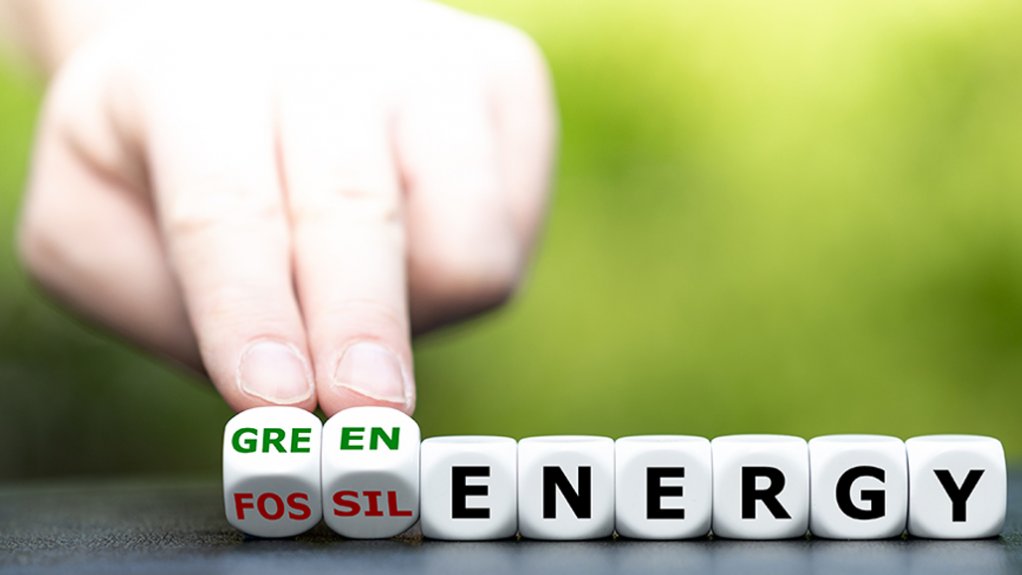
As the world’s largest economies are decarbonising, deregulating, decentralising and digitalising their energy sectors, it is imperative that South Africa, as a trading partner of these countries, also embraces this revolution to avoid hampering competitiveness and economic growth.
An untransformed energy sector and resultant deindustrialisation will lead to persistently unsolved poverty, inequality and unemployment, which are systemic threats to society, says State-owned power utility Eskom CEO Andre de Ruyter.
In an exclusive interview with Engineering News & Mining Weekly, De Ruyter emphasises the importance of electricity as the lifeblood of a modern, industrial economy that is in keeping with international trends.
“From a position of lacking energy security in South Africa today, we have an opportunity for this crisis to act as a pivot into a clean energy transition, to build new generation capacity to address energy security and to create jobs, particularly for those in the coal value chain,” De Ruyter avers.
Eskom has been working to garner power project development interest in Mpumalanga, in the heart of the coal belt, where there is ample transmission infrastructure. The power utility has made about 36 000 ha of land available for leasing, particularly for power generation project development.
Mpumalanga has among the highest youth unemployment rates in the country, which, De Ruyter avers, can be addressed by an energy revolution in the province.
Other stakeholders, such as mining company Impala Platinum sustainable development executive Tsakani Mthombeni, consider this move a viable one.
He says it is better to bring power projects on stream where there is existing transmission infrastructure, even though these areas may have less abundant renewable-energy resources, instead of having to build transmission infrastructure and distribution networks in remote, resource-rich areas.
Dynamic Utility
Concerning the changes required for Eskom to be on a par with the four ‘D’ trends – decarbonising, deregulating, decentralising and digitalising – De Ruyter summarises the changes at play from an operational, structural, regulatory and fiscal policy perspective.
“Operationally, we have to ensure that our current plant performance is as good as it can be. It is common knowledge that Eskom has an ageing generation fleet, barring the Medupi and Kusile power stations, as well as the Koeberg nuclear plant, once its licence is extended. We need to address the looming generation gap, which is currently at about 6 GW already.”
Structurally, Eskom needs to continue its restructuring into generation, transmission and distribution, which, while having achieved successful legal separation now, awaits licence approvals from the National Energy Regulator of South Africa.
“The unbundling is a catalytic step in the right direction to unlock additional private- sector investment for generation capacity,” De Ruyter adds.
Mthombeni lauds the progression of Eskom’s unbundling process, as it will better cater to large, corporate power users and smaller businesses alike, with the mining industry, for example, longing for one point of entry and a simplified process for building power projects.
From a regulatory and policy perspective, De Ruyter believes that it would be beneficial if government could achieve policy alignment and complementarity across four major policy streams: energy, fiscal, industrial and environmental.
He also deems it necessary for energy policy to recognise the need for a greater role for market forces, particularly as South Africa chases decarbonisation goals, amid the risk of carbon border taxes if more clean energy power projects do not come on stream soon.
De Ruyter says onerous procurement processes are limiting investment, particularly those procurement processes that add little value. Instead, targeted strategic policies can be designed to drive demand for locally manufactured goods, given uncertainty of that demand for a sufficiently long period.
To this end, government can also drive supply chain development, instead of focusing on brute force percentage requirements for local content, he adds.
He advocates for more tax incentives, possibly subsidies, and the establishment of more special economic zones to drive more local content and foster development.
De Ruyter cites electric vehicles as an example of products that still attract significant import duties, leading to insufficient demand to justify greater investments.
“By allowing demand to grow, it can be satisfied by imports initially and, over time, encourage manufacturers to come on board – resulting in more local manufacturing and job creation. We should never stifle an industry, but enable it through smart regulation,” he notes.
To effect some of the necessary transformation, Eskom will need to invest about R400-billion in 8 GW of clean electricity generation capacity, taking into account that 22 GW of coal-fired capacity will, ultimately, be retired from the grid, says De Ruyter.
“We will definitely have a smaller role to play in the generation sector, which results in a greater need to incentivise private- sector generation investment.”
He adds that Eskom also needs to strengthen the grid with about 8 000 km of trans- mission lines to access the best solar and wind acreage in South Africa and connect to that market.
In this regard, Mthombeni sees the future of Eskom as being a service provider, rather than the sole generator and mover of electricity.
It was announced at the COP26 climate change conference that Eskom had been afforded access to $8.5-billion in green financing, which De Ruyter says the utility is endeavouring to effectively rein in with speed and agility, while maintaining good governance.
South Africa, France, Germany, the UK and the US, along with the European Union, announced this Just Energy Transition Partnership to support South Africa’s decarbonisation efforts over a three- to five-year period, on November 2 last year.
De Ruyter acknowledges that, if Eskom delays in stepping up to commitments in its pipeline of projects across generation, transmission and distribution, other countries will gladly take advantage of green climate finance opportunities, leaving Eskom, and South Africa, “in the dark”.
Weighing in on the concessional finance matter, Mthombeni states that, although it is a good opportunity for Eskom to decarbonise and transition to cleaner energy, it must be done in a measured and inclusive manner – through consultation with stakeholders – otherwise it will not be a just, futureproof transition.
Other Considerations
Mthombeni says that, while stakeholders have been getting into a tussle over choices of generation technology, a solution to energy security has not been actioned.
He believes gas is a viable transitional fuel, particularly for self-generating sites. Access to pipelines can be an issue for remote mines, but with the correct investment, they can tap into green hydrogen later on.
Mthombeni says that, despite policy adjustments, such as the 100 MW threshold allowance for users that can generate their own power without a licence, other transactional barriers and uncertainties, such as Eskom’s high tariffs, remain.
“Electricity accounts for about 40% of input costs for a mining operation at the moment, and should this trend worsen, more companies will consider diverting processing operations elsewhere.
“The mining sector also requires good transmission integration capability if it is to build microgrids or enter into joint microgrid building agreements with other mining companies.”
This is another reason why the unbundling of Eskom’s transmission entity is important – to lower risk and know that infrastructure will be maintained properly – adds Mthombeni.
He says that wheeling through the grid should not be “top secret” or require that companies work with different government offices to realise their plans.
“Government processes should not limit aspirations to build big plants, especially not while the country has an energy security issue.”
Mthombeni believes that to truly effect a clean energy transition, government must establish a one-stop shop for power projects in industry, similar to the dynamic between the Renewable Energy Independent Power Producer Procurement Programme and the Independent Power Producers Office.
“It would realise many more investments. Let us streamline the administrative processes to get project approvals and builds going.”
Further, in terms of the challenges that the renewable-energy industry foresees for a just energy transition, beyond Eskom’s necessary transformation, energy developer Mainstream Renewable Power Africa GM Hein Reyneke foresees a shortage of human resources to deliver on the scale envisioned in the Integrated Resource Plan (IRP) 2019, which will require skills development efforts.
On that note, he adds that the IRP 2019 is due for an upgrade this year, with new scenarios and simulations, which should pave the way for more renewable energy.
Reyneke says South Africa’s energy policies need to be more agile and responsive to market changes, particularly as the private and public sectors will become two markets of similar size, both buying and selling power.
He echoes De Ruyter’s well publicised ideal scenario of electricity in South Africa being a merchant market, and not one that is lodged within the bureaucracy around wheeling, licensing and trade across markets.
“At the moment, we do not have a renewable- energy market – only a programme. We need a clear set of noncomplex rules of engagement so that all stakeholders understand, and have, access to the grid, wheeling and trading,” elaborates Reynecke.
De Ruyter concludes that, if South Africa has an integrated policy approach – aligning energy, fiscal, environmental and industry policy – in place, so that the country “can pull together” in the transition to a lower carbon economy, the country can attract investors, create jobs and build factories, while moving away from a reliance on coal to a cleaner future.
•
The quoted individuals spoke during a Creamer Media-hosted webinar on Advancing the Just Energy Transition early in February, which incorporated an exclusive interview with Eskom CEO André de Ruyter.
Article Enquiry
Email Article
Save Article
Feedback
To advertise email advertising@creamermedia.co.za or click here
Research Reports

Projects


Latest Multimedia

Latest News

Showroom
The Beneficiation Academy is a certified training institution that follows all compliance legislation and is accredited with various Sector...
VISIT SHOWROOM
Sulzer South Africa, established in 1922, partners with critical industries like power, oil & gas, water, mining, and chemicals to boost...
VISIT SHOWROOM



Announcements
What's On
Subscribe to improve your user experience...
Option 1 (equivalent of R125 a month):
Receive a weekly copy of Creamer Media's Engineering News & Mining Weekly magazine
(print copy for those in South Africa and e-magazine for those outside of South Africa)
Receive daily email newsletters
Access to full search results
Access archive of magazine back copies
Access to Projects in Progress
Access to ONE Research Report of your choice in PDF format
Option 2 (equivalent of R375 a month):
All benefits from Option 1
PLUS
Access to Creamer Media's Research Channel Africa for ALL Research Reports, in PDF format, on various industrial and mining sectors
including Electricity; Water; Energy Transition; Hydrogen; Roads, Rail and Ports; Coal; Gold; Platinum; Battery Metals; etc.
Already a subscriber?
Forgotten your password?
Receive weekly copy of Creamer Media's Engineering News & Mining Weekly magazine (print copy for those in South Africa and e-magazine for those outside of South Africa)
➕
Recieve daily email newsletters
➕
Access to full search results
➕
Access archive of magazine back copies
➕
Access to Projects in Progress
➕
Access to ONE Research Report of your choice in PDF format
RESEARCH CHANNEL AFRICA
R4500 (equivalent of R375 a month)
SUBSCRIBEAll benefits from Option 1
➕
Access to Creamer Media's Research Channel Africa for ALL Research Reports on various industrial and mining sectors, in PDF format, including on:
Electricity
➕
Water
➕
Energy Transition
➕
Hydrogen
➕
Roads, Rail and Ports
➕
Coal
➕
Gold
➕
Platinum
➕
Battery Metals
➕
etc.
Receive all benefits from Option 1 or Option 2 delivered to numerous people at your company
➕
Multiple User names and Passwords for simultaneous log-ins
➕
Intranet integration access to all in your organisation
