



Transnet’s Market Demand Strategy, South Africa

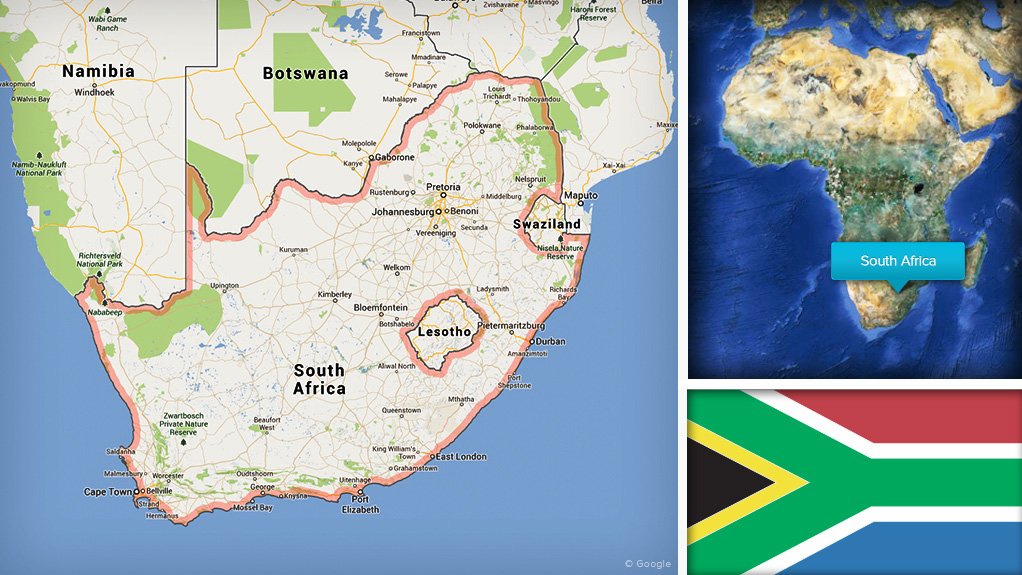


Name and Location
Transnet’s Market Demand Strategy (MDS), South Africa.
Client
Transnet.
Project Description
Transnet will shift its capital expenditure (capex) focus over the coming seven years from maintenance expenditure to expansionary investments on rail and port projects across South Africa.
The expansion of South Africa’s rail, port and pipeline infrastructure is expected to result in a significant increase in freight volumes, especially in commodities such as iron-ore, coal and manganese.
It will also lead to a significant modal shift from road to rail.
The bulk of the capex, R201-billion, will be allocated towards railway projects, which have been designed to increase freight volumes to 350-million tons a year, from the 202-million tons achieved in the year to March 31, 2012.
Supporting the rail-volume growth aspiration is a plan to materially increase the capacity of Transnet Freight Rail’s (TFR’s) key commodity lines, which includes:
• increasing coal volumes by 44%, from 68-million tons last year to 98-million tons by 2018/19, which will be above the 92-million-ton-a-year nameplate capacity for the privately owned Richards Bay Coal Terminal, in KwaZulu-Natal;
• raising the capacity of the iron-ore export channel from Sishen, in the Northern Cape, to Saldanha, in the Western Cape, by 57%, from 53-million tons to 83-million tons; and
• increasing the capacity of the general freight business by a material 113%, from 80-million tons a year currently to 180.3-million tons a year.
The capital to be invested in the port system (R47-billion for the Transnet National Ports Authority and R33-billion for Transnet Port Terminals) should also enable Transnet to increase its container handling capacity by 76%, from 4.3-million twenty-foot equivalent units (TEUs) to 7.6-million TEUs.
Value
The cost of the MDS is estimated at R307.5-billion, including R201-billion for railways, R47-billion for harbours, R33-billion for port terminals, R11-billion for pipelines and R4-billion for rail engineering works.
The MDS will primarily be funded by Transnet’s own balance sheet. However, Transnet will still need to raise about R100-billion from domestic and international debt capital markets, development finance institutions (DFIs) and export credit agencies, as well as in the form of corporate paper between now and 2020.
Duration
Seven years to 2020.
Latest Developments
State-owned freight logistics group Transnet, which invested a record R31.8-billion last year, is planning to invest a further R33-billion in 2014/15 and says it has no intention, at this stage, of pulling back from its R307.5-billion MDS, despite the sluggish South African economy.
However, CEO Brian Molefe has said that the group will moderate its spending should there be any sign that some of its key credit metrics are at risk of moving outside of internal thresholds, or ones set for it by the rating agencies.
The company’s rating was downgraded by Standard & Poor’s following the rating agency’s recent downgrade of South Africa, and Molefe has revealed that the downgrade will force a repricing of about R8-billion of Transnet’s current debt, which will add a cost of about R41-million to future borrowings.
Transnet’s total borrowings stand at R90.4-billion, with R22.4-billion in new debt having been raised in 2013/14. It plans to raise a further R22-billion in the current financial year, mostly from the domestic bond market, as well as from DFIs and export credit agencies.
Speaking against the backdrop of record profit of R5.2-billion, supported in part by a 12.8% rise in revenue to R56.6-billion, Molefe has stressed that it sees no immediate need to pare down the MDS.
Molefe has also stressed that the group’s gearing at 45.9% is below its 50% target, while its cash-interest cover of 3.7 times is above its three-times-cover limit.
“We are not about to bust our gearing ratios, our interest-cover multiple – if those are under threat, we will revise the MDS numbers down. So we are not going to borrow until the company’s bankrupt so that we can fund the MDS,” Molefe indicates.
Volumes, however, have been below forecast and a rise in revenue has been made possible mainly through market-share gains. The group reported a 25.2% rise in volumes, underpinned by an increase in automotive and container volumes, with coal and iron-ore volumes falling by 1% and 3% respectively.
Transnet expected rail volumes to rise further as new locomotives are introduced, with a further 122 electric and diesel locomotives and 2 704 wagons expected to be added to the TFR fleet during the current financial year.
In addition, TFR is gearing up for the introduction of diesel and electric locomotives to arise from the so-called ’10-64 programme’, with the R50-billion package having been awarded in March to consortiums led by China South Rail (CSR) Zhuzhou Electric Locomotive, Bombardier Transportation South Africa, General Electric (GE) South Africa Technologies and China North Rail (CNR) Rolling Stock South Africa.
CSR, which will supply 359 electric locomotives, and GE South Africa, which has been contracted to supply a further 233 diesel locomotives, will assemble the vehicles at Transnet Engineering’s facility in Koedoespoort, near Pretoria. Bombardier Transportation South Africa, which would supply 240 electric locomotives, and CNR, which will supply 232 diesel locomotives, will establish assembly facilities in Durban.
Molefe says that all 1 064 locomotives will be introduced to the general freight fleet by the end of 2018.
Key Contracts and Suppliers
CSR Zhuzhou Electric Locomotive and Bombardier Transportation South Africa (supply of 359 and 240 electric locomotives respectively) and GE South Africa Technologies and CNR Rolling Stock South Africa (build and supply 233 and 232 diesel locomotives respectively).
On Budget and on Time?
Too early to state.
Contact Details for Project Information
Transnet spokesperson Mboniso Sigonyela, tel +27 11 308 2458, cell +27 83 463 7701 or email mboniso.sigonyela@transnet.net; or group corporate and public affairs, Viwe Tlaleane, tel +27 11 308 2384, cell +27 83 979 0707, fax +27 11 308 2465 or email Viwe.tlaleane@transnet.net.
Article Enquiry
Email Article
Save Article
To advertise email advertising@creamermedia.co.za or click here
Research Reports

Projects


Latest Multimedia


Latest News

Showroom

The Steel Tube Export Association of South Africa was established to develop sustainable, internationally competitive carbon steel tube and pipe...
VISIT SHOWROOM
Rentech provides renewable energy products and services to the local and selected African markets. Supplying inverters, lithium and lead-acid...
VISIT SHOWROOM



Press Office
Announcements
What's On
Subscribe to improve your user experience...
Option 1 (equivalent of R125 a month):
Receive a weekly copy of Creamer Media's Engineering News & Mining Weekly magazine
(print copy for those in South Africa and e-magazine for those outside of South Africa)
Receive daily email newsletters
Access to full search results
Access archive of magazine back copies
Access to Projects in Progress
Access to ONE Research Report of your choice in PDF format
Option 2 (equivalent of R375 a month):
All benefits from Option 1
PLUS
Access to Creamer Media's Research Channel Africa for ALL Research Reports, in PDF format, on various industrial and mining sectors
including Electricity; Water; Energy Transition; Hydrogen; Roads, Rail and Ports; Coal; Gold; Platinum; Battery Metals; etc.
Already a subscriber?
Forgotten your password?
Receive weekly copy of Creamer Media's Engineering News & Mining Weekly magazine (print copy for those in South Africa and e-magazine for those outside of South Africa)
➕
Recieve daily email newsletters
➕
Access to full search results
➕
Access archive of magazine back copies
➕
Access to Projects in Progress
➕
Access to ONE Research Report of your choice in PDF format
RESEARCH CHANNEL AFRICA
R4500 (equivalent of R375 a month)
SUBSCRIBEAll benefits from Option 1
➕
Access to Creamer Media's Research Channel Africa for ALL Research Reports on various industrial and mining sectors, in PDF format, including on:
Electricity
➕
Water
➕
Energy Transition
➕
Hydrogen
➕
Roads, Rail and Ports
➕
Coal
➕
Gold
➕
Platinum
➕
Battery Metals
➕
etc.
Receive all benefits from Option 1 or Option 2 delivered to numerous people at your company
➕
Multiple User names and Passwords for simultaneous log-ins
➕
Intranet integration access to all in your organisation
