The Year Value-for-Money Becomes a Non-Negotiable


This article has been supplied and will be available for a limited time only on this website.
Global public procurement spending is estimated to account for around 12% of GDP in OECD economies, underscoring the scale and strategic importance of how governments and organisations spend money (Organisation for Economic Co-operation and Development). As fiscal pressure tightens and oversight intensifies, value-for-money (VFM) is rapidly becoming the defining benchmark for procurement performance in 2026.
Against this backdrop, organisations are under growing pressure to demonstrate that every procurement decision delivers measurable value.
"Value for money has moved from being a guiding principle to a non-negotiable requirement," says Paul Vos, Regional Managing Director of the Chartered Institute of Procurement & Supply (CIPS) Southern Africa.
Vos says the shift is driven by tighter fiscal environments, increased scrutiny, and rising expectations that procurement must deliver demonstrable outcomes across the full lifecycle of spend. "Increasingly, procurement is no longer judged on process adherence alone," he explains. "It is judged on whether it delivers real, defensible value to the organisation and wider stakeholders."
This is pushing procurement teams away from price-led decisions towards total value approaches that incorporate cost, risk, quality and long-term impact. It includes stronger business case discipline, tighter demand justification, and greater use of total cost of ownership (TCO) models rather than upfront pricing alone.
Vos notes that scrutiny is also reshaping supplier engagement. "There is far less tolerance for poorly justified deviations, non-competitive awards or unexplained cost escalations," he says. "Procurement is becoming more analytical, evidence-based and far more defensible."
Despite improvements in procurement maturity, weak specifications and poor demand planning remain a major source of cost overruns and inefficiency. Vos says these failures often originate internally rather than in supplier markets.
"In many cases, cost overruns are not driven by suppliers," he explains. "They are driven by poorly defined requirements, unclear scopes of work and inadequate planning at the outset." The downstream effects include contract variations, scope creep, supplier risk premiums and delayed delivery, all of which undermine value-for-money outcomes.
One of the most significant shifts is the rise of category management as a core procurement capability. Rather than sourcing reactively, organisations are managing spend strategically by analysing supplier markets, cost drivers and risk exposure across categories.
"Category management enables procurement to move from transactional buying to strategic value creation," says Vos. "It improves supplier leverage, strengthens decision-making and aligns procurement outcomes with organisational priorities."
Organisations are also shifting away from cost-cutting towards broader value optimisation models, recognising that short-term savings at the expense of quality, resilience or supplier stability often create higher long-term costs.
Procurement decisions are increasingly balancing price competitiveness with supplier capability, Environmental, Social and Governance (ESG) considerations, supply chain resilience and local development objectives.
To strengthen VFM outcomes, procurement leaders are focusing on capability development, process discipline and governance improvements. Key priorities include strengthening demand management, embedding category management, improving data and analytics capability, reinforcing transparency and audit readiness, and aligning procurement more closely with organisational strategy.
Increased regulatory oversight and audit expectations are further reshaping procurement practices, particularly in regulated and public-sector environments. Organisations are now expected to provide clear, auditable evidence for procurement decisions, including documented evaluation criteria, consistent scoring methodologies and transparent supplier selection processes.
This is driving what Vos describes as 'audit-ready procurement', where defensibility is as important as delivery.
Internationally, high-performing value-for-money procurement systems share consistent features, including strong governance frameworks, clear separation of roles, data-driven decision-making and embedded category management.
Countries such as the United Kingdom and Australia demonstrate the value of combining centralised standards with decentralised execution, supported by strong capability development and consistent VFM methodologies.
Vos says the key lesson for emerging markets is adaptation, not replication. "Global best practice is useful, but it must be aligned to local regulatory, institutional and market realities to be effective," he says.
Vos says the shift is clear. "Procurement is no longer just a control function," he says. "It is becoming a core driver of economic value, accountability and organisational performance."
In 2026, value-for-money is no longer defined by cost alone, but by credibility, capability and accountability across the entire procurement lifecycle.
Organisations that embed these principles effectively will strengthen efficiency, trust, resilience and long-term performance in increasingly complex operating environments.
Article Enquiry
Email Article
Save Article
Feedback
To advertise email advertising@creamermedia.co.za or click here

Projects


Latest Multimedia

Latest News


Showroom

As a reticulator, Egoli Gas provides natural gas to homes and businesses via underground pipes.
VISIT SHOWROOM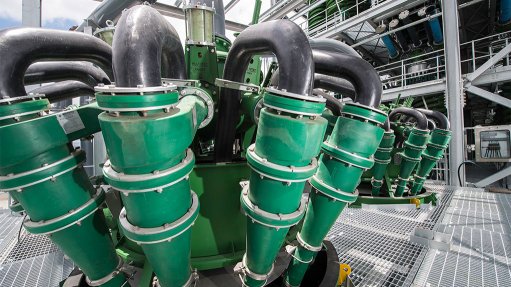
Multotec, recognised industry leaders in metallurgy and process engineering help mining houses across the world process minerals more efficiently,...
VISIT SHOWROOM



Announcements
What's On
Subscribe to improve your user experience...
Option 1 (equivalent of R125 a month):
Receive a weekly copy of Creamer Media's Engineering News & Mining Weekly magazine
(print copy for those in South Africa and e-magazine for those outside of South Africa)
Receive daily email newsletters
Access to full search results
Access archive of magazine back copies
Access to Projects in Progress
Access to ONE Research Report of your choice in PDF format
Option 2 (equivalent of R375 a month):
All benefits from Option 1
PLUS
Access to Creamer Media's Research Channel Africa for ALL Research Reports, in PDF format, on various industrial and mining sectors
including Electricity; Water; Energy Transition; Hydrogen; Roads, Rail and Ports; Coal; Gold; Platinum; Battery Metals; etc.
Already a subscriber?
Forgotten your password?
Receive weekly copy of Creamer Media's Engineering News & Mining Weekly magazine (print copy for those in South Africa and e-magazine for those outside of South Africa)
➕
Recieve daily email newsletters
➕
Access to full search results
➕
Access archive of magazine back copies
➕
Access to Projects in Progress
➕
Access to ONE Research Report of your choice in PDF format
RESEARCH CHANNEL AFRICA
R4500 (equivalent of R375 a month)
SUBSCRIBEAll benefits from Option 1
➕
Access to Creamer Media's Research Channel Africa for ALL Research Reports on various industrial and mining sectors, in PDF format, including on:
Electricity
➕
Water
➕
Energy Transition
➕
Hydrogen
➕
Roads, Rail and Ports
➕
Coal
➕
Gold
➕
Platinum
➕
Battery Metals
➕
etc.
Receive all benefits from Option 1 or Option 2 delivered to numerous people at your company
➕
Multiple User names and Passwords for simultaneous log-ins
➕
Intranet integration access to all in your organisation