



Mining fatalities and occupational diseases declining, but more should be done – DMRE

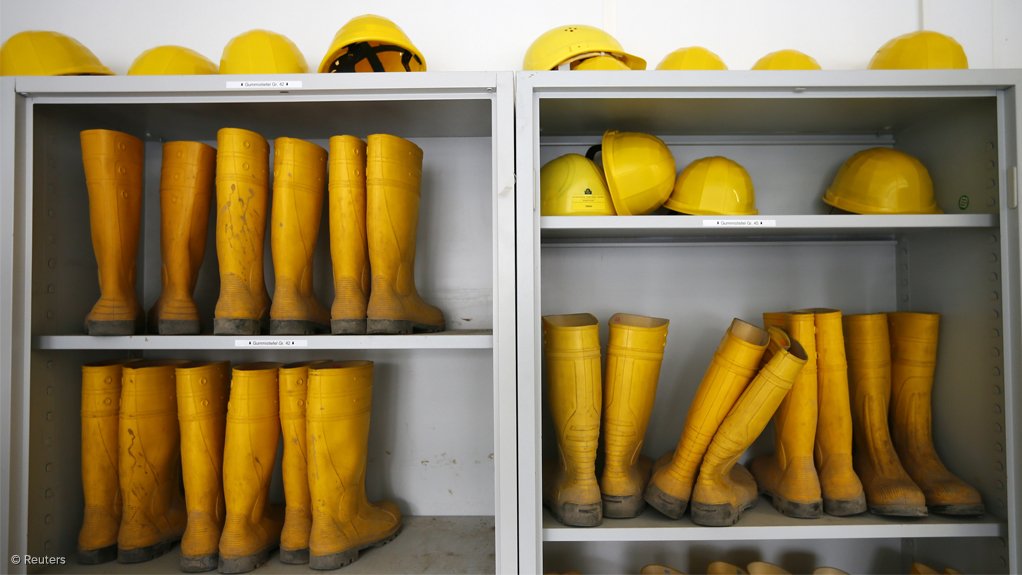


Although the mining industry has made strides have been made in reducing mine fatalities, occupational diseases and industry disasters, there is still work to be done in the industry’s quest for zero harm, speakers at the Anglo American Tripartite Health and Safety Initiative said last week.
With the industry continuing its pursuit of zero harm, and having to contend with issues relating to the environment, health, wellness and social impact, this year’s summit was aimed at maintaining and strengthening collaborative relationships and ensuring that the respective visions of stakeholder representatives remained closely aligned.
Department of Mineral Resources and Energy (DMRE) director-general Advocate Thabo Mokoena noted that the mining industry faced political and economic headwinds, such as the trade war between the US and China, which adversely affected South Africa’s economy and impacted on mining costs.
He noted that the department was calling for the cost of energy to be lowered, as it increased the cost of doing business in the extractive industries considerably.
Despite the challenges faced by the industry, he noted positives such as the publication of the Integrated Resources Plan, which proposed a plan for investment in power generation in the country. This proposal should help to lower the cost of doing business in the country.
Mokoena also paid tribute to the Tripartite, noting that, since its launch in 2008, it had successfully demonstrated that significant results could be achieved through collaboration between various stakeholders in the mining industry.
The policy of zero harm, which had contributed to a significant decrease in fatalities at mines, was one such example.
Moreover, Mokoena noted that the collaborative approach of the summit aligned to the ideals of the Mine Health and Safety Act.
Mokoena said the department was concerned about the continued loss of lives in the mining sector. He said that, while there were challenges in the industry, there had been an improvement over time in reducing the number of fatalities, but emphasised that there was room for further improvement in this regard.
He said the lowest number of fatalities, at 73, had been recorded in 2016. This, however, increased to 90 fatalities, mainly in the gold sector, the following year.
However, a turnaround is being seen, with 81 fatalities reported for 2018, a 10% reduction year-on-year, he noted.
Mokoena said that, while modest strides had been made in recent years in terms of safety, it was unacceptable that the industry continued to report high numbers of occupational diseases, such as tuberculosis.
While there was a reduction year-on-year in 2018, the number is still very high – upwards of 3 000. Mokoena added that this was despite advances in technology in the sector, such as in lifting practices, as well as considerable research that had been undertaken in the industry.
He noted that inspectors from the DMRE would soon be visiting mines to ensure they were complying with the Act.
Also speaking at the event was DMRE chief inspector of mines David Msiza, who lamented 2018’s high level of fatalities, and indicated that the Tripartite was one of the initiatives that could help overcome this challenge.
He outlined a number of priority areas that the DMRE would pursue to help improve safety, including the implementation of the Occupational Health and Safety (OHS) Tripartite Summit Milestones; continued partnerships and support for stakeholder initiatives to enhance OHS; and leadership engagements.
De Beers head of health Dr Tshepo Sedibe also touched on some objectives that would be pursued going forward. These included, but were not limited to, focusing on mental health and tackling the stigma around it, as well as engaging with communities regarding this matter. Gender-based violence, which required a collaborative approach, would also receive attention.
The Tripartite Alliance
The Tripartite is a multistakeholder partnership established in 2008 to address the shared challenge of improving health and safety in Anglo American and the industry at large.
The initiative was founded on the principle of relationship building, and as a platform for constructive engagement between a diverse group of stakeholders.
Pivotal to the success of the collaboration was the transparent relationship that all stakeholders had developed. Throughout the years, the Tripartite had operated with a high level of trust between organised labour, government and industry.
Article Enquiry
Email Article
Save Article
Feedback
To advertise email advertising@creamermedia.co.za or click here
Research Reports

Projects


Latest Multimedia


Latest News

Showroom

The Steel Tube Export Association of South Africa was established to develop sustainable, internationally competitive carbon steel tube and pipe...
VISIT SHOWROOM
Rentech provides renewable energy products and services to the local and selected African markets. Supplying inverters, lithium and lead-acid...
VISIT SHOWROOM



Press Office
Announcements
What's On
Subscribe to improve your user experience...
Option 1 (equivalent of R125 a month):
Receive a weekly copy of Creamer Media's Engineering News & Mining Weekly magazine
(print copy for those in South Africa and e-magazine for those outside of South Africa)
Receive daily email newsletters
Access to full search results
Access archive of magazine back copies
Access to Projects in Progress
Access to ONE Research Report of your choice in PDF format
Option 2 (equivalent of R375 a month):
All benefits from Option 1
PLUS
Access to Creamer Media's Research Channel Africa for ALL Research Reports, in PDF format, on various industrial and mining sectors
including Electricity; Water; Energy Transition; Hydrogen; Roads, Rail and Ports; Coal; Gold; Platinum; Battery Metals; etc.
Already a subscriber?
Forgotten your password?
Receive weekly copy of Creamer Media's Engineering News & Mining Weekly magazine (print copy for those in South Africa and e-magazine for those outside of South Africa)
➕
Recieve daily email newsletters
➕
Access to full search results
➕
Access archive of magazine back copies
➕
Access to Projects in Progress
➕
Access to ONE Research Report of your choice in PDF format
RESEARCH CHANNEL AFRICA
R4500 (equivalent of R375 a month)
SUBSCRIBEAll benefits from Option 1
➕
Access to Creamer Media's Research Channel Africa for ALL Research Reports on various industrial and mining sectors, in PDF format, including on:
Electricity
➕
Water
➕
Energy Transition
➕
Hydrogen
➕
Roads, Rail and Ports
➕
Coal
➕
Gold
➕
Platinum
➕
Battery Metals
➕
etc.
Receive all benefits from Option 1 or Option 2 delivered to numerous people at your company
➕
Multiple User names and Passwords for simultaneous log-ins
➕
Intranet integration access to all in your organisation
