Strengthening South Africa’s water sector starts with stabilising its infrastructure

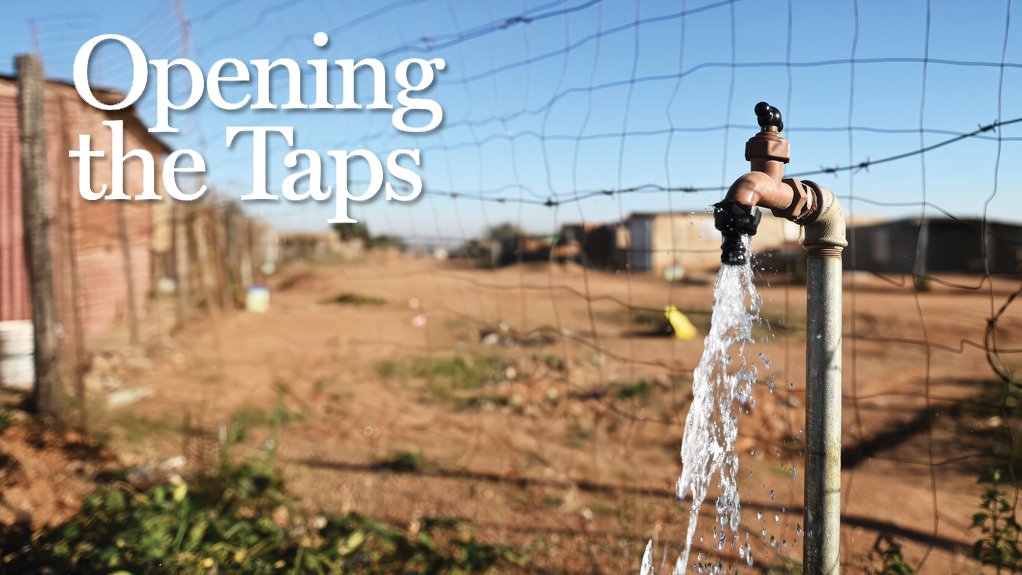



As South Africa’s water sector continues to deteriorate, strengthening asset management, infrastructure maintenance and institutional reform will be critical, while tackling high levels of nonrevenue water faced by many municipalities will go a long way towards ensuring the country’s water security.
Maintenance of municipal water and sanitation infrastructure has been neglected across many municipalities for decades, leaving a “huge” backlog of repairs and refurbishment.
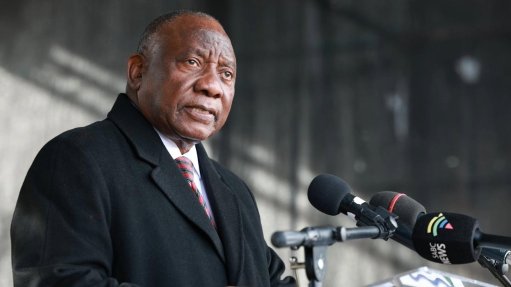
“The situation has been exacerbated by a lack of capacity, organised crime, widespread theft of water infrastructure, corruption, poor billing and revenue management, illegal connections and water leaks,” President Cyril Ramaphosa said in response to a question in Parliament earlier this month.
Thus, resolving South Africa’s water crisis requires a multifaceted approach focused on strengthening the capacity of water service authorities to manage resources, reduce demand and maintain critical systems effectively.
Currently, more than 70% of South Africa’s 144 water service providers and municipalities are struggling to provide basic water services, while deteriorating infrastructure – and the excessive water losses it causes – is exacerbating the situation.
Simply plugging leaks could add a million litres of water a day back into the system, says Rand Water operations GM Simon Xaba.
Highlighting the current strain on the Integrated Vaal River System, from which Rand Water abstracts raw water to supply municipalities across Gauteng and parts of the North West, Mpumalanga and the Free State, he noted that the utility currently abstracts 17% above its licensed allocation to meet rising demand – including physical losses within municipal networks.
Xaba, who spoke during a high-level discussion hosted by Creamer Media Webinars on March 11, said average nonrevenue water levels across municipalities in Gauteng were about 40%, with real or physical losses – primarily from leaks – accounting for roughly 25%.
If municipalities could reduce those physical losses by just 10%, the water saved would amount to roughly 400-megalitres a day, easing supply pressures across the province.
University of the Witwatersrand’s Wits: H2O director and founder Professor Craig Sheridan pointed out that the City of Johannesburg, for example, had nonrevenue water of about 36%, representing lost revenue that is roughly the same, over ten years, as the capital required to repair the infrastructure.
Rand Water has kept its own water losses comparatively low by applying strict asset management practices. The utility reports nonrevenue water of about 6%, against its 5% target, while its real losses have been reduced to 2%.
Xaba said the organisation’s approach is rooted in lifecycle asset management principles.
“It is not a nice-to-have. It is a principle that we adopt, which governs the asset management from cradle to grave,” he said, noting that, through continuous condition assessments and preventative maintenance, Rand Water monitors infrastructure performance and addresses problems before they escalate into major failures.
The utility also conducts planned maintenance programmes to ensure its infrastructure can continue to meet demand over the long term.
Committed to assisting municipalities with their water challenges, Rand Water has revived its technical support arm, Rand Water Services, which will work with municipalities through special-purpose vehicles focused on infrastructure planning and management.
Xaba further pointed to the Rand Water Institute, with which municipalities can collaborate for the best technologies and innovations.
Such initiatives could significantly assist municipalities in improving infrastructure planning and management, while reducing water losses.
“Maintenance is not an event. It is an ongoing process,” said Pragma chief revenue officer Bani Kgosana, noting that there should never be a point at which maintenance is neglected.
Department of Water and Sanitation (DWS) director-general Dr Sean Phillips agreed, pointing out that, while infrastructure ages all over the world, services do not deteriorate all over the world.
“The underlying problem is a lack of lifecycle asset management in municipalities and proper funding of lifecycle asset management plans.”
Phillips added that various technologies are available to detect leaks in the system in real time and enable proactive maintenance.
However, some municipalities lack even the basic capacity to repair leaks once they are identified.
“There is a risk that municipalities might waste money on sophisticated leak detection technologies; however, getting that data on where all the leaks are does not really help if you have not got the ability to go out to fix the leaks in the first place.”
Maintenance and operation of municipal infrastructure should be funded through revenue from the sale of water, yet many municipalities are not allocating – or ring- fencing – the required budgets back into the water function.
“It is supposed to be run as a financially self-sustaining function.”
Municipalities globally spend far less on infrastructure upkeep than is required and need about 17 times more funding for maintenance than they currently allocate, said Kgosana, highlighting insufficient funding as one of the biggest obstacles to maintaining water infrastructure.
However, he pointed out that effective asset management is also essential for attracting investment.
Phillips noted that many projects, including water reuse, nonrevenue water reduction and sea water desalination, have associated revenue streams, meaning partnerships with the private sector could help bring such projects to life.
Strengthening Legislation
The DWS is working to strengthen the policy and legislative environment to help guide the water sector back to efficiency and further support municipalities.
This includes amending the Water Services Bill to clarify the functions of water services authorities and water service providers, introducing an operating licence for water service providers, and guiding the sector towards a utilities model that would ringfence water revenue.
Phillips noted that, despite municipal water distribution being one of the biggest challenges in South Africa’s water sector, national government cannot legally intervene in the functions of municipalities.
Amending the Water Services Bill will enable stronger intervention where a water service provider fails to comply with its licence conditions.
Performance against targets could also be incorporated into national infrastructure grants to municipalities. The National Treasury already does this with the Metropolitan Trading Services Reform programme.
The amended legislation could open the water sector to increased public-private partnerships (PPPs).
However, while PPPs may appear increasingly attractive as a solution to municipal capacity constraints, caution will be required and full transparency will be essential.
WaterCAN executive manager Dr Ferrial Adam warned that commoditising water and privatisation are not the solution in a country with high levels of inequality.
The private sector has a significant and critical role to play, provided the correct safeguards, including protections against corruption and procurement abuse, are in place to ensure improved services alongside the right of access to clean, safe drinking water and sanitation, she said.
“Any partnerships must be very carefully designed.”
She added that more creative approaches were needed to address South Africa’s water and sanitation challenges.
In seeking solutions to problems that have developed over 30 years, she warned that the same type of thinking and institutional structures that led to the deterioration cannot be used to reverse the damage.
There is no quick fix, she concluded.
Article Enquiry
Email Article
Save Article
Feedback
To advertise email advertising@creamermedia.co.za or click here
Research Reports

Projects

Latest Multimedia

Latest News
Showroom

The Steel Tube Export Association of South Africa was established to develop sustainable, internationally competitive carbon steel tube and pipe...
VISIT SHOWROOM
ROSOND provides fast, efficient, safe, and cost-effective drilling and grouting services to mining and exploration industries throughout Africa.
VISIT SHOWROOM

Press Office
Announcements
What's On
Subscribe to improve your user experience...
Option 1 (equivalent of R125 a month):
Receive a weekly copy of Creamer Media's Engineering News & Mining Weekly magazine
(print copy for those in South Africa and e-magazine for those outside of South Africa)
Receive daily email newsletters
Access to full search results
Access archive of magazine back copies
Access to Projects in Progress
Access to ONE Research Report of your choice in PDF format
Option 2 (equivalent of R375 a month):
All benefits from Option 1
PLUS
Access to Creamer Media's Research Channel Africa for ALL Research Reports, in PDF format, on various industrial and mining sectors
including Electricity; Water; Energy Transition; Hydrogen; Roads, Rail and Ports; Coal; Gold; Platinum; Battery Metals; etc.
Already a subscriber?
Forgotten your password?
Receive weekly copy of Creamer Media's Engineering News & Mining Weekly magazine (print copy for those in South Africa and e-magazine for those outside of South Africa)
➕
Recieve daily email newsletters
➕
Access to full search results
➕
Access archive of magazine back copies
➕
Access to Projects in Progress
➕
Access to ONE Research Report of your choice in PDF format
RESEARCH CHANNEL AFRICA
R4500 (equivalent of R375 a month)
SUBSCRIBEAll benefits from Option 1
➕
Access to Creamer Media's Research Channel Africa for ALL Research Reports on various industrial and mining sectors, in PDF format, including on:
Electricity
➕
Water
➕
Energy Transition
➕
Hydrogen
➕
Roads, Rail and Ports
➕
Coal
➕
Gold
➕
Platinum
➕
Battery Metals
➕
etc.
Receive all benefits from Option 1 or Option 2 delivered to numerous people at your company
➕
Multiple User names and Passwords for simultaneous log-ins
➕
Intranet integration access to all in your organisation