



Stellenbosch University vindicated by court ruling on pandemic language policy

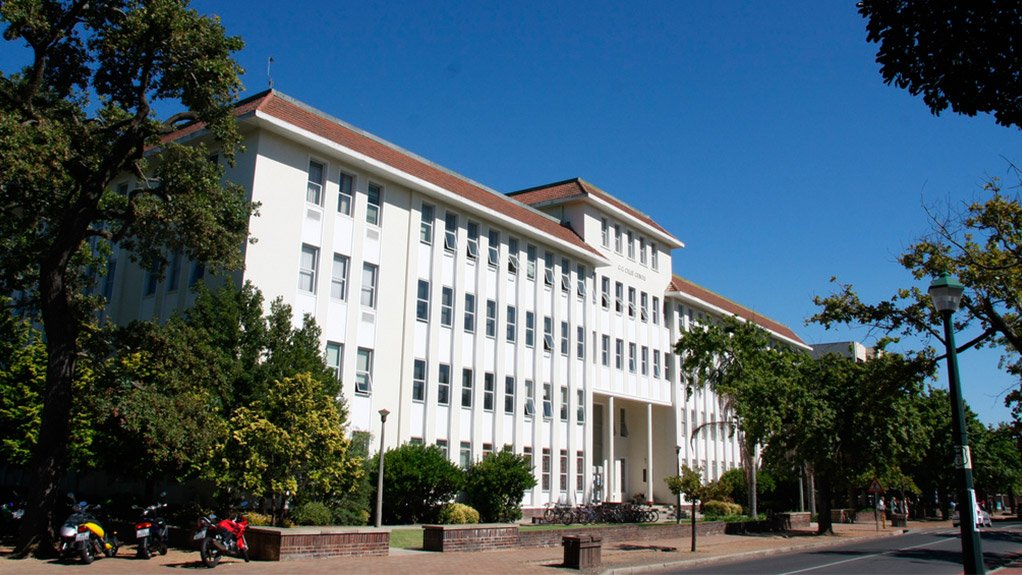


Stellenbosch University (SU) has welcomed a Western Cape High Court judgment which declared that the university did not violate its language policy.
The Western Cape High Court dismissed an application by the Democratic Alliance (DA) and the university's student organisation StudentePlein (SP) to have the changes in the language implementation plans in the four semesters of 2020 and 2021 declared unconstitutional, unlawful, and in violation of the policy.
The DA and SP accused the university of using the Covid-19 pandemic as an excuse to do away with providing learning material in Afrikaans during this period. They also argued that students were not sufficiently involved in the process of introducing these adjustments in the policy.
In papers filed at the High Court in October last year, they argued that the university violated its 2016 language policy by making learning material available only in English, and not Afrikaans.
"The ruling… confirms SU's ongoing point of view that there was no deviation from the Language Policy, but rather consulted and approved changes to certain language arrangements of certain faculties. SU's Language Policy made full provision for this," said Professor Deresh Ramjugernath, deputy vice-chancellor of learning and teaching.
News24 reported that the university's senate had accepted a recommendation from its academic planning committee (APC) that lectures provide new learning material in English only and not in Afrikaans, as its policy required.
The recommendation was in response to demands for converting learning material to English and Afrikaans to accommodate online teaching and learning during the pandemic.
The senate said old learning material in the language would be made available to students requiring it.
In its court papers, the DA and SP argued that the "deviation from Afrikaans" was imposed on university faculties by the APC, which influenced the senate to approve it.
They argued that this violated the policy, which stipulated that faculties should make changes and that it should not be "imposed" by the senate.
In its judgment, the court said that although promoting multilingualism was among the core pillars of the policy, it made provisions for changes under unprecedented circumstances like the pandemic.
The court stated that before the government introduced the hard lockdown in March 2020, faculties had – in 2019 – made submissions for the 2020 academic year.
These plans were, however, scrapped when universities had to introduce alternatives to adhere to the regulations.
The court ruled that these changes, including in the language policy, were detailed in the university's documents on its plan for the pandemic.
"The documents also stated that faculties' planning was likely to include changes in module outcomes, assessment schemes, and language policy implementation to adapt the academic offering to what was reasonably practicable in light of the then-Covid-19 measures," the ruling stated.
The ruling also detailed other changes implemented by the university to ensure adherence to the government-imposed regulations. These included shortening holidays, evacuating students from campus, and facilitating effective online teaching and learning.
The ruling also cited a February 2021 communiqué sent to students by the university, in which it said online learning would continue despite the relaxation of some regulations.
It indicated that changes in the language policy would continue.
The court ruled that SP failed to indicate in its argument that students who preferred to learn in Afrikaans could understand English, which meant there was no violation of their constitutional right to an education.
It also found that the university sufficiently informed students of the changes in the policy and that these were not "imposed" on faculties.
The court ruled, "I am persuaded that its explanation of involvement of faculties, some level of student representation in that involvement, and the decision-making process itself substantially followed the purpose of giving meaningful content to changes to language arrangements falling outside the regular review process. It is my finding that the Senate and its committees did not violate the policy as alleged..."
The judgment further serves as confirmation "that the University acted in good faith" during the Covid-19 pandemic when various sectors, including universities, had to very quickly find new ways of working and implement emergency measures.
"The challenge and impact of pivoting all courses online within a short period of time in March 2020 cannot be emphasised enough. Because a large volume of additional online material had to be developed with the almost immediate and complete move from residential to online teaching in the midst of a national lockdown, the workload put extraordinary pressure on lecturers," said Ramjugernath.
"It would have been almost impossible to expect of lecturers to offer all new learning material in both English and Afrikaans in the relevant circumstances," Ramjugernath added.
Where learning material existed in Afrikaans, it was still provided to students, and new learning materials were also made available in Afrikaans or translated to Afrikaans. Assessments were also available in Afrikaans and English, said Ramjugernath.
Article Enquiry
Email Article
Save Article
Feedback
To advertise email advertising@creamermedia.co.za or click here
Research Reports

Projects


Latest Multimedia


Latest News


Showroom

Multotec, recognised industry leaders in metallurgy and process engineering help mining houses across the world process minerals more efficiently,...
VISIT SHOWROOM
Goodwin Submersible Pumps Africa is sole distributors for Goodwin electrically driven, submersible, abrasion resistance slurry pumps.
VISIT SHOWROOM



Press Office
Announcements
What's On
Subscribe to improve your user experience...
Option 1 (equivalent of R125 a month):
Receive a weekly copy of Creamer Media's Engineering News & Mining Weekly magazine
(print copy for those in South Africa and e-magazine for those outside of South Africa)
Receive daily email newsletters
Access to full search results
Access archive of magazine back copies
Access to Projects in Progress
Access to ONE Research Report of your choice in PDF format
Option 2 (equivalent of R375 a month):
All benefits from Option 1
PLUS
Access to Creamer Media's Research Channel Africa for ALL Research Reports, in PDF format, on various industrial and mining sectors
including Electricity; Water; Energy Transition; Hydrogen; Roads, Rail and Ports; Coal; Gold; Platinum; Battery Metals; etc.
Already a subscriber?
Forgotten your password?
Receive weekly copy of Creamer Media's Engineering News & Mining Weekly magazine (print copy for those in South Africa and e-magazine for those outside of South Africa)
➕
Recieve daily email newsletters
➕
Access to full search results
➕
Access archive of magazine back copies
➕
Access to Projects in Progress
➕
Access to ONE Research Report of your choice in PDF format
RESEARCH CHANNEL AFRICA
R4500 (equivalent of R375 a month)
SUBSCRIBEAll benefits from Option 1
➕
Access to Creamer Media's Research Channel Africa for ALL Research Reports on various industrial and mining sectors, in PDF format, including on:
Electricity
➕
Water
➕
Energy Transition
➕
Hydrogen
➕
Roads, Rail and Ports
➕
Coal
➕
Gold
➕
Platinum
➕
Battery Metals
➕
etc.
Receive all benefits from Option 1 or Option 2 delivered to numerous people at your company
➕
Multiple User names and Passwords for simultaneous log-ins
➕
Intranet integration access to all in your organisation
