Steel shortage, tariffs drive up costs

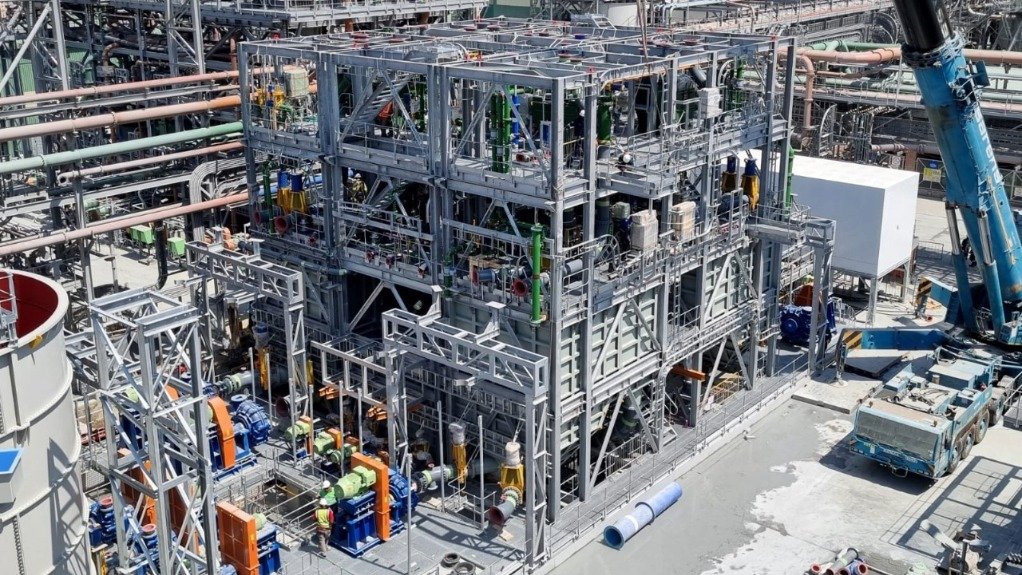
DISRUPTIVE EFFECTS Steel supply chain disruptions come amid an uptick in project demand


The gap in local supply of lighter long steel products, following the closure of steel producer ArcelorMittal South Africa’s Newcastle Works in November last year, compounded by tariffs, has significantly affected infrastructure projects and the steel value chain, says industry association Southern African Institute of Steel Construction (SAISC) CEO Amanuel Gebremeskel.
Several infrastructure project categories have been affected by the steel shortage, including transmission lines, renewable- energy installations, logistics infrastructure, municipal services and commercial developments.
“The disruption of our supply chain is coming at an unfortunate time, coinciding with a meaningful uptick in project demand, so we have to work hard to see how we can overcome these challenges,” Gebremeskel says.
While new suppliers, including a scrap-based producer, are expected to start operating this year, the interim shortage of light long steel products will continue to affect the steel industry.
Compounding this shortage is the International Trade Administration Commission of South Africa’s (Itac’s) introducing anti-dumping tariffs on long products that are no longer locally produced.
While a precise percentage increase is difficult to quantify, Gebremeskel says tariff rates on many products have risen to the legally permissible 15% maximum import tariff rate alongside additional safeguard duties. Further, reduced local supply following Newcastle’s closure and longer lead times on imports have pushed steel input costs upward across the board.
“Itac’s investigations take very long, so it’s hard for them to keep aligned with the dynamic nature of our industry,” he adds.
Consequently, SAISC is leading an initiative of industry associations in seeking temporary waivers – anticipated to last for six months – to bridge the period until new mills are operational. It is also encouraging Itac to consider numerous factors when determining availability.
Gebremeskel notes that Itac has acknowledged two out of the three dimensions of availability put forward by SAISC, specifically whether steel is available and whether it can be delivered in time.
SAISC is advocating for quality to be recognised as the third dimension. Gebremeskel elaborates that the downstream industry is significant, with fabricators and related entities accounting for over 90% of industry employment, compared with 5% to 10% employed by mills that benefit directly from tariff protection.
He adds that imports are unavoidable in the near term, given the absence of smaller mills and the scale of current project demand, adding that import dependency will likely extend to years, as the product diversity previously offered by Newcastle cannot be readily replicated.
Further, even when new mills reach capacity and demonstrate acceptable quality, some product lines and profiles will continue to require importation.
Article Enquiry
Email Article
Save Article
Feedback
To advertise email advertising@creamermedia.co.za or click here
Research Reports
Projects


Latest Multimedia

Latest News

Showroom

Rentech provides renewable energy products and services to the local and selected African markets. Supplying inverters, lithium and lead-acid...
VISIT SHOWROOM
The Beneficiation Academy is a certified training institution that follows all compliance legislation and is accredited with various Sector...
VISIT SHOWROOM



Press Office
Announcements
What's On
Subscribe to improve your user experience...
Option 1 (equivalent of R125 a month):
Receive a weekly copy of Creamer Media's Engineering News & Mining Weekly magazine
(print copy for those in South Africa and e-magazine for those outside of South Africa)
Receive daily email newsletters
Access to full search results
Access archive of magazine back copies
Access to Projects in Progress
Access to ONE Research Report of your choice in PDF format
Option 2 (equivalent of R375 a month):
All benefits from Option 1
PLUS
Access to Creamer Media's Research Channel Africa for ALL Research Reports, in PDF format, on various industrial and mining sectors
including Electricity; Water; Energy Transition; Hydrogen; Roads, Rail and Ports; Coal; Gold; Platinum; Battery Metals; etc.
Already a subscriber?
Forgotten your password?
Receive weekly copy of Creamer Media's Engineering News & Mining Weekly magazine (print copy for those in South Africa and e-magazine for those outside of South Africa)
➕
Recieve daily email newsletters
➕
Access to full search results
➕
Access archive of magazine back copies
➕
Access to Projects in Progress
➕
Access to ONE Research Report of your choice in PDF format
RESEARCH CHANNEL AFRICA
R4500 (equivalent of R375 a month)
SUBSCRIBEAll benefits from Option 1
➕
Access to Creamer Media's Research Channel Africa for ALL Research Reports on various industrial and mining sectors, in PDF format, including on:
Electricity
➕
Water
➕
Energy Transition
➕
Hydrogen
➕
Roads, Rail and Ports
➕
Coal
➕
Gold
➕
Platinum
➕
Battery Metals
➕
etc.
Receive all benefits from Option 1 or Option 2 delivered to numerous people at your company
➕
Multiple User names and Passwords for simultaneous log-ins
➕
Intranet integration access to all in your organisation