



South Africa's growth to remain below 2% until electricity supply constraints ease


Financial services firm Nedbank expects South Africa's economic growth to remain below 2% over the next two to three years until more power generation comes online.
Additional power generation capacity would result in greater energy certainty and provide an incentive for more investment in the country.
Owing to the duration and intensity of loadshedding this year, Nedbank has had to revise its growth expectations for this year downward to 1.5% from its previous estimate of 1.8%.
Further, the company's research team warns that the electricity constraints could persist and potentially intensify during 2023, which means it has also revised its expected growth rate for 2023 down by 20 basis points, Nedbank senior research analyst Reezwana Sumad said during a macroeconomic outlook briefing on November 3.
"We have been talking to large mining companies that are building their own power stations at energy-intensive mines and they say their generation will come online in about two years. This points to the country perhaps reaching breakeven in terms of electricity supply in 2025, or possibly sooner if more private producers come on board," she noted.
"However, a potential US recession in early 2023 is a key risk to our growth forecast. Should this materialise, financial conditions are expected to tighten, the rand should weaken and commodity prices will come under pressure," she added.
Meanwhile, the Nedbank economics team expects 6.7% inflation this year, with it having peaked in July 2022, and 5.8% inflation in 2023. Oil remains a key upside risk to consumer price inflation, Sumad said.
Further, Nedbank has revised upwards, by 100 basis points, its expectations for the repo rate to a peak of 7.75%, based on the South African Reserve Bank Monetary Policy Committee's view that it is concerned about falling behind the pace of hikes by the US Federal Reserve (Fed) and other central banks.
"The Fed has about 140 basis points of hikes in its roadmap, and we have a further 150 basis points in our [South African] repo rate view. We expect the repo rate to rise by 75 basis points this month, a further 50 basis points in January and 25 basis points in March to bring the repo rate to 7.75%.
"We are unlikely to see cuts in South Africa over the medium term owing to inflation risks, given that core inflation and service inflation are rising, and inflation expectations do not show any evidence of starting to fall. For now, we expect a base repo rate of 7% to 2024," Sumad noted.
Meanwhile, a significant concern for South Africa's macroeconomic outlook was its expenditure framework. The Medium-Term Budget Policy Statement (MTBPS) revised expenditure up, but not by the same margin as Nedbank expects, she said.
"There are several reasons we think that expenditure will overshoot revenue, one of which is the wage bill inflation that will increase by 3.3% a year over three years. Treasury has a 0.9% increase in the wage bill, but it will be difficult for unions to take a 0.9% increase.
"A second aspect with regard to spending is that the basic income grant (BIG). Treasury has said it has not made any assumption for a permanent BIG, but it is unlikely to end in March 2024 when there will be elections a few months later," Sumad highlighted.
A third reason that expenditure may overshoot revenue by more than expected is the unknown about State-owned utility Eskom's debt and how it will impact on Treasury's and government's debt service costs, and that there may be further bailouts of State-owned enterprises, she added.
"These are materials expenditure risks that can result in higher deficits and debt than the MTBPS projected," she said.
South Africa's cumulative revenue undershoot from 1997 to 2021 amounted to R141-billion. The country's cumulative expenditure overshoot over the same period amounted to R121-billion.
Government spending is asymmetric to revenue. During periods of large revenue undershoots, spending is not revised down in tandem. This resulted in the debt-to-GDP ratio rising from 27% in 2008/09 to 70% in 2021/22, Sumad highlighted.
"Revenue growth is already starting to slow. While we expect a R280-billion revenue overshoot over the Medium-Term Expenditure Framework (MTEF), the risk to this estimate is squarely to the downside.
"Over the MTEF from 2024 to 2025, we expect at least another R362-billion expenditure overshoot, driven by a higher wage bill, a permanent BIG and State-owned enterprise contingent liabilities settling into the fiscus. The risk to expenditure estimates is to the upside," she said.
An additional risk factor for gross domestic product (GDP) growth is the pace of the global economic slowdown, which will definitely impact trade. Current and trade surpluses have propped up GDP over the past few years, but this has started to unwind from April, she said.
"Global inflation also presents a risk to local inflation and any unexpected increases in inflation in trading partners will serve as an impulse on local inflation, albeit with a lag of up to six months. Global inflation expectations have also been raised by many finance institutions.
"We are also seeing for the first time in many decades a situation where we have synchronised global stagflation. If global inflation remains elevated or rises, there is a good chance we will see higher local inflation," Sumad highlighted.
Article Enquiry
Email Article
Save Article
Feedback
To advertise email advertising@creamermedia.co.za or click here
Research Reports

Projects

Latest Multimedia
Latest News

Showroom

Industrial Nozzles & Systems (Pty) Ltd (Est. 2000) exclusive representative in Southern Africa for LECHLER GmbH (Est. 1879) - Europe's leading...
VISIT SHOWROOM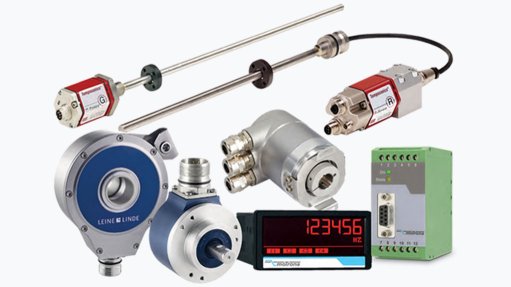
ATI systems comprises five divisions: electrical assemblies, drives and controls, feedback sensors, enclosures, and strip guiding.
VISIT SHOWROOM


Announcements
What's On
Subscribe to improve your user experience...
Option 1 (equivalent of R125 a month):
Receive a weekly copy of Creamer Media's Engineering News & Mining Weekly magazine
(print copy for those in South Africa and e-magazine for those outside of South Africa)
Receive daily email newsletters
Access to full search results
Access archive of magazine back copies
Access to Projects in Progress
Access to ONE Research Report of your choice in PDF format
Option 2 (equivalent of R375 a month):
All benefits from Option 1
PLUS
Access to Creamer Media's Research Channel Africa for ALL Research Reports, in PDF format, on various industrial and mining sectors
including Electricity; Water; Energy Transition; Hydrogen; Roads, Rail and Ports; Coal; Gold; Platinum; Battery Metals; etc.
Already a subscriber?
Forgotten your password?
Receive weekly copy of Creamer Media's Engineering News & Mining Weekly magazine (print copy for those in South Africa and e-magazine for those outside of South Africa)
➕
Recieve daily email newsletters
➕
Access to full search results
➕
Access archive of magazine back copies
➕
Access to Projects in Progress
➕
Access to ONE Research Report of your choice in PDF format
RESEARCH CHANNEL AFRICA
R4500 (equivalent of R375 a month)
SUBSCRIBEAll benefits from Option 1
➕
Access to Creamer Media's Research Channel Africa for ALL Research Reports on various industrial and mining sectors, in PDF format, including on:
Electricity
➕
Water
➕
Energy Transition
➕
Hydrogen
➕
Roads, Rail and Ports
➕
Coal
➕
Gold
➕
Platinum
➕
Battery Metals
➕
etc.
Receive all benefits from Option 1 or Option 2 delivered to numerous people at your company
➕
Multiple User names and Passwords for simultaneous log-ins
➕
Intranet integration access to all in your organisation
