



Smart Water Meter Technology


This article has been supplied.
We don’t count how many dry-cell batteries we use regularly in our lives: cell phones, gate remotes, TV remotes alarm systems, car security – to name a few. In Europe it is an offence to throw batteries into household dustbins, or waste tips as it constitutes a contravention of environmental protection legislation. This is not the case in South Africa yet!
It is anticipated that South Africa will initiate dry-cell battery disposal legislation in the near future to eliminate the danger of toxic leakage that thousands of batteries left in normal dumping areas will eventually emit. While most dry cell batteries have metallic casings, over time gas builds up inside the battery and eventually ruptures the casing resulting in leakage of the toxic contents such as acids, zinc chloride, mercury, lithium and other harmful chemicals into the soil and ultimately into the ground water.
All of the new advanced water metering devices such as prepaid meters, water management devices and smart meters incorporate batteries. However when a comparison is done between the batteries employed in prepaid water meters with those employed in smart meters there are significant differences: Because prepaid systems are required to operate a shut-off valve which is “energy hungry” the battery size is five to 10 times larger than those employed in the latest generation smart meters. Secondly, the claimed life of the battery in a prepaid meter seldom exceeds five to eight years whereas smart meters offer a battery life of up to 15 years or more. Assuming a municipality has 100,000 prepaid meters installed, this means that within five to eight years it will be faced with the disposal of the batteries. With the introduction of environmental controls this is an additional cost – not evident, or mentioned, in initial cost justification exercises. Equally as disturbing is the possibility that battery disposal remains unmonitored and uncontrolled resulting in thousands of “toxic time bombs” being planted in our waste dumps resulting in pollution of our ground water resources.
Basil Bold, Managing Director, Sensus SA commented “While the move to more advanced electronic water measurement and control devices for the better management of our water resources, the hidden costs of new electronic technologies should not be ignored. In the development of the iPerl, our latest smart water meter, Sensus paid particular attention to achieving an extended battery life (guaranteed 15 years, maintenance-free), but it was also necessary to build into the design the ability to remove the battery from the device for safe disposal. This is not the case with many battery-driven electronic devices where the battery is not accessible and the entire device is disposed of – battery and all!”
Article Enquiry
Email Article
Save Article
Feedback
To advertise email advertising@creamermedia.co.za or click here
Research Reports

Projects

Latest Multimedia
Latest News

Showroom
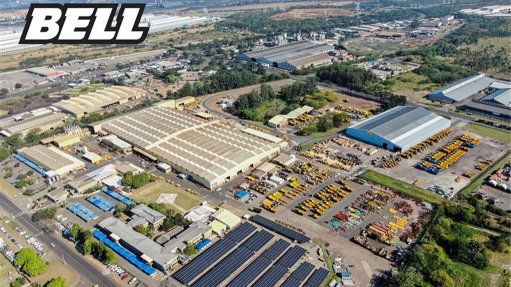
As one of South Africa's leading manufacturers, Bell Equipment distributes and exports its wide range of heavy equipment globally to mining,...
VISIT SHOWROOM
From batteries for boats and jet skis, to batteries for cars and quad bikes, SABAT Batteries has positioned itself as the lifestyle battery of...
VISIT SHOWROOM
Announcements
What's On
Subscribe to improve your user experience...
Option 1 (equivalent of R125 a month):
Receive a weekly copy of Creamer Media's Engineering News & Mining Weekly magazine
(print copy for those in South Africa and e-magazine for those outside of South Africa)
Receive daily email newsletters
Access to full search results
Access archive of magazine back copies
Access to Projects in Progress
Access to ONE Research Report of your choice in PDF format
Option 2 (equivalent of R375 a month):
All benefits from Option 1
PLUS
Access to Creamer Media's Research Channel Africa for ALL Research Reports, in PDF format, on various industrial and mining sectors
including Electricity; Water; Energy Transition; Hydrogen; Roads, Rail and Ports; Coal; Gold; Platinum; Battery Metals; etc.
Already a subscriber?
Forgotten your password?
Receive weekly copy of Creamer Media's Engineering News & Mining Weekly magazine (print copy for those in South Africa and e-magazine for those outside of South Africa)
➕
Recieve daily email newsletters
➕
Access to full search results
➕
Access archive of magazine back copies
➕
Access to Projects in Progress
➕
Access to ONE Research Report of your choice in PDF format
RESEARCH CHANNEL AFRICA
R4500 (equivalent of R375 a month)
SUBSCRIBEAll benefits from Option 1
➕
Access to Creamer Media's Research Channel Africa for ALL Research Reports on various industrial and mining sectors, in PDF format, including on:
Electricity
➕
Water
➕
Energy Transition
➕
Hydrogen
➕
Roads, Rail and Ports
➕
Coal
➕
Gold
➕
Platinum
➕
Battery Metals
➕
etc.
Receive all benefits from Option 1 or Option 2 delivered to numerous people at your company
➕
Multiple User names and Passwords for simultaneous log-ins
➕
Intranet integration access to all in your organisation
