SAETA urges timely finalisation of electricity market rules to unlock investment, competition





South Africa's electricity market reforms have reached a critical point, with the regulations now being finalised by the National Energy Regulator of South Africa (Nersa) set to determine whether the country succeeds in attracting the private investment needed to build a competitive, secure and affordable electricity market, states industry body the South African Energy Traders Association (SAETA).
As South Africa transitions from an electricity system dominated by State-owned Eskom to one with multiple market participants, including buyers, sellers and privately owned generators, Nersa is finalising the market code, which underpins the South African Wholesale Electricity Market (SAWEM), as well as the trading rules, which provide for specific trading arrangements within the evolving electricity market.
Together, SAETA says, these frameworks will determine how electricity is bought and sold, how market participants compete and whether investors have the regulatory certainty needed to commit capital to new generation and trading projects.
Crucially, over the medium to long term, the industry body says efficient market pricing signals must drive the cost of electricity down to allow South Africa to achieve its economic growth targets.
The draft market code, developed through a two-year consultation process led by the National Transmission Company South Africa, received broad support during a public hearing on July 1, the SAETA points out.
However, the association says several important issues still require resolution, including the location of the Market Surveillance Unit, the participation of municipalities in the wholesale market and their balance responsible obligations, and the treatment of curtailment.
Eskom, which made submissions during the consultation process, indicated that it may seek a judicial review if certain legal concerns are not addressed. The SAETA cautions that any delay to finalising the market code will have significant implications for the pace of reform, as the SAWEM cannot commence operations without it.
At the same time, Nersa has published for public consultation revised trading rules governing bilateral electricity trading outside the SAWEM.
The SAETA says bilateral trading has been instrumental in unlocking private generation investment to date, but the latest draft limits competition during the first two phases of market development.
The industry body argues that this will influence future investment decisions and slow the expansion of renewable-energy capacity, with implications for energy security and long-term affordability, particularly in light of South Africa’s planned coal decommissioning schedule, which sees about 8 GW of aging coal-fired generation asset capacity being taken offline.
Public comments on this crucial regulatory intervention close on July 27.
The SAETA says Nersa's indicative timelines show that both the market code and the trading rules are expected to be finalised during August.
They are two of the ten priority reforms identified in the SAETA ‘Policy to Power’ roadmap for creating a modern, competitive electricity market.
"South Africa does not need theoretical electricity market reform; it needs bankable reform. The trading rules and market code will determine whether private capital arrives at scale or waits on the sidelines.
“Traders are set to play a critical role in aggregating supply, improving market liquidity, managing intermittency and giving customers reliable, structured access to cleaner power. But that will only happen if the final rules are clear, neutral and investable," says independent power trading company Enpower Trading CEO James Beatty.
“The importance of the final regulations is underscored by the scale of private sector investment already unlocked by recent reforms. Since the licensing cap on private generation was removed, more than 18 GW of projects have been registered with Nersa.
“More than 8 GW of private renewable energy projects have already reached financial close or are under construction, broadly equivalent to the cumulative capacity procured through the Renewable Energy Independent Power Producer Procurement Programme since its launch in 2011,” adds independent power producer and licensed trader NOA co-founder and head of trading Andrew Taylor.
Enpower and NOA are members of the SAETA.
Article Enquiry
Email Article
Save Article
Feedback
To advertise email advertising@creamermedia.co.za or click here
Research Reports

Projects
Latest News
Showroom
ROSOND provides fast, efficient, safe, and cost-effective drilling and grouting services to mining and exploration industries throughout Africa.
VISIT SHOWROOM
We partner growth of our select clients through our comprehensive and competitive integrated international logistics, trade finance and information...
VISIT SHOWROOM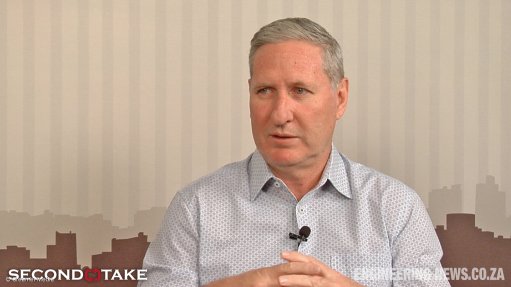
Press Office
Announcements
What's On
Subscribe to improve your user experience...
Option 1 (equivalent of R125 a month):
Receive a weekly copy of Creamer Media's Engineering News & Mining Weekly magazine
(print copy for those in South Africa and e-magazine for those outside of South Africa)
Receive daily email newsletters
Access to full search results
Access archive of magazine back copies
Access to Projects in Progress
Access to ONE Research Report of your choice in PDF format
Option 2 (equivalent of R375 a month):
All benefits from Option 1
PLUS
Access to Creamer Media's Research Channel Africa for ALL Research Reports, in PDF format, on various industrial and mining sectors
including Electricity; Water; Energy Transition; Hydrogen; Roads, Rail and Ports; Coal; Gold; Platinum; Battery Metals; etc.
Already a subscriber?
Forgotten your password?
Receive weekly copy of Creamer Media's Engineering News & Mining Weekly magazine (print copy for those in South Africa and e-magazine for those outside of South Africa)
➕
Recieve daily email newsletters
➕
Access to full search results
➕
Access archive of magazine back copies
➕
Access to Projects in Progress
➕
Access to ONE Research Report of your choice in PDF format
RESEARCH CHANNEL AFRICA
R4500 (equivalent of R375 a month)
SUBSCRIBEAll benefits from Option 1
➕
Access to Creamer Media's Research Channel Africa for ALL Research Reports on various industrial and mining sectors, in PDF format, including on:
Electricity
➕
Water
➕
Energy Transition
➕
Hydrogen
➕
Roads, Rail and Ports
➕
Coal
➕
Gold
➕
Platinum
➕
Battery Metals
➕
etc.
Receive all benefits from Option 1 or Option 2 delivered to numerous people at your company
➕
Multiple User names and Passwords for simultaneous log-ins
➕
Intranet integration access to all in your organisation