



SA needs labour deals linked to productivity, not inflation – Hart

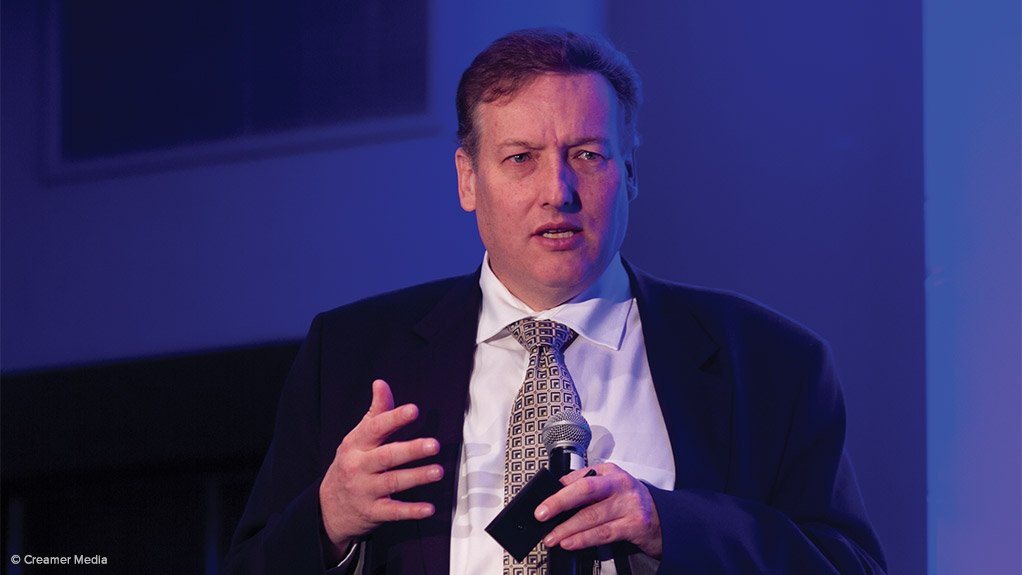



South Africa needed to pursue productivity-linked labour deals, and not inflation-linked settlements, said Investment Solutions chief strategist Chris Hart on Monday.
Speaking at a Ford Motor Company of Southern Africa (FMCSA) breakfast in Johannesburg, he said South Africa required a policy that would see labour mimic the behaviour of highly productive countries such as Germany of Japan, and not cheaper labour destinations, such as China and India.
He said Japan was retaining its manufacturing sector next to a cheaper labour source such as China, because productivity was increasing along with labour costs.
Hart said it was essential to allow the price of labour to rise in South Africa, but, in doing so, to also drive down labour unit costs by improving productivity among workers, as well as management.
He said labour prices in South Africa were not particularly high by global standards, as they were cheaper than in the US and Europe, but more expensive than in China and India.
“We must be careful to compare the price of labour with the value of labour.”
He regarded prolonged and continued labour action as a “serious threat” to South Africa.
In specific reference to the automotive industry, he said this sector of the local economy was “blessed” with dealing with “the worst union you can have”.
He regarded the leadership of the National Union of Metalworkers of South Africa (Numsa) as “archaic”, still fighting “the battle of the Cold War”.
“They are battling the system, not any company.”
Hart regarded South Africa’s automotive sector as successful, based on the fact that vehicle manufacturers remained in the country, despite events such as the recent seven-week strike in this industry.
“Our blessing is that our backyard is Africa.”
Hart said many African countries showed potential in growing their vehicle populations, with South African-made vehicles well positioned to gain market share on the continent.
“After being in the worst neighbourhood in the world, we are now in a growth region.
He warned, however, that none of the local sector’s production decisions were taken in South Africa, with Germany, Japan and the US deciding whether it remained prudent to assemble vehicles in South Africa.
Hart also had praise for the Department of Trade and Industry’s (DTI’s) support policies for the local automotive sector, but little for the department itself.
He said support policies were often used to compensate for the hindrances created by government, noting that it was important to first remove the hindrances to effective business.
Government often “ties your legs together, and then offers a wheelchair as an incentive”.
Hart also noted that few parliamentarians understood economics to the degree they should, with “the level of economic discourse in the country weak”.
Ponzi Scheme?
With developed countries’ debt levels rising exponentially, Hart said he was worried the international “system was becoming more Ponzi like”.
He said much of the debt created in developed countries were consumption-led debt, with the “money gone” while the debt still had to be serviced.
“When does it get too big to repay? And maybe it can be paid, but generations down the line will have to do it.”
Hart said investment-led debt is of a much better calibre, as “you have something to show for it”.
A Ponzi scheme was a fraudulent investment operation that paid returns to its investors from their own money, or money paid by a new round of investors, rather than from profit earned by the individual or organisation running the operation.
Operators of Ponzi schemes usually enticed new investors by offering higher returns than other investments.
The scheme was named after Charles Ponzi, who used the technique in the US in 1920.
Hart added that political elections were becoming like “auctions these days”, with governments promising more than their tax bases could deliver, which meant they had to keep on borrowing money to keep their promises.
“More debt is needed to sustain the system all the time. Governments keep on kicking the can down the road for the next set of politicians to solve the problem, as long as they get elected now.”
However, he warned that, at some point in time, “the books had to balance”, adding that no economy could exist without “making something”.
He regarded agriculture and manufacturing as essential for any other economic sector’s existence. However, he noted that these sectors were not the big winners in the current round of programmes to stimulate economic growth around the world, but rather the financial sector.
Article Enquiry
Email Article
Save Article
Feedback
To advertise email advertising@creamermedia.co.za or click here
Research Reports

Projects


Latest Multimedia


Latest News


Showroom
The Beneficiation Academy is a certified training institution that follows all compliance legislation and is accredited with various Sector...
VISIT SHOWROOM
The SAIMM started as a learned society in 1894 after the invention of the cyanide process that saved the South African gold mining industry of the...
VISIT SHOWROOM



Announcements
What's On
Subscribe to improve your user experience...
Option 1 (equivalent of R125 a month):
Receive a weekly copy of Creamer Media's Engineering News & Mining Weekly magazine
(print copy for those in South Africa and e-magazine for those outside of South Africa)
Receive daily email newsletters
Access to full search results
Access archive of magazine back copies
Access to Projects in Progress
Access to ONE Research Report of your choice in PDF format
Option 2 (equivalent of R375 a month):
All benefits from Option 1
PLUS
Access to Creamer Media's Research Channel Africa for ALL Research Reports, in PDF format, on various industrial and mining sectors
including Electricity; Water; Energy Transition; Hydrogen; Roads, Rail and Ports; Coal; Gold; Platinum; Battery Metals; etc.
Already a subscriber?
Forgotten your password?
Receive weekly copy of Creamer Media's Engineering News & Mining Weekly magazine (print copy for those in South Africa and e-magazine for those outside of South Africa)
➕
Recieve daily email newsletters
➕
Access to full search results
➕
Access archive of magazine back copies
➕
Access to Projects in Progress
➕
Access to ONE Research Report of your choice in PDF format
RESEARCH CHANNEL AFRICA
R4500 (equivalent of R375 a month)
SUBSCRIBEAll benefits from Option 1
➕
Access to Creamer Media's Research Channel Africa for ALL Research Reports on various industrial and mining sectors, in PDF format, including on:
Electricity
➕
Water
➕
Energy Transition
➕
Hydrogen
➕
Roads, Rail and Ports
➕
Coal
➕
Gold
➕
Platinum
➕
Battery Metals
➕
etc.
Receive all benefits from Option 1 or Option 2 delivered to numerous people at your company
➕
Multiple User names and Passwords for simultaneous log-ins
➕
Intranet integration access to all in your organisation
