



SA hunger levels remain stubbornly high – survey

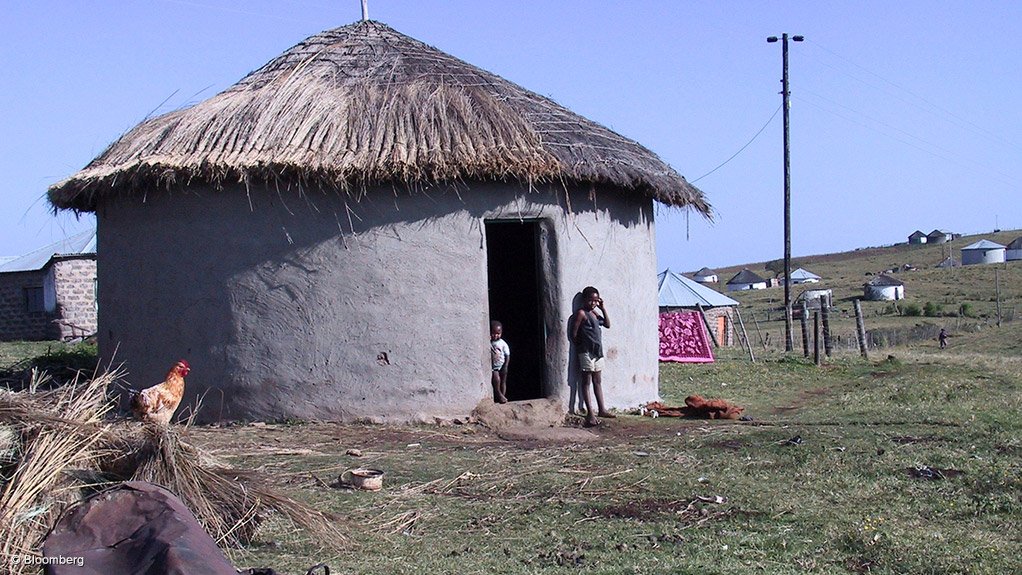


One of the most devastating “unintended consequences” resulting from the response to the Covid-19 pandemic in South Africa is the spread of hunger.
The first wave of the National Income Dynamics Study – Coronavirus Rapid Mobile Survey (NIDS-CRAM) provided strong evidence of drastic increases in household and child hunger during the initial period of the pandemic, as well as an increase in household food insecurity.
“Much of the improvement since 2000 in household and child hunger that was owing to the expansion of the Child Support Grant was almost entirely reversed by the hard lockdown and the coronavirus pandemic,” said University of Cape Town School of Economics Associate Professor Dr Reza Daniels.
Overall, the proportion of households who reported running out of money for food went from 47% in wave 1 to 38% in wave 2 – a significant decrease. In wave 3, however, the proportion rose again to 41%.
United Nations University World Institute for Development Economics Research (UNU-WIDER) research assistant Grace Bridgman said the second wave of the NIDS-CRAM showed improvement, although hunger and food insecurity remained disturbingly high.
Bridgman added that wave 3, surveyed in November and December, provided an update to the widely reported and sobering findings from the first two waves, which showed that indicators of hunger and food insecurity had again worsened after the improvement in wave 2.
HUNGER AND GRANT TARGETING
Daniels explained that this was as a result of the phasing out of the top-ups to some social grants since November, adding that the magnitude of the food insecurity problem was still such that the need for social relief efforts remained undiminished. She warned that the reduction and phasing out of some of the social grants would have severe consequences in terms of hunger.
Bridgman warned that the increase between waves 2 and 3 was not statistically significant, but indicated a worrying trend, adding that there was a similar pattern at play in household hunger between waves 1, 2 and 3.
There was a significant decline from 23% to 16% between waves 1 and 2, and an insignificant increase in household hunger from 16% to 18% between waves 2 and 3.
Meanwhile, in terms of child hunger, the proportion of households with children who reported a child going hungry at least once in the past week saw a significant decline from 15% to 12% between waves 1 and 2. However, this statistic rose again to 16% in wave 3 – a statistically significant increase and an alarming discovery.
Initially, government support measures implemented to combat the effects of the pandemic were planned to end in October 2020, but the severe conditions on the ground led to the extension of the Covid-19 Social Relief of Distress Grant to the end of January 2021.
Daniels explained that the top-up of all the other social grants was ended in October, when grant values reverted to their pre-Covid-19 levels.
“TERS applications were extended by one month until mid-October 2020. The increased levels of hunger in the wave 3 data could, in part, have been owing to the phasing out of this government support,” he said.
Together, the reach of the social grant system is now exceedingly large. More than two out of every three respondents in all three waves of the NIDS-CRAM survey indicated that someone in their households benefited from at least one grant.
The reduction in grant values for the Child Support Grant and elimination of the top-up reduced the safety net for a large proportion of the poor. Therefore, the survey concluded that it was not a complete surprise that access to money for food and hunger increased again in wave 3.
Article Enquiry
Email Article
Save Article
Feedback
To advertise email advertising@creamermedia.co.za or click here
Research Reports

Projects

Latest Multimedia

Latest News

Showroom
Complete range of security sealing solutions including security seals bags and labels.
VISIT SHOWROOM
FLANDERS Southern Africa provides integrated solutions for mining and industrial operations, covering field services, automation, electrification,...
VISIT SHOWROOM


Press Office
Announcements
What's On
Subscribe to improve your user experience...
Option 1 (equivalent of R125 a month):
Receive a weekly copy of Creamer Media's Engineering News & Mining Weekly magazine
(print copy for those in South Africa and e-magazine for those outside of South Africa)
Receive daily email newsletters
Access to full search results
Access archive of magazine back copies
Access to Projects in Progress
Access to ONE Research Report of your choice in PDF format
Option 2 (equivalent of R375 a month):
All benefits from Option 1
PLUS
Access to Creamer Media's Research Channel Africa for ALL Research Reports, in PDF format, on various industrial and mining sectors
including Electricity; Water; Energy Transition; Hydrogen; Roads, Rail and Ports; Coal; Gold; Platinum; Battery Metals; etc.
Already a subscriber?
Forgotten your password?
Receive weekly copy of Creamer Media's Engineering News & Mining Weekly magazine (print copy for those in South Africa and e-magazine for those outside of South Africa)
➕
Recieve daily email newsletters
➕
Access to full search results
➕
Access archive of magazine back copies
➕
Access to Projects in Progress
➕
Access to ONE Research Report of your choice in PDF format
RESEARCH CHANNEL AFRICA
R4500 (equivalent of R375 a month)
SUBSCRIBEAll benefits from Option 1
➕
Access to Creamer Media's Research Channel Africa for ALL Research Reports on various industrial and mining sectors, in PDF format, including on:
Electricity
➕
Water
➕
Energy Transition
➕
Hydrogen
➕
Roads, Rail and Ports
➕
Coal
➕
Gold
➕
Platinum
➕
Battery Metals
➕
etc.
Receive all benefits from Option 1 or Option 2 delivered to numerous people at your company
➕
Multiple User names and Passwords for simultaneous log-ins
➕
Intranet integration access to all in your organisation
