



South African gas distribution network needs to expand to replace imports

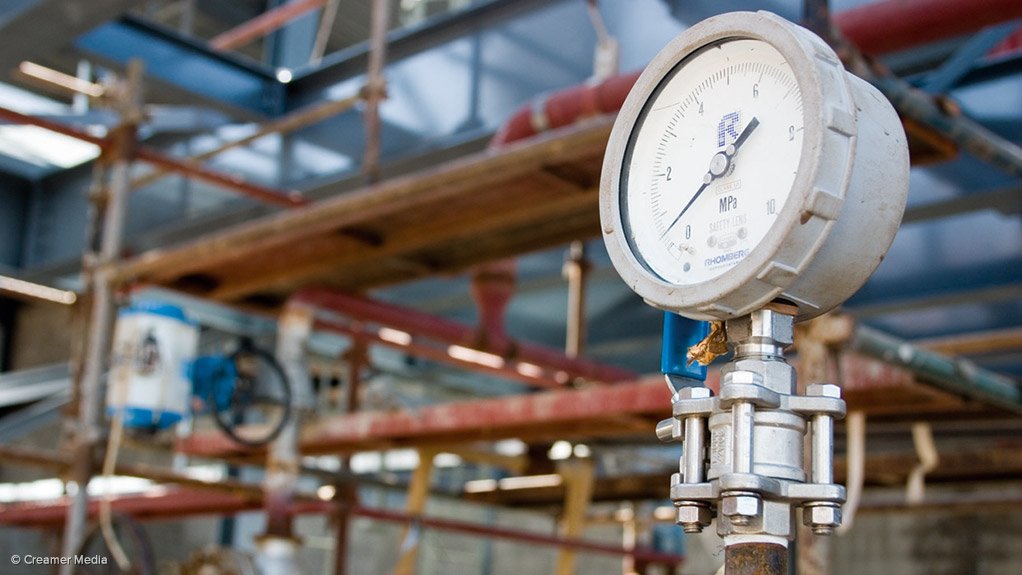
GAS DEMAND For gas to play a more prominent role in the energy mix of South Africa the size and distribution network of the gas market will need to increase
Photo by Duane Daws



Although demand for natural gas was increasing in South Africa, it accounted for only 2% of the country’s energy supply, followed by oil, with 19%, and coal providing 67%, noted South African Oil & Gas Alliance (Saoga) executive chairperson Mthozami Xiphu at this year’s Gas Week 2014, which was held in June, in Bryanston.
For gas to play a more prominent role in the energy mix of South Africa, he suggested that the country “will first need to increase the size and distribution network of the gas market, which will initially be supplied by imported gas”.
Xiphu added that the current gas market might find an initial boost in expansion through liquid natural gas (LNG) developments in either the Western Cape or the Eastern Cape. The Orange basin, off the western coast of South Africa, will also play an important role in expanding the local gas market, for which the ultimate aim is to secure supply for the market from shale gas developments in the Karoo, with an estimated shale gas reserve of 390-trillion cubic feet.
If the reserves are proven, the Karoo basin would become the eighth-largest shale gasfield reserve in the world and would be able to replace gas imports to South Africa.
Xiphu notes that South Africa could begin gas imports, mainly from Mozambique, in the next three to four years, which would begin the process of expanding the local gas market.
Should local gas exploration prove successful, onshore gas commercialisation could take place in the next five to seven years and offshore commercialisation in the next seven to ten years.
Xiphu suggested that natural gas could be a potential “game changer” for South African power generation, owing to economic, environmental and technological developments, which has increased its popularity, compared with coal or nuclear power generation.
“Natural gas is one of the cheapest forms of energy available to residential con-sumers and can be used to heat and cool homes, and for cooking,” he added.
Further, natural gas can also be used in many industrial applications, such as waste treatment and incineration, iron and steel preheating, drying and dehumidification, glass melting, food processing, and fuel for industrial boilers.
It can also be used in non-energy-related applications such as feedstock, in the production of petrochemicals and fertiliser.
Xiphu pointed out that natural gas could sustain the petrochemicals industry of South Africa, as “it can be processed into chemical intermediaries for use in a variety of polyester consumer goods”, such as plastic bottles, food packaging, polyester fibres, adhesives and polymeric powders.
However, for South Africa to benefit from natural gas production, it must first develop capital-intensive infrastructure necessary to produce, store and distribute natural gas products.
Global Trends
Xiphu noted that technological developments in the natural gas sphere had made the resource an increasingly attractive energy source.
“There are abundant supplies of natural gas in the world, and many of these supplies can be developed at a relatively low cost,” he said, adding that, globally, shale gas development over the last decade has received substantially increased assessments of resources that can also be produced at modest cost.
New technologies, such as floating LNG, have made ‘stranded’ gas reserves – which are either economically expensive or physically difficult to recover, particularly when the reserves are located in deep waters – commercially viable.
Xiphu added that demand for natural gas was forecast to grow significantly, with a yearly growth rate of 1.7% until 2035.
Demand will, therefore, increase by more than 33% by 2035, from the current demand of 6% to 7%, which will result in gas featuring significantly at 23% of the global energy mix by 2035.
Xiphu attributed this increased growth rate to the improved costs of gas infrastructure and improved reliability of LNG supply.
Article Enquiry
Email Article
Save Article
To advertise email advertising@creamermedia.co.za or click here
Research Reports

Projects

Latest Multimedia
Latest News

Showroom

ROSOND provides fast, efficient, safe, and cost-effective drilling and grouting services to mining and exploration industries throughout Africa.
VISIT SHOWROOM
AirNox (Pty) Ltd is a level 1 BBBEE manufacturer of complete AdBlue® solutions for operators of SCR diesel engines and AUS40 across South Africa...
VISIT SHOWROOM

Announcements
What's On
Subscribe to improve your user experience...
Option 1 (equivalent of R125 a month):
Receive a weekly copy of Creamer Media's Engineering News & Mining Weekly magazine
(print copy for those in South Africa and e-magazine for those outside of South Africa)
Receive daily email newsletters
Access to full search results
Access archive of magazine back copies
Access to Projects in Progress
Access to ONE Research Report of your choice in PDF format
Option 2 (equivalent of R375 a month):
All benefits from Option 1
PLUS
Access to Creamer Media's Research Channel Africa for ALL Research Reports, in PDF format, on various industrial and mining sectors
including Electricity; Water; Energy Transition; Hydrogen; Roads, Rail and Ports; Coal; Gold; Platinum; Battery Metals; etc.
Already a subscriber?
Forgotten your password?
Receive weekly copy of Creamer Media's Engineering News & Mining Weekly magazine (print copy for those in South Africa and e-magazine for those outside of South Africa)
➕
Recieve daily email newsletters
➕
Access to full search results
➕
Access archive of magazine back copies
➕
Access to Projects in Progress
➕
Access to ONE Research Report of your choice in PDF format
RESEARCH CHANNEL AFRICA
R4500 (equivalent of R375 a month)
SUBSCRIBEAll benefits from Option 1
➕
Access to Creamer Media's Research Channel Africa for ALL Research Reports on various industrial and mining sectors, in PDF format, including on:
Electricity
➕
Water
➕
Energy Transition
➕
Hydrogen
➕
Roads, Rail and Ports
➕
Coal
➕
Gold
➕
Platinum
➕
Battery Metals
➕
etc.
Receive all benefits from Option 1 or Option 2 delivered to numerous people at your company
➕
Multiple User names and Passwords for simultaneous log-ins
➕
Intranet integration access to all in your organisation
