



Rio Tinto-led plan for major lithium mine stirs protests in Serbia

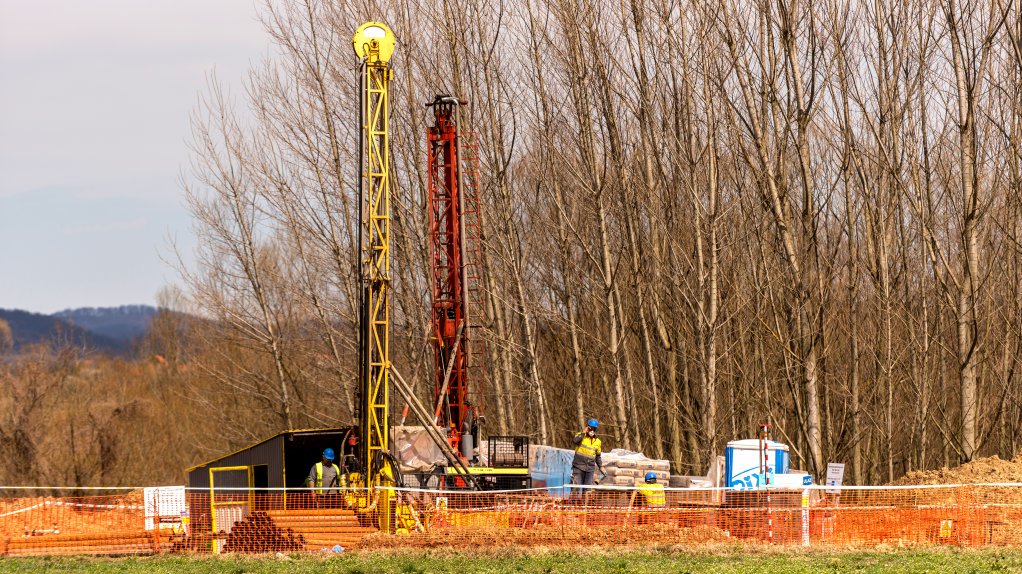


KORENITA - Four years from now, fields in the Jadar river valley in western Serbia where Djorjde Kapetanovic grows corn and soy to feed his cattle will be turned into a waste dump for Europe's biggest lithium mine.
Rio Tinto in July committed $2.4-billion to its Jadar project as global miners push into metals needed for the green energy transition, including lithium, which is used to make electric vehicle batteries. The Jadar project, once completed, would help make Rio a top 10 lithium producer, just as demand for EVs booms.
Opposition to the project is growing, however, because of concerns about possible environmental damage and protest rallies have become more frequent. In April, thousands gathered in Belgrade to protest against widespread pollution in the Balkan country and against the lithium mine near Loznica, 142 km southwest of the capital.
Once it reaches full capacity, the mine is expected to produce 58,000 tonnes of refined battery-grade lithium carbonate per year. That would make it Europe's biggest lithium mine in terms of production, Rio said.
In the village of Korenita, dairy farmer Kapetanovic said the mine, if opened, could leave him without income. Part of his land where he grows crop to feed his animals will be turned into a dump for mining waste, known as tailings, with compensation from the company.
Other areas of his land, his house and a cattle shed will be outside the mine, leaving Kapetanovic worried about exposure to possible pollution.
"Who would want to buy products made on the outskirts of the mine?" said Kapetanovic, who produces 10 t of meat and 90 000 litres of milk per year, making him one of the bigger producers in the Loznica area.
Rio Tinto Serbia CEO Vesna Prodanovic said the Anglo-Australian miner would meet all European Union and Serbian environmental regulations, including on the treatment of wastewater.
"There's simply no way for the construction to start without securing licences (and) if all those (EU standards) are not adhered to," she said in an interview.
"We take into account precipitation levels, prescribed dust levels. We take into consideration everything there is in the field. We are making all studies and tests to get clear data about what is the current situation in the area."
One study, commissioned by Rio on the mine’s environmental impact, concluded the mine should not be built as it will cause "irredeemable damage to the biosphere", an abstract obtained by Reuters found.
"The implementation of the planned activities, especially the disposal of industrial waste, will significantly impair biodiversity in the entire area of the planned works," the study by Belgrade University’s Faculty of Biology said.
"In ... primary zones of (the mine's) influence, there will be complete and direct destruction of habitats with the disappearance of all organisms that inhabit them."
Rio said the biodiversity study was part of a wider feasibility study and it would conduct further research to "support the most advanced and most expensive solutions in nature protection, which would minimise the impact".
ECONOMIC BOOST
Lithium is central to the European Union's plans to secure an entire supply chain of battery minerals and materials as the use of electric vehicles increases.
Serbia, which sits on the world's 11th largest lithium reserves, is working its way through the accession process to join the EU.
For its own economy, the Jadar project is one of Serbia’s biggest foreign investments to date and could help to tackle rising unemployment in the Balkan country.
Rio said the project would create about 2 100 construction jobs and inject approximately 200-million euros ($235.32-million) per year into the domestic supply chain.
Energy minister Zorana Mihajlovic told Reuters that Serbia aimed, like the EU, to secure the entire production chain, including a potential battery plant and an electric vehicle plant.
Rio's Serbia CEO said the company's studies estimated the project would add 1 percentage point to Serbia's $51.4-billion annual GDP. It would also boost Loznica’s municipal budget by 60-70% annually, she said.
In June, Serbian President Aleksandar Vucic, who is under fire for supporting the project, said a referendum would be held to allow people to decide whether it should go ahead.
The absence of further details on the referendum has worried opponents. In July, Loznica municipal assembly, which is dominated by Vucic's Serbian Progressive Party and its allies, formally gave a green light for mine construction by approving a new municipal plan for land allocation.
Contacted by Reuters, the president's office had no immediate comment.
Rio has bought nearly half of the land required for the mine, which will be spread over roughly 387 ha.
Some $100-million of Rio's investment has been earmarked for environmental protection, but activists say that is insufficient to compensate for potential damage.
One major concern for environmentalists is Rio's plan to put
waste dumps in the Korenita and Jadar rivers valley, an area prone to flash flooding.
In 2014, Korenita river flooding caused a closed mine's tailings dam to overflow, spilling toxic waste onto agricultural land.
Rio Tinto said it planned to convert the liquid waste into "dry cakes" to make it easier and safer to store and is planning for once-in-a-millennium floods in its construction.
Article Enquiry
Email Article
Save Article
Feedback
To advertise email advertising@creamermedia.co.za or click here
Research Reports

Projects
Latest Multimedia
Latest News
Showroom
The Steel Tube Export Association of South Africa was established to develop sustainable, internationally competitive carbon steel tube and pipe...
VISIT SHOWROOM
Rentech provides renewable energy products and services to the local and selected African markets. Supplying inverters, lithium and lead-acid...
VISIT SHOWROOM

Press Office
Announcements
What's On
Subscribe to improve your user experience...
Option 1 (equivalent of R125 a month):
Receive a weekly copy of Creamer Media's Engineering News & Mining Weekly magazine
(print copy for those in South Africa and e-magazine for those outside of South Africa)
Receive daily email newsletters
Access to full search results
Access archive of magazine back copies
Access to Projects in Progress
Access to ONE Research Report of your choice in PDF format
Option 2 (equivalent of R375 a month):
All benefits from Option 1
PLUS
Access to Creamer Media's Research Channel Africa for ALL Research Reports, in PDF format, on various industrial and mining sectors
including Electricity; Water; Energy Transition; Hydrogen; Roads, Rail and Ports; Coal; Gold; Platinum; Battery Metals; etc.
Already a subscriber?
Forgotten your password?
Receive weekly copy of Creamer Media's Engineering News & Mining Weekly magazine (print copy for those in South Africa and e-magazine for those outside of South Africa)
➕
Recieve daily email newsletters
➕
Access to full search results
➕
Access archive of magazine back copies
➕
Access to Projects in Progress
➕
Access to ONE Research Report of your choice in PDF format
RESEARCH CHANNEL AFRICA
R4500 (equivalent of R375 a month)
SUBSCRIBEAll benefits from Option 1
➕
Access to Creamer Media's Research Channel Africa for ALL Research Reports on various industrial and mining sectors, in PDF format, including on:
Electricity
➕
Water
➕
Energy Transition
➕
Hydrogen
➕
Roads, Rail and Ports
➕
Coal
➕
Gold
➕
Platinum
➕
Battery Metals
➕
etc.
Receive all benefits from Option 1 or Option 2 delivered to numerous people at your company
➕
Multiple User names and Passwords for simultaneous log-ins
➕
Intranet integration access to all in your organisation
