



‘Rushed’ nuclear determination and proposed RFP ‘baffling’

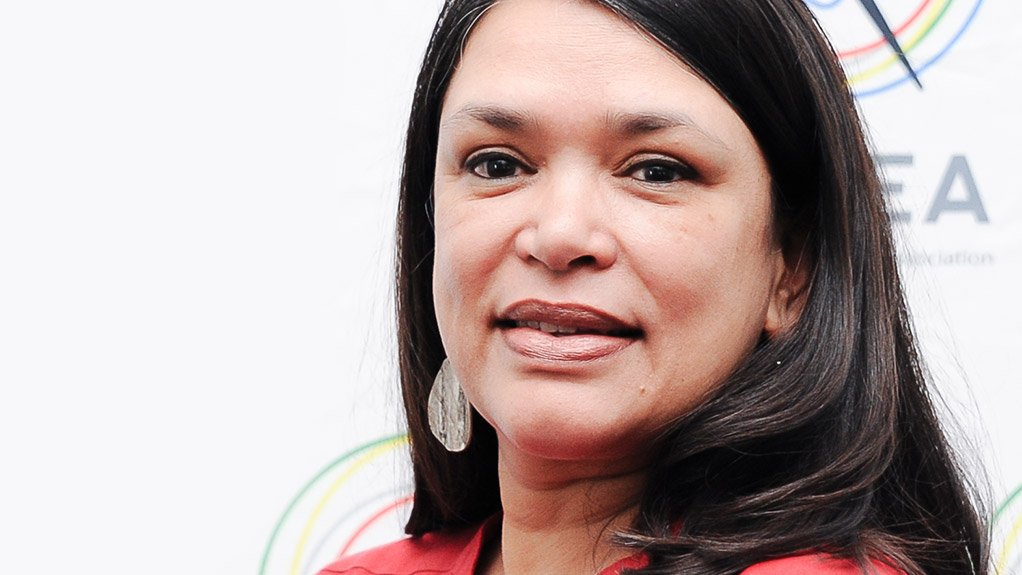


The South African Renewable Energy Council (Sarec) has expressed disappointment at news of a new Ministerial determination for 9 600 MW of nuclear, as well as indications that the controversial nuclear request for proposals (RFP) will be released by Eskom this week.
Revelations of a new Section 34 determination were made known by lawyers acting for the Department of Energy (DoE) during a court case in Cape Town, which had been brought against the nuclear programme by Earthlife Africa Johannesburg and the Southern African Faith Communities’ Environment Institute (SAFCEI).
The determination, which has the concurrence of the National Energy Regulator of South Africa, would be published in this week’s Government Gazette.
A revised determination, which replaces a 2013 version, had been anticipated in light of a recent Cabinet decision confirming Eskom as the procurer, owner and operator of any new nuclear reactors to be built in South Africa. The previous determination had the DoE as the procurer; a development that flowed from the fact that Eskom was not considered to be in a financial position to procure new nuclear capacity, owing to its high levels of indebtedness, its junk status, delayed build programme and ongoing delays to its transition to cost-reflective tariffs.
The State-owned utility had subsequently made the case for it to play the central role in the procurement of the power component of the nuclear programme, with the South African Nuclear Energy Corporation to be the procurer, owner and operator of the multipurpose-reactor and the fuel-cycle components.
Sarec, said it was “hugely disappointed” to learn of a “rushed through” Section 34 determination for the procurement of 9 600 MW of nuclear energy, based on the outdated 2010 Integrated Resource Plan (IRP) for electricity.
“We are further disheartened by Eskom acting CEO’s simultaneous announcement that the utility will release a nuclear RFP as soon as the determination is Gazetted,” Sarec chair Brenda Martin said in a statement.
Sarec’s disappointment was compounded by Eskom’s ongoing refusal to sign power purchase agreements with 37 renewable independent power producers, some of which had had preferred-bidder status for as long as 20 months.
The timing of the Ministerial determination and the RFP was also “baffling” given that the DoE has recently commenced a public participation process to update the IRP. As part of the process, a draft IRP base case was published suggesting that the first new nuclear capacity would only be required in 2037.
This base case, which is currently the subject of public hearings, has been heavily criticised for the fact that it “artificially constrains” the amount of renewable energy that is assumed can be feasibly added to the South African mix on a yearly basis. Largely as a consequence of this constraint, the base case has included 20 000 MW of new nuclear capacity by 2050, with the first new capacity allocated for 2037. By comparison, the prevailing IRP envisages 9 600 MW of new nuclear being built between 2023 and 2030.
Eskom acting CEO Matshela Koko has dismissed the 2037 timeframe and has argued, instead, that the issuance of the RFP remains urgent. His justification is a parallel “scenario” indicating that the first new nuclear capacity will be required by 2026. He has stressed, too, that testing the market through an RFP is not equivalent to signing a contract for nuclear.
“Sarec believes that this irrational behaviour fans the flames of suspicion as to the real motives behind the nuclear campaign. Facts, logic and basic financial prudence simply do not support this determination. Sadly, it appears that Eskom and an increasingly compliant DoE are playing to a different set of rules,” Martin said.
Nomura International research analyst Peter Attard Montalto was equally biting in his critique of the move. In a note, title ‘South Africa: Nuclear bulldozer’, he wrote that, while the IRP process was meant to be a technocratic exercise it was, in reality, “highly political”.
“At issue here, writ large, is the form of procurement, rent extraction and corruption potential,” Attard Montalto noted.
However, he also raised the prospect of several obstacles to any nuclear deal, which he saw arising from the National Treasury and from legal objections.
“Our baseline is that generation may never happen given the obstacles in the way. Certainly we do not expect to see it by 2025,” Attard Montalto wrote.
Sarec, meanwhile, appealed for South Africa’s long-term energy choices to be based on rational and transparent planning. Energy policymakers must walk this talk.”
The Organisation Undoing Tax Abuse (Outa) expressed shock at the way the DoE had released the new determination during the court case brought by environmental groups against the nuclear procurement. The matter has been postponed to February, largely as a consequence of the new Ministerial determination, which Outa says seeks to "cure the defects of the original determination of December 2013".
“Government [is] simply manipulating the legal process to ensure they can commence their nuclear energy procurement process before the High Court has an opportunity to scrutinise their shady dealings,” Outa chairperson Wayne Duvenage said in a statement.
He indicated that the organisation was assessing its legal options, as well as other avenues, to halt the "relentless and irrational conduct" of Eskom and the DoE.
The two main protagonists in the case, Earthlife Africa Johannesburg and SAFCEI, described the release of a new "secretive" determination as a “disquieting twist of events".
"Despite it being signed [by Energy Minister Tina Joemat-Pettersson] on 5 December 2016, the court was not informed thereof and neither were the applicants – until literally minutes before the hearing was to begin," the two organisations highlighted in a statement.
The case has been adjourned for hearing on February 22 to 24.
Article Enquiry
Email Article
Save Article
Feedback
To advertise email advertising@creamermedia.co.za or click here
Research Reports

Projects


Latest Multimedia

Latest News
Showroom
M and J Mining are leading suppliers of physical support systems as used by the underground mining industry. Our selection of products are not...
VISIT SHOWROOM




Announcements
What's On
Subscribe to improve your user experience...
Option 1 (equivalent of R125 a month):
Receive a weekly copy of Creamer Media's Engineering News & Mining Weekly magazine
(print copy for those in South Africa and e-magazine for those outside of South Africa)
Receive daily email newsletters
Access to full search results
Access archive of magazine back copies
Access to Projects in Progress
Access to ONE Research Report of your choice in PDF format
Option 2 (equivalent of R375 a month):
All benefits from Option 1
PLUS
Access to Creamer Media's Research Channel Africa for ALL Research Reports, in PDF format, on various industrial and mining sectors
including Electricity; Water; Energy Transition; Hydrogen; Roads, Rail and Ports; Coal; Gold; Platinum; Battery Metals; etc.
Already a subscriber?
Forgotten your password?
Receive weekly copy of Creamer Media's Engineering News & Mining Weekly magazine (print copy for those in South Africa and e-magazine for those outside of South Africa)
➕
Recieve daily email newsletters
➕
Access to full search results
➕
Access archive of magazine back copies
➕
Access to Projects in Progress
➕
Access to ONE Research Report of your choice in PDF format
RESEARCH CHANNEL AFRICA
R4500 (equivalent of R375 a month)
SUBSCRIBEAll benefits from Option 1
➕
Access to Creamer Media's Research Channel Africa for ALL Research Reports on various industrial and mining sectors, in PDF format, including on:
Electricity
➕
Water
➕
Energy Transition
➕
Hydrogen
➕
Roads, Rail and Ports
➕
Coal
➕
Gold
➕
Platinum
➕
Battery Metals
➕
etc.
Receive all benefits from Option 1 or Option 2 delivered to numerous people at your company
➕
Multiple User names and Passwords for simultaneous log-ins
➕
Intranet integration access to all in your organisation
