



Reliability Engineer Pierre Swart Tackled Technical Standards And Legislation At Saama Conference


This article has been supplied.
Reliability engineer at Sasol Synfuels, Pierre Swart, was one of the speakers at this year’s Southern African Asset Management Association Conference, which took place at the CTICC in Cape Town this week.
The presentation focused on the requirements from the Department of Labour in implementing a Risk Based Inspection programme, as well as explaining the basic concepts of a RBI programme. Said Swart: “With the change from the Vessel Under Pressure regulation to the Pressure Equipment Regulation in 2009, users are now required to have a RBI scheme in place if they wish to exceed the 36 month inspection interval. This RBI scheme is to be certified by a certification body approved by SANAS and users who wish to implement a RBI management system as an alternative to the requirements stipulated in Regulation 11.(1).(d) must now inform the Department of Labour in this regard.”
The following is required by the Department of Labour: a copy of the RBI management system; the RBI Specialist and his/her qualification; RBI team competency and qualifications; Technical standard (code) to be used; Certification Body involved and a Letter of recommendation from AIA to implement RBI.
Continued swart: “RBI is a method using risk as a basis for prioritising and managing inspection programmes. RBI is therefore concerned with the loss of containment function of pressure vessels. RBI rates the loss of containment as the consequence and the occurrence of a degradation mechanism as the probability of the risk equation. The probability of the degradation mechanism occurring drives the inspection technique and scope of the inspection, and the risk result drives the inspection interval. Should the risk be unacceptable, other risk mitigation activities are required. The RBI study is dynamic and needs to be kept current by means of re-assessment over time.”
Swart further commented on each of the key areas of a RBI process, including different levels of analysis. “There are three levels of RBI defined, namely qualitative, quantitative and semi-quantitative. The qualitative level is at one end of the scale and requires less resources and information than the other methodologies. The downside of this approach is that it’s also less rigorous. The quantitative methodology is on the other end of the scale and requires the most resources and information. Calculations become more complex and take longer to complete which increases cost. The semi-quantitative methodology fits in between these extremes. This approach has the benefit of less data and resources than quantitative, but more data and resources than a qualitative approach, based on the level of quantification.”
With regards to the topic of data collection, Swart explained that it is dependent on the level of RBI analysis. “Typical data required is design data such as material of construction and design parameters such as pressure, temperature, and corrosion allowance. The design data is then compared against the operating data such as operating pressures and temperatures, as well as the fluid composition and properties. The RBI study could also take into account other parameters such as plant population densities, local population densities, and mitigation measures such as bunds, drains, and firefighting facilities amongst others.”
Another key area is determining the probability of failure. “To determine the probability, active and credible degradation mechanisms are identified. The degradation rate and susceptibility are determined after which the probability is determined that with the current condition, predicted deterioration will result in failure,” said Swart. According to Swart, the consequence of failure is determined by examining the loss of containment. “Factors considered may include the state of the fluid, properties of the fluid, and failure mode leak size. Typical consequence categories are safety, environment and business consequences.”
Furthermore, the RBI risk is determined as the product of the probability rating and the consequence rating. Swart explained further: “The result is typically presented on a risk matrix. One also needs to manage the risk with inspection activities. Since the active and credible degradation mechanisms are now known as well as the susceptibility or rate of deterioration, the inspection programme can now be defined to cater for these degradation mechanisms. The inspection programme should include what to inspect, how to inspect (which technique) and the extent of inspection (coverage).” When inspection activities alone are not sufficient to manage the degradation, other mitigation activities may be required. These activities are typically repairs, replacements, or change in operating conditions such as lowering of volumes, temperatures and pressures.
Lastly, one needs to keep RBI evergreen. Swart concludes: “As some degradation mechanisms are time dependent, the risk profile of the equipment will change over time, specifically as the equipment nears the end of its life cycle. For some degradation mechanisms the rate of deterioration is also affected by the change in process conditions. Therefore RBI is a dynamic tool and must be updated when changes occur to the equipment or process or when new inspection results become available.”
Article Enquiry
Email Article
Save Article
Feedback
To advertise email advertising@creamermedia.co.za or click here
Research Reports

Projects


Latest Multimedia


Latest News
Showroom
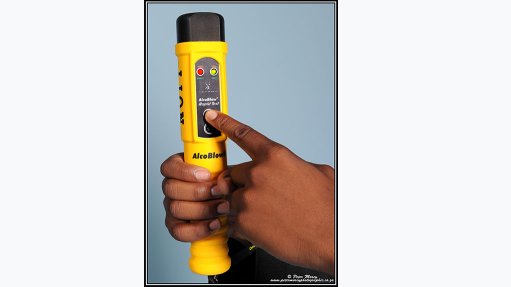
Developed to exceed the latest EN 15964 standards for police breathalysers proving that it will remain accurate and reliable for many years to come.
VISIT SHOWROOM
Rittal is a world leading provider of top-quality integrated systems for enclosures, power distribution, climate control, IT infrastructure and...
VISIT SHOWROOM



Announcements
What's On
Subscribe to improve your user experience...
Option 1 (equivalent of R125 a month):
Receive a weekly copy of Creamer Media's Engineering News & Mining Weekly magazine
(print copy for those in South Africa and e-magazine for those outside of South Africa)
Receive daily email newsletters
Access to full search results
Access archive of magazine back copies
Access to Projects in Progress
Access to ONE Research Report of your choice in PDF format
Option 2 (equivalent of R375 a month):
All benefits from Option 1
PLUS
Access to Creamer Media's Research Channel Africa for ALL Research Reports, in PDF format, on various industrial and mining sectors
including Electricity; Water; Energy Transition; Hydrogen; Roads, Rail and Ports; Coal; Gold; Platinum; Battery Metals; etc.
Already a subscriber?
Forgotten your password?
Receive weekly copy of Creamer Media's Engineering News & Mining Weekly magazine (print copy for those in South Africa and e-magazine for those outside of South Africa)
➕
Recieve daily email newsletters
➕
Access to full search results
➕
Access archive of magazine back copies
➕
Access to Projects in Progress
➕
Access to ONE Research Report of your choice in PDF format
RESEARCH CHANNEL AFRICA
R4500 (equivalent of R375 a month)
SUBSCRIBEAll benefits from Option 1
➕
Access to Creamer Media's Research Channel Africa for ALL Research Reports on various industrial and mining sectors, in PDF format, including on:
Electricity
➕
Water
➕
Energy Transition
➕
Hydrogen
➕
Roads, Rail and Ports
➕
Coal
➕
Gold
➕
Platinum
➕
Battery Metals
➕
etc.
Receive all benefits from Option 1 or Option 2 delivered to numerous people at your company
➕
Multiple User names and Passwords for simultaneous log-ins
➕
Intranet integration access to all in your organisation
