



Ramaphosa’s challenge may be bigger than that faced by Mandela

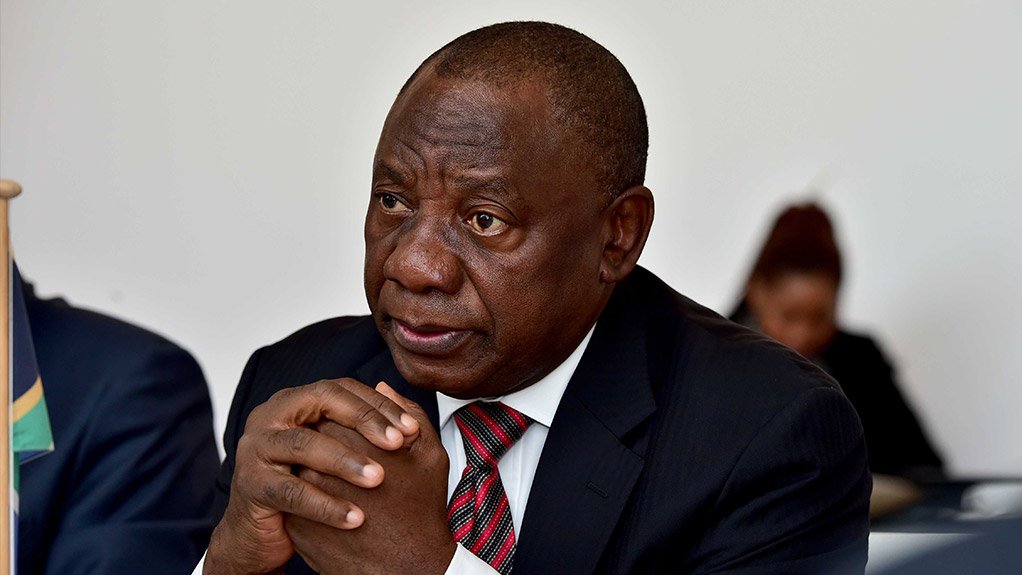


When Nelson Mandela came to power in 1994, he faced the challenge of uniting a nation divided by the system of racial discrimination known as apartheid and healing an economy shattered by sanctions and mismanagement.
A quarter of a century later, his one-time protege Cyril Ramaphosa faces perhaps even bigger obstacles.
Nine years of scandal-tainted rule under former President Jacob Zuma left South Africa with little economic growth, dysfunctional state companies, escalating debt and an investor-confidence crisis. In 1994, the country basked in the glory of liberation and benefited from the attendant international goodwill. That moment has passed and expectations for reform under Ramaphosa, a seasoned businessman, are higher than under Mandela.
Economic growth during Mandela and his successor Thabo Mbeki’s rule accelerated to more than 5% by the mid-2000s as they made policy decisions that were unpopular with their leftist allies. With Ramaphosa, 66, beholden to the labor unions opposed to the steps needed to fix the economy, it’s hard to see how he’ll make progress.
Zuma left Ramaphosa facing a mountain of debt and a lack of competence in government institutions.
Last week, Finance Minister Tito Mboweni warned that state bailouts for troubled power utility Eskom Holdings threaten to ensnare the nation in a debt trap. Moody’s Investors Service cut its outlook on the country’s credit rating from stable to negative on November 1. With the country already holding Moody’s lowest investment grade rating that moved it one step closer to being rated junk by all three major ratings companies.
“If you look at the numbers on debt, the deficit, tax-to-GDP and growth, the environment faced by Ramaphosa and his administration shows strong similarities to that inherited by Mandela and Mbeki,” said Frans Cronje, director of the Centre for Risk Analysis in Johannesburg.
Nevertheless, Ramaphosa remains confident.
“We are still on our feet,” he told lawmakers on October 31. “We will resolve these problems.”
That may be a big ask.
“Zuma and his allies erased about 20 years of progress,” said Claude Baissac, the head of Eunomix Business and Economics, which advises on political risk. Now “we don’t have a consensus, we don’t have the euphoria of liberation and great leaders. It’s not very clear what the plan is. They look like reindeer caught in the headlights.”
While debt, the highest unemployment rate in at least 11 years and insufficient power supply plague the South African economy, its biggest crisis is the lack of confidence caused by the government’s indecision on reforms.
“Mandela and Mbeki had advantages that Ramaphosa does not enjoy,” Cronje said. “They were firm in isolating left-wing ideological influences in order to force pragmatic policy onto their party. Ramaphosa, on the other hand, indulges and appeases such influences, with the result that structural reform is permanently delayed while policy overall remains net hostile to investment.”
That means that investment is meager and even though Ramaphosa will on Tuesday convene his second investment conference, South Africa is competing against a host of nations for attention. Many of them have clearer policies and better financial metrics.
“The ground is shifting and no one is going to give South Africa a free pass,” Baissac said.
Ramaphosa’s allies urge investors to be patient.
“Many of the issues are very complex. There are vested interests. Nobody wants to make a mistake,” Mcebisi Jonas, a former deputy finance minister who now serves as an investment envoy for Ramaphosa, said in an interview. “Nobody would oppose the need for growth.”
Article Enquiry
Email Article
Save Article
Feedback
To advertise email advertising@creamermedia.co.za or click here
Research Reports

Projects


Latest Multimedia


Latest News


Showroom

For over 60 years, VEGA has provided industry-leading products for the measurement of level, density, weight and pressure. As the inventor of the...
VISIT SHOWROOM
Iritron delivers advanced automation, control, and optimisation solutions to the Mining, Minerals & Metals, Consumer Package Goods and...
VISIT SHOWROOM


Press Office
Announcements
What's On
Subscribe to improve your user experience...
Option 1 (equivalent of R125 a month):
Receive a weekly copy of Creamer Media's Engineering News & Mining Weekly magazine
(print copy for those in South Africa and e-magazine for those outside of South Africa)
Receive daily email newsletters
Access to full search results
Access archive of magazine back copies
Access to Projects in Progress
Access to ONE Research Report of your choice in PDF format
Option 2 (equivalent of R375 a month):
All benefits from Option 1
PLUS
Access to Creamer Media's Research Channel Africa for ALL Research Reports, in PDF format, on various industrial and mining sectors
including Electricity; Water; Energy Transition; Hydrogen; Roads, Rail and Ports; Coal; Gold; Platinum; Battery Metals; etc.
Already a subscriber?
Forgotten your password?
Receive weekly copy of Creamer Media's Engineering News & Mining Weekly magazine (print copy for those in South Africa and e-magazine for those outside of South Africa)
➕
Recieve daily email newsletters
➕
Access to full search results
➕
Access archive of magazine back copies
➕
Access to Projects in Progress
➕
Access to ONE Research Report of your choice in PDF format
RESEARCH CHANNEL AFRICA
R4500 (equivalent of R375 a month)
SUBSCRIBEAll benefits from Option 1
➕
Access to Creamer Media's Research Channel Africa for ALL Research Reports on various industrial and mining sectors, in PDF format, including on:
Electricity
➕
Water
➕
Energy Transition
➕
Hydrogen
➕
Roads, Rail and Ports
➕
Coal
➕
Gold
➕
Platinum
➕
Battery Metals
➕
etc.
Receive all benefits from Option 1 or Option 2 delivered to numerous people at your company
➕
Multiple User names and Passwords for simultaneous log-ins
➕
Intranet integration access to all in your organisation
