



Ramaphosa says SA’s current health care system is unsustainable, following NHI uproar



This article has been supplied.
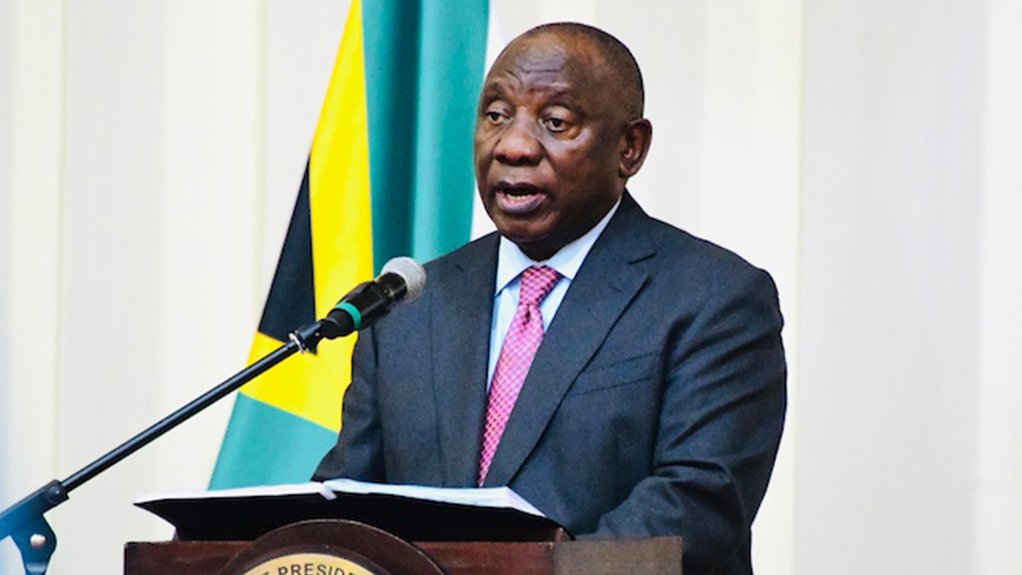
President Cyril Ramaphosa noted on Monday that while there may be different views on how the National Health Insurance (NHI) Bill will be progressively implemented, the reality is that South Africa’s current health care system is unsustainable.
Ramaphosa wrote in his weekly letter to the nation that access to quality, decent healthcare should not depend on one’s ability to pay, noting that the country’s current healthcare “does not serve the poor, does not serve the middle-class and does not serve the country”.
Last week, Ramaphosa signed the NHI Act into law, which he said would bring the country one step closer towards universal health coverage.
Civil society organisations and political parties are threatening legal action following last week’s controversial signing of the NHI Bill.
However, Ramaphosa noted that the signing was a milestone in the country’s quest to achieve the Sustainable Development Goal of good health and wellbeing for all.
Ramaphosa highlighted that for many years, South Africa had had parallel healthcare systems operating in the country, with about 84% of the population, using public health facilities, while 16% were covered by medical schemes, enabling them to access private health care facilities.
A small percentage of people use both, he said.
He pointed out that some people have claimed that the NHI would signal the end of private health care.
“To the contrary, the NHI aims to use the respective strengths and capabilities of both the private and public health sectors to build a single, quality health system for all,” he said.
Ramaphosa noted that South Africa’s private health sector had “world-class expertise” and was a major source of domestic and foreign investment, saying the public sector also had numerous centres of excellence and was staffed by well-trained, experienced personnel.
The NHI Fund will procure services from accredited public and private service providers for every person in need of health care, he said, and added that the NHI would be a lifeline for millions of poor South Africans whose financial resources would be freed up for other essential needs.
“…it will also alleviate the burden on those who are increasingly paying more in medical aid premiums for increasingly fewer services,” he said.
He explained that while achieving social justice was a key objective of the NHI, efficiency and better resource allocation were equally important.
Government believes that the real challenge in implementing the NHI lies not in the lack of funds, but in the misallocation of resources that he said currently favoured the private health sector at the expense of public health needs.
He said there was a misconception that the private health care sector operated and was funded completely independently of government.
“We, therefore, have a situation where the State both directly and indirectly helps to fund a private health care sector that serves only a minority of society. Access to private health care through medical aids is also costly for users. It is said that without the tax rebate private healthcare would not be affordable to the majority of users. Medical aid contributions are increasing faster than inflation. At the same time, benefits are being reduced. As the 2016 Healthcare Market Inquiry found, private healthcare services and medical scheme cover is frequently over-used without clear improvements in health outcomes,” he explained.
Ramaphosa said that the resources that were spent by the State and private individuals could, therefore, be more efficiently used to build a single, unitary health care system that served all.
Article Enquiry
Email Article
Save Article
Feedback
To advertise email advertising@creamermedia.co.za or click here
Research Reports

Projects


Latest Multimedia


Latest News

Showroom

Leading condition monitoring specialists, WearCheck, help boost machinery lifespan and reduce catastrophic component failure through the scientific...
VISIT SHOWROOM



Announcements
What's On
Subscribe to improve your user experience...
Option 1 (equivalent of R125 a month):
Receive a weekly copy of Creamer Media's Engineering News & Mining Weekly magazine
(print copy for those in South Africa and e-magazine for those outside of South Africa)
Receive daily email newsletters
Access to full search results
Access archive of magazine back copies
Access to Projects in Progress
Access to ONE Research Report of your choice in PDF format
Option 2 (equivalent of R375 a month):
All benefits from Option 1
PLUS
Access to Creamer Media's Research Channel Africa for ALL Research Reports, in PDF format, on various industrial and mining sectors
including Electricity; Water; Energy Transition; Hydrogen; Roads, Rail and Ports; Coal; Gold; Platinum; Battery Metals; etc.
Already a subscriber?
Forgotten your password?
Receive weekly copy of Creamer Media's Engineering News & Mining Weekly magazine (print copy for those in South Africa and e-magazine for those outside of South Africa)
➕
Recieve daily email newsletters
➕
Access to full search results
➕
Access archive of magazine back copies
➕
Access to Projects in Progress
➕
Access to ONE Research Report of your choice in PDF format
RESEARCH CHANNEL AFRICA
R4500 (equivalent of R375 a month)
SUBSCRIBEAll benefits from Option 1
➕
Access to Creamer Media's Research Channel Africa for ALL Research Reports on various industrial and mining sectors, in PDF format, including on:
Electricity
➕
Water
➕
Energy Transition
➕
Hydrogen
➕
Roads, Rail and Ports
➕
Coal
➕
Gold
➕
Platinum
➕
Battery Metals
➕
etc.
Receive all benefits from Option 1 or Option 2 delivered to numerous people at your company
➕
Multiple User names and Passwords for simultaneous log-ins
➕
Intranet integration access to all in your organisation
