Project showcases academia, industry’s investment in next-gen engineers

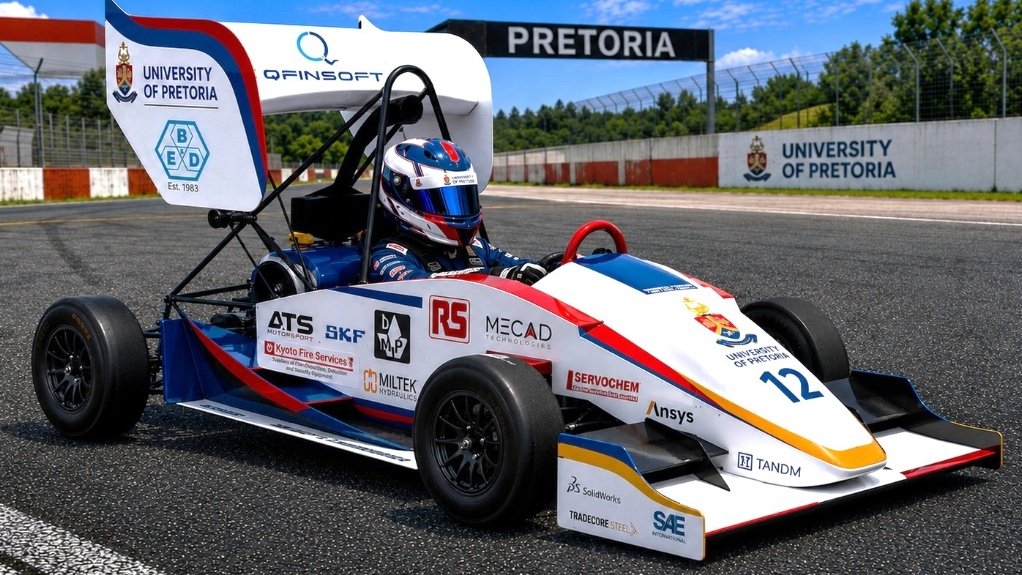
FORMULA STUDENT RACE CAR The Formula One-style race car is a prime example of the design and manufacturing skills from the team of UP engineering students
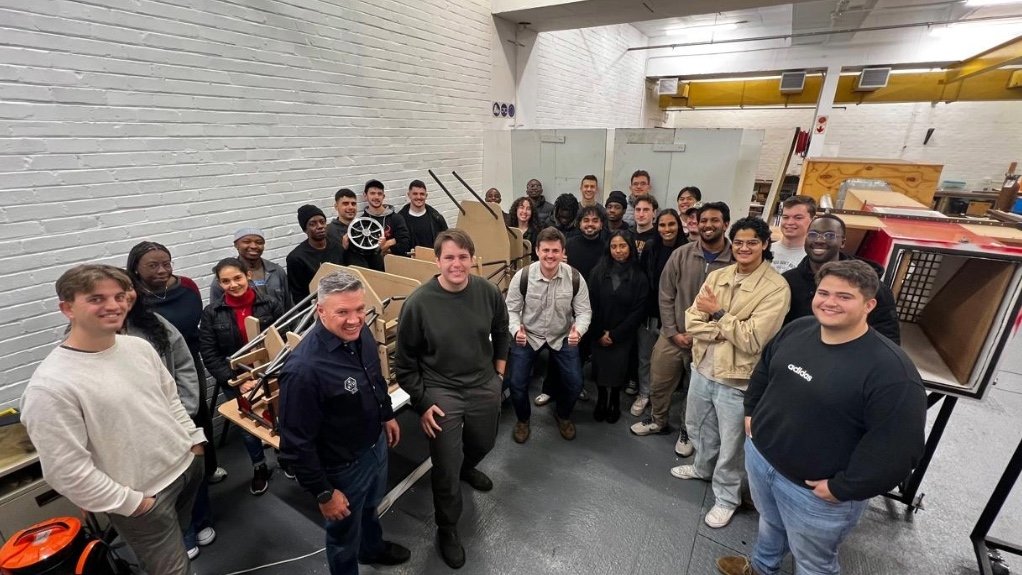
ENGINEERING TEAM EXCELLENCE The group of UP engineering students are working together on the race car alongside UP professors and B.E.D. experts
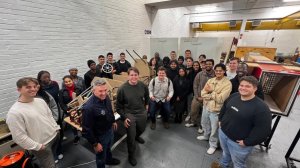


The manufacturing process to build a Formula One-style race car by a team of mechanical engineering students from tertiary institution University of Pretoria (UP) is progressing steadily.
The bolts and bearings will be supplied by the Tshwane branch of engineering solutions company Bolt and Engineering Distributors Group (B.E.D.), which has more than 40 years in the supply of bolts and other industrial equipment. The company is also sponsoring the required bolts and providing engineering expertise on bolt and bearing selection.
The single-seater Formula Student race car is expected to be completed by the end of October – in time for a major race and sponsor showcase scheduled for November 30.
The collaboration between B.E.D. and the UP students will develop the students’ engineering skills, as they will be required to design and manufacture the vehicle’s components using sub-assembled components ranging from the frame, wings, steering and suspension, to the wheel hubs and drivetrain.
The car is being constructed in phases, with the first phase comprising the frame – which required the design of jigs to hold the pipes, which were then welded together in accordance with Formula Student rules and regulations, elaborates UP Faculty of Mechanical and Aeronautical Engineering lecturer Professor Dirk van Vuuren.
“The engine will be placed into the frame, along with the required circuitry needed for operation. Once the engine is fitted, ancillaries, such as radiators, the rear differential, suspension and steering components, will be fitted. This will ensure that we have a rolling chassis. Once the rolling chassis has been created, the final components will be added, including the front, side and rear wings, the underplate, seat and safety belt.”
Although the integration of all components has, to date, posed a significant challenge for the students, the aim of the project is to allow them to address challenges by aligning their theoretical knowledge with practical application to produce the final product.
Fastener Technicalities
With fasteners (bolts) being a significant line-item and technical component, B.E.D. has emphasised the provision of its best fastener products to ensure precision and compliance with safety standards.
The company’s precision engineering expertise, coupled with its fastener solutions, ensures that students have “exactly what they need” to build the car, says B.E.D. Tshwane director and operations manager Phil van der Westhuizen.
The company will provide the student team with a range of certified fastener solutions capable of withstanding high vibration, high temperatures, and heavy aerodynamic and suspension loads. “The difference between a correctly specified, certified fastener and a generic equivalent can be the difference between finishing a race and a catastrophic failure,” he adds.
Some of the fasteners that B.E.D. will supply include high-tensile socket head cap screws in property classes 8.8, 10.9 and 12.9 for chassis, suspension and drivetrain assemblies; hexagon head bolts and setscrews in high-tensile and stainless steel grades; self-locking nuts for vibration-critical joints; flat, spring and load-spreading washers in matching grades; and button head and countersunk socket screws for bodywork and aerodynamic components.
Stainless steel fasteners for corrosion-sensitive areas, such as the cooling and fuel systems, as well as studs, threaded rod and specialised small hardware for brackets and adjustable suspension components, will also be included, says Van der Westhuizen.
These are the best options for the project because they combine certified mechanical properties with consistency – so that every batch performs the way the students’ calculations say that it should.
All high-tensile fasteners supplied by B.E.D. conform to relevant international standards, most notably ISO 898-1, with applicable International Organisation for Standardisation (ISO) and Deutsches Institut für Normung (DIN) dimensional standards and South African National Standards (SANS) equivalents used locally. Stainless steel fasteners conform to ISO 3506.
B.E.D. bearings product specialist Pieter Cilliers says the company is also assisting students by offering its technical expertise in bolting and bearing solutions to ensure that these are suited to the demanding conditions under which the Formula Student car will operate.
“B.E.D. actively supports educational institutions and engineering development initiatives . . . This includes providing engineering components, specialist products, technical guidance and knowledge.”
Consequently, the students will enjoy access to “industry-leading innovations”, such as those the company provided to other engineering faculties for past projects, including the development of a solar-powered car.
Building Future Engineers
Industry body South African Institute of Steel Construction (SAISC) representative Storm Boshoff says that the institute’s flagship engineering manual, known in industry as the ‘Red Book’ – has been adopted by UP to ensure high-quality engineering and safety standards, including ISO standards, ISO 898-1 and ISO 3506, as well as DIN and SANS.
SAISC’s expertise in the steel industry enabled it to appoint long-term member and sponsor B.E.D. as the product supplier, support provider and experts for the race car project.
“When the Formula Student project came together, it made perfect sense for us to help Professor Van Vuuren and his student team by pointing them to the right people in our industry, which is exactly what SAISC does,” Boshoff adds.
She says the project is going “smoothly” and applauds the students for their steadfastness in applying their theoretical knowledge.
However, she believes that more is required from other steel industry stakeholders and engineers to support initiatives such as this one, with this project also being a first-of-its-kind project for South Africa which will empower future engineers.
Van der Westhuizen concurs, commenting that “for B.E.D. Tshwane, sponsoring the UP’s Formula Student team is an investment in the future of South African engineering”. “These students are the design engineers, project managers and plant engineers of tomorrow – the very people our industry will depend on,” he concludes.
Article Enquiry
Email Article
Save Article
Feedback
To advertise email advertising@creamermedia.co.za or click here
Research Reports
Projects

Latest Multimedia
Latest News

Showroom
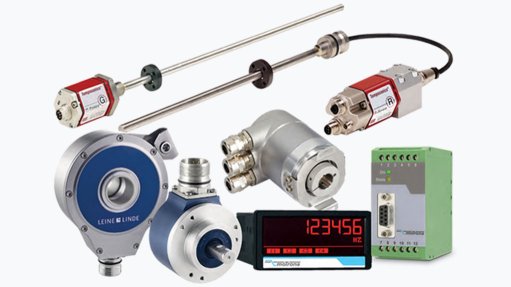
ATI systems comprises five divisions: electrical assemblies, drives and controls, feedback sensors, enclosures, and strip guiding.
VISIT SHOWROOM
As a reticulator, Egoli Gas provides natural gas to homes and businesses via underground pipes.
VISIT SHOWROOM
Press Office
Announcements
What's On
Subscribe to improve your user experience...
Option 1 (equivalent of R125 a month):
Receive a weekly copy of Creamer Media's Engineering News & Mining Weekly magazine
(print copy for those in South Africa and e-magazine for those outside of South Africa)
Receive daily email newsletters
Access to full search results
Access archive of magazine back copies
Access to Projects in Progress
Access to ONE Research Report of your choice in PDF format
Option 2 (equivalent of R375 a month):
All benefits from Option 1
PLUS
Access to Creamer Media's Research Channel Africa for ALL Research Reports, in PDF format, on various industrial and mining sectors
including Electricity; Water; Energy Transition; Hydrogen; Roads, Rail and Ports; Coal; Gold; Platinum; Battery Metals; etc.
Already a subscriber?
Forgotten your password?
Receive weekly copy of Creamer Media's Engineering News & Mining Weekly magazine (print copy for those in South Africa and e-magazine for those outside of South Africa)
➕
Recieve daily email newsletters
➕
Access to full search results
➕
Access archive of magazine back copies
➕
Access to Projects in Progress
➕
Access to ONE Research Report of your choice in PDF format
RESEARCH CHANNEL AFRICA
R4500 (equivalent of R375 a month)
SUBSCRIBEAll benefits from Option 1
➕
Access to Creamer Media's Research Channel Africa for ALL Research Reports on various industrial and mining sectors, in PDF format, including on:
Electricity
➕
Water
➕
Energy Transition
➕
Hydrogen
➕
Roads, Rail and Ports
➕
Coal
➕
Gold
➕
Platinum
➕
Battery Metals
➕
etc.
Receive all benefits from Option 1 or Option 2 delivered to numerous people at your company
➕
Multiple User names and Passwords for simultaneous log-ins
➕
Intranet integration access to all in your organisation