Beyond jobs – rethinking skills development in mining communities




This article has been supplied and will be available for a limited time only on this website.
For many years, the success of mining Social and Labour Plans (SLPs) has been measured through straightforward outputs: the number of people trained, bursaries awarded and jobs created.
Those indicators made sense when mining was one of South Africa’s largest employers. During the 1980s, the industry employed close to 800,000 people, with labour-intensive gold mining accounting for the majority of jobs. Today, despite remaining a cornerstone of the economy, the sector directly employs fewer than 500,000 people. Advances in mechanisation, automation and digital technologies have enabled mines to improve productivity, safety and environmental performance while requiring significantly fewer employees.
A highly mechanised mine may employ around 1,200 people, while surrounding communities include tens of thousands seeking work.”
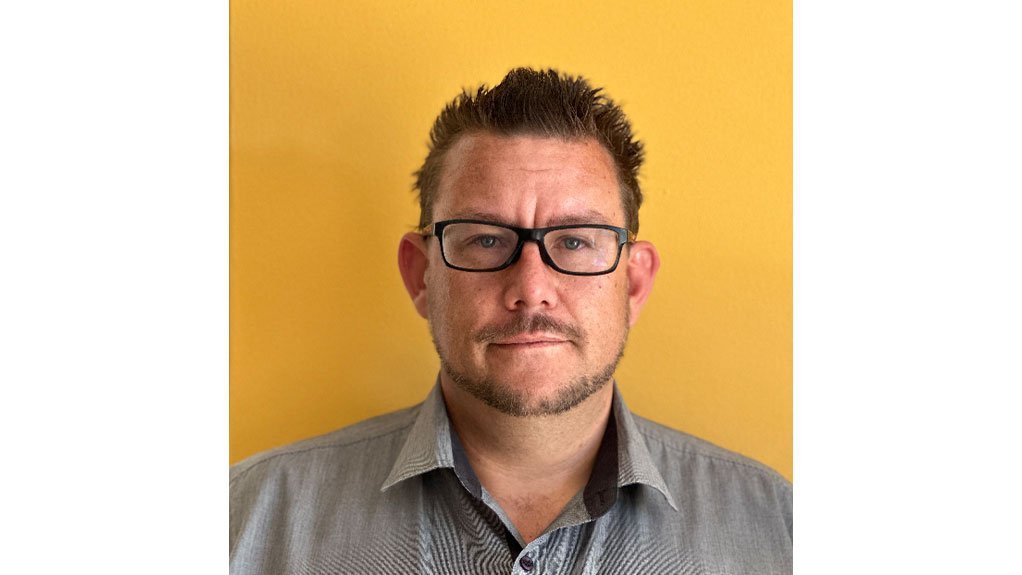
“Employment is no longer the primary measure of a successful mining SLP. This presents a growing challenge for skills development programmes,” says Marco Maree, Training & Development Expert at Triple E Training, the country’s foremost provider of foundational skills training to the mining industry.
He says that the changing nature of mining raises an important question: if mines cannot employ everyone living in surrounding communities, what should SLP’s human resources development component actually achieve?
“Increasingly, the answer lies in moving beyond employment-based metrics towards building capabilities that enable people to create sustainable livelihoods long after the mine itself has closed,” says Maree.
Creating sustainable livelihoods beyond mining
The need for this shift is clear. According to one comprehensive academic study, South Africa’s 84 large-scale mining host communities are home to 5.4 million people – more than 10% of the country's population. “Many remain heavily dependent on mining and are therefore vulnerable to mechanisation and eventual mine closure,” he says.
Mining Affected Communities United in Action reports that unemployment in communities surrounding some of South Africa’s largest mining operations consistently exceeds 65%, with certain communities recording unemployment as high as 82%.
Maree notes, “Many people in rural mining communities have not had access to strong foundational education. Challenges in literacy, numeracy and digital literacy make it more difficult to progress into higher-level technical training.”
He, therefore, believes the focus of SLPs should be on building the capabilities that enable them to succeed throughout their working lives.
Building on existing strengths
Maree says effective skills development should begin by recognising what communities already have rather than focusing on what they lack.
“People in mining host communities possess a wealth of practical experience, local knowledge and informal skills developed through years of work, enterprise and community life. These capabilities provide a valuable foundation on which more advanced technical, digital and entrepreneurial skills can be built,” he says.
Starting with existing strengths makes training more relevant and sustainable. It also shifts the focus from importing external solutions to developing local capability.
“Instead of viewing communities primarily as beneficiaries of mining investment, they become active participants in shaping their own economic future,” he says.
Building capability for lifelong learning
According to Maree, the foundation of effective skills development lies in literacy, numeracy, digital literacy and problem-solving.
“These foundational skills provide the platform on which all further learning is built,” he says. “Without them, individuals are less able to acquire technical qualifications, adapt to new technologies, pursue entrepreneurship or respond to changing labour market demands.”
From this base, SLPs can develop transferable technical, digital, entrepreneurial and business skills that enable people to participate in a broader local economy rather than relying solely on employment at the mine.
He emphasises that skills development is a journey rather than a one-off intervention.
“Effective skills development is not measured by the completion of a course or the awarding of a certificate. It is a long-term process of building knowledge, confidence and capability,” he says, adding that mentoring, coaching and practical experience enable application of new knowledge, continued learning and progression to higher levels.
“The objective is not simply to deliver training, but to build capability that enables people to continue learning, secure employment, establish enterprises and adapt to changing economic opportunities,” Maree says.
Measuring what matters
Maree also believes SLPs should be judged by the outcomes they achieve rather than the number of people who attend training.
“Counting participants or certificates only tells part of the story,” he says. “The real measure of success is whether skills development creates lasting economic opportunities and stronger, more resilient communities.”
This means looking beyond training outputs to outcomes such as new businesses established, income generated, local suppliers developed, improved food security and the ability of individuals and communities to adapt to changing economic conditions.
“These are the indicators that demonstrate whether skills development is creating sustainable livelihoods and reducing long-term dependence. That is also far more closely aligned with the outcomes expected of modern Environmental, Social and Governance programmes,” he says.
Partnerships that strengthen communities
Maree notes that effective skills development cannot be delivered by mining companies alone. “Lasting outcomes depend on strong partnerships that bring together the expertise and resources of municipalities, government departments, community leadership and other local stakeholders,” he says.
Triple E Training’s experience of delivering community training across a range of industries shows that the most successful programmes involve municipalities, government departments, community leadership and other local partners. “Each has a distinct role to play in creating opportunities and supporting long-term development,” he says.
By working collaboratively, skills development becomes better aligned with local priorities, creates stronger support networks for learners and helps ensure that programmes continue delivering value long after the initial training has been completed.
“The real measure of an SLP is not how many people attended training, but whether communities are better equipped to create opportunities for themselves,’ Maree concludes.
“The greatest value of skills development lies in equipping people with the skills to keep learning, adapt to changing opportunities and build sustainable livelihoods. If we achieve that, we are not only supporting mining communities today – we are helping them prosper long after mining has ended.”
Article Enquiry
Email Article
Save Article
Feedback
To advertise email advertising@creamermedia.co.za or click here
Research Reports
Projects
Latest Multimedia


Latest News

Showroom

Mitsubishi Chemical Advanced Materials South Africa (Pty) Ltd is a leading manufacturer of high-performance engineering plastics for the mining...
VISIT SHOWROOM
Sweet-Orr, established in 1871, is a global leader in superior protective workwear, known for quality, innovation, and performance.
VISIT SHOWROOM


Press Office
Announcements
What's On
Subscribe to improve your user experience...
Option 1 (equivalent of R125 a month):
Receive a weekly copy of Creamer Media's Engineering News & Mining Weekly magazine
(print copy for those in South Africa and e-magazine for those outside of South Africa)
Receive daily email newsletters
Access to full search results
Access archive of magazine back copies
Access to Projects in Progress
Access to ONE Research Report of your choice in PDF format
Option 2 (equivalent of R375 a month):
All benefits from Option 1
PLUS
Access to Creamer Media's Research Channel Africa for ALL Research Reports, in PDF format, on various industrial and mining sectors
including Electricity; Water; Energy Transition; Hydrogen; Roads, Rail and Ports; Coal; Gold; Platinum; Battery Metals; etc.
Already a subscriber?
Forgotten your password?
Receive weekly copy of Creamer Media's Engineering News & Mining Weekly magazine (print copy for those in South Africa and e-magazine for those outside of South Africa)
➕
Recieve daily email newsletters
➕
Access to full search results
➕
Access archive of magazine back copies
➕
Access to Projects in Progress
➕
Access to ONE Research Report of your choice in PDF format
RESEARCH CHANNEL AFRICA
R4500 (equivalent of R375 a month)
SUBSCRIBEAll benefits from Option 1
➕
Access to Creamer Media's Research Channel Africa for ALL Research Reports on various industrial and mining sectors, in PDF format, including on:
Electricity
➕
Water
➕
Energy Transition
➕
Hydrogen
➕
Roads, Rail and Ports
➕
Coal
➕
Gold
➕
Platinum
➕
Battery Metals
➕
etc.
Receive all benefits from Option 1 or Option 2 delivered to numerous people at your company
➕
Multiple User names and Passwords for simultaneous log-ins
➕
Intranet integration access to all in your organisation