Schneider Electric, Schneider Electric Foundation and The BOOST Fellowship launch energy transition innovation challenge to equip Zimbabwe’s youth

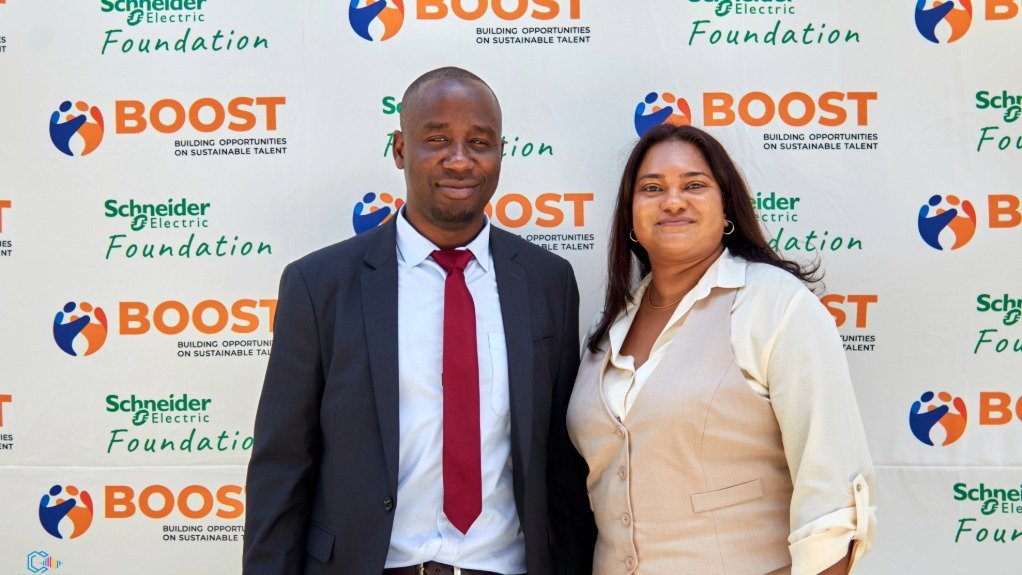
Tinashe Mushonga, Executive Director of BOOST Fellowship, & Ravishka Jairam, Youth Education & Entrepreneurship Programme Leader at Schneider Electric



Schneider Electric and the Schneider Electric Foundation, in partnership with NGO, The BOOST Fellowship and key government and education stakeholders, have officially launched the Energy Transition Innovation Challenge, an exciting initiative designed to equip Zimbabwe’s youth with the skills, knowledge, and opportunities required to participate in and lead the country’s energy transition.
Launched in Ruwa District, Mashonaland East Province, the programme forms part of Schneider Electric’s global Youth Education and Entrepreneurship (YEE) programme which focuses on developing future-ready skills in the energy transition and fostering inclusive economic growth.
The Energy Transition Innovation Challenge which will be hosted at the Ruwa Vocational Training Centre’s innovation hub as central implementation site, is a two-year programme and expected to impact 9,000 young people, with 3,000 participants in its first year and a further 6,000 in the second.
Importantly, the initiative prioritises inclusivity, targeting young people from underserved and rural communities to ensure that access to opportunity is equitable and far-reaching.
The initiative also aligns with Schneider Electric’s broader ambition to empower three million young people worldwide by 2030 with access to education, training, and entrepreneurship opportunities.
Prioritising learning for the future
The Energy Transition Innovation Challenge will be realised through a hybrid model combining digital learning and in-person training initially at the central innovation hub and similar hubs in the second year of the programme.
It integrates Schneider Electric’s Energy Transition course, which forms part of the Get into Energy Transition curriculum, which equips participants with foundational skills and knowledge required to progress towards exciting jobs in the renewable energy ,with complementary content from UNICEF’s Futuremakers initiative that focuses on design thinking, entrepreneurship, and project management for inclusive economic participation.
“This Energy Transition Innovation Challenge will provide young Zimbabweans with the capabilities to thrive in today and the future’s energy landscape, while contributing meaningfully to sustainable development and economic resilience. We look forward to working with The BOOST Foundation on this truly exciting initiative,” says Ravishka Jairam, Youth Education & Entrepreneurship Programme Leader at Schneider Electric.
“Through this partnership with Schneider Electric Foundation, we are creating an ecosystem where young people are not only equipped with green, technical and entrepreneurial skills, but are also empowered to become innovators, problem-solvers and job creators within Zimbabwe’s growing green economy,” says Tinashe Mushonga, Executive Director, BOOST.
“At BOOST, we believe that young people are central to driving sustainable development, and the Energy Transition Innovation Challenge provides a practical platform for them to transform ideas into impactful community solutions,” she concludes.
The Energy Transition Innovation Challenge seeks to equip young people with critical, future-focused skills in:
- Renewable energy and energy transition technologies.
- Entrepreneurship and innovation.
- Design thinking and problem-solving.
- Project management and digital skills.
- Project-based practical, hands-on technical training.
Participants will engage in real-world learning experiences, developing innovative solutions to community challenges and presenting their projects in a structured competition format.
The Energy Transition Innovation Challenge is built on three core pillars:
1) Skills and knowledge
Participants gain access to industry-relevant training through globally recognised curricula, combining technical expertise with essential soft skills. In addition, they will be equipped with basic technical and practical project skills.
2) Innovation and creativity
Young people work in teams to identify local challenges and develop practical, scalable solutions—from solar-powered systems to energy efficiency initiatives. Furthermore, there will be coaching and mentorship to support teams.
3) Competition and entrepreneurship pathways
Competition event where the top three teams will receive prize money to further develop their concepts, while receiving ongoing coaching and mentorship. The programme creates tangible opportunities for participants to launch businesses or take on leadership roles within their communities.
Strong partnership that will drive impact
The success of the Energy Transition Innovation Challenge is underpinned by a robust ecosystem of partners, including:
- Schneider Electric Foundation with Schneider Electric contributing financially and curriculum content.
- The BOOST Fellowship, leading programme delivery and youth engagement
- Ruwa Vocational Training Centre, hosting the Innovation hub as central implementation site.
- Government ministries and local authorities, including representation from Zimbabwe’s education and youth development sectors.
- Partner colleges, universities, trainers, and mentors.
The Energy Transition Innovation Challenge also contributes directly to national objectives around sustainable development, energy diversification, and economic transformation. It aims to:
- Build local technical capacity in renewable energy.
- Support the growth of a green economy.
- Foster entrepreneurship and job creation.
Strengthen community resilience to climate and economic challenges.
“This programme is about creating real, tangible pathways; moving from learning to doing, from ideas to implementation, and from potential to impact,” concludes Jaram.
Article Enquiry
Email Article
Save Article
Feedback
To advertise email advertising@creamermedia.co.za or click here


Projects


Latest Multimedia


Latest News

Showroom
Axiom Hydraulics is a trusted leader in South Africa’s hydraulic industry, delivering world-class components, systems, and engineering expertise...
VISIT SHOWROOM
Established on 1 March, 2000, by Barries Barnard, Advanced Fire Suppression Technologies (AFST) and the Advanced Group stands as Sub-Saharan...
VISIT SHOWROOM



Press Office
Announcements
What's On
Subscribe to improve your user experience...
Option 1 (equivalent of R125 a month):
Receive a weekly copy of Creamer Media's Engineering News & Mining Weekly magazine
(print copy for those in South Africa and e-magazine for those outside of South Africa)
Receive daily email newsletters
Access to full search results
Access archive of magazine back copies
Access to Projects in Progress
Access to ONE Research Report of your choice in PDF format
Option 2 (equivalent of R375 a month):
All benefits from Option 1
PLUS
Access to Creamer Media's Research Channel Africa for ALL Research Reports, in PDF format, on various industrial and mining sectors
including Electricity; Water; Energy Transition; Hydrogen; Roads, Rail and Ports; Coal; Gold; Platinum; Battery Metals; etc.
Already a subscriber?
Forgotten your password?
Receive weekly copy of Creamer Media's Engineering News & Mining Weekly magazine (print copy for those in South Africa and e-magazine for those outside of South Africa)
➕
Recieve daily email newsletters
➕
Access to full search results
➕
Access archive of magazine back copies
➕
Access to Projects in Progress
➕
Access to ONE Research Report of your choice in PDF format
RESEARCH CHANNEL AFRICA
R4500 (equivalent of R375 a month)
SUBSCRIBEAll benefits from Option 1
➕
Access to Creamer Media's Research Channel Africa for ALL Research Reports on various industrial and mining sectors, in PDF format, including on:
Electricity
➕
Water
➕
Energy Transition
➕
Hydrogen
➕
Roads, Rail and Ports
➕
Coal
➕
Gold
➕
Platinum
➕
Battery Metals
➕
etc.
Receive all benefits from Option 1 or Option 2 delivered to numerous people at your company
➕
Multiple User names and Passwords for simultaneous log-ins
➕
Intranet integration access to all in your organisation