



Policy Uncertainty Index improves to 53.2, but remains in negative territory

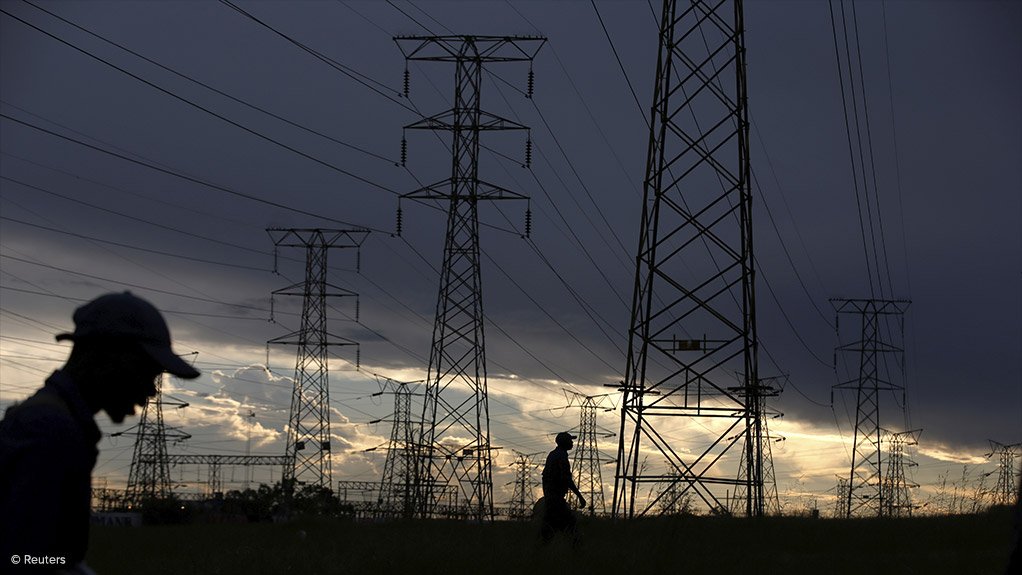


The North-West University Business School’s Policy Uncertainty Index (PUI) for the fourth quarter of 2022 eased to 53.2 points down from the 59.6 recorded in the third quarter, but it remains in negative territory above the 50-point baseline.
Nevertheless, the positive factors in the fourth quarter outweighed the negatives to significantly reduce the fourth-quarter PUI.
The record elevation of the PUI in recent years owed much to a formidable combination of negative global and domestic factors that persisted for a while, but the calibration of the fourth quarter of 2022 PUI suggests that some of these negative factors have either ameliorated or are now being largely priced in by the markets, NWU Business School's Professor Raymond Parsons said in a January 9 release.
"Positive trends in South Africa in recent months included the much better-than-expected gross domestic product (GDP) growth in the third quarter of 2022, following negative growth in the second quarter, a slight easing in the rate of inflation, lower fuel costs, better employment figures, additional anti-corruption steps, a well-accepted Medium-Term Budget Policy Statement in October and the leadership outcome of the ANC fifty-fifth elective conference in December.
“The credit rating agencies have also maintained a stable outlook for South Africa, although the junk investment rating itself remains unchanged for now.
"In particular, South Africa’s real GDP in third quarter of 2022 rose by 1.6%, which was well ahead of consensus forecasts of only 0.4%. While there may also have been technical reasons for this outcome, the upshot is that growth forecasts have had to be revised upward," he noted.
"For 2022 as a whole, growth is now likely to be about 2.3%, instead of the consensus view of 1.8%, and for 2023, GDP growth may be about 1.4%, compared to the consensus view of 1.2%. This surprise GDP growth was largely driven by agriculture with its bumper crop yield, together with support from most other sectors of the economy," Parsons added.
Further, the re-election of President Cyril Ramaphosa as ANC president appears to have had a particularly favourable impact on the PUI for the fourth quarter of 2022.
Meanwhile, negative factors that influenced the fourth-quarter PUI included the shock resignation of Eskom CEO André de Ruyter, intensified loadshedding, the twin impact of high inflation and higher interest rates on disposable income of households, continued low business and consumer confidence levels, and residual uncertainties arising from the ANC’s elective conference in December.
"The South African economy is struggling to gain momentum in the face of various socioeconomic challenges. There are no grounds for complacency.
"However, a reduction in policy uncertainty nonetheless creates a useful platform on which to encourage new investment and job-rich growth. Ramaphosa has a strong political mandate to tackle the domestic constraints on South Africa’s economic performance, such as on the energy front. The big challenge in 2023 remains the rapid and successful implementation of key economic reforms that further reduce policy uncertainty and ignite confidence," Parsons noted.
Externally, the immediate global implications for the South African economy have registered in five broad, uncertain ways, namely the continued Russia-Ukraine war; the accelerated slowdown in the world economy, including for sub-Saharan Africa; weaker international commodity prices; the outlook for energy and food prices; and a world that has moved into a cycle of dearer money.
"Stronger economic growth in South Africa requires multi-tiered good news on the implementation front in 2023, especially on energy matters. Absent that, it is difficult to see the economy attaining the levels of investment and job creation that it needs. The big challenge in unlocking SA’s true economic potential remains the rapid and successful implementation of key domestic reforms that further reduce policy uncertainty and ignite confidence," Parsons said.
Further, in a recent survey, global body the International Monetary Fund (IMF) forecast that more than a third of economies worldwide will have contracted by the end of 2022 or will do so during 2023.
Global body the World Bank, therefore, believes that, in these more vulnerable circumstances, even a small shock could knock the global economy off course and precipitate a wider recession.
It would seem that economic growth and interest rates are now the two main variables to watch globally in 2023, the NWU PUI outlined.
The IMF has cut its overall 2023 global growth forecast from 2.9% to 2.7%. Growth predictions from the private sector have been more bearish. The IMF believes there is a one-in-four chance that global growth will fall below 2% in 2023 and a probability of 10% to 15% that it will drop below 1%. The IMF again stressed that the general global outlook "remains fraught with uncertainty", the PUI highlighted.
There is mounting evidence that global inflation may have peaked or is close to that point. Central banks, however, remain cautious. Although future interest rate hikes in several economies may be less aggressive into 2023, there is unlikely to be an early return to softer monetary policies.
Central banks, including the US Federal Reserve, will want to see more definitive evidence of declining inflation, and even in some cases likely rising unemployment, before cutting interest rates. Several markets are gradually adjusting to that scenario, the NWU said.
Additionally, regarding sub-Saharan Africa, the IMF expects the region’s GDP growth to have slowed sharply by more than 1% to 3.6% in 2022 and to remain at about that level in 2023.
This is the inevitable outcome of the slowdown in advanced economies and emerging markets, tightening global financial conditions and volatile commodity prices. In a region already wearied by ongoing shocks, such as Covid-19, rising food and energy prices are severely impacting on the vulnerable.
The IMF says public debt and inflation in sub-Saharan Africa are at levels not seen in decades. These deteriorating economic conditions are also creating serious socio-political tensions, the PUI for the fourth quarter of 2022 showed.
The risks for economic growth in sub-Saharan Africa are presently on the upside, the extent depending on what steps are taken to offset or mitigate the escalating pressures, the report added.
Article Enquiry
Email Article
Save Article
Feedback
To advertise email advertising@creamermedia.co.za or click here
Research Reports

Projects

Latest Multimedia
Showroom
Axiom Hydraulics is a trusted leader in South Africa’s hydraulic industry, delivering world-class components, systems, and engineering expertise...
VISIT SHOWROOM
Your global lifecycle technology & service partner for materials & minerals processing equipment for coal, iron ore, copper, manganese & other...
VISIT SHOWROOM



Announcements
What's On
Subscribe to improve your user experience...
Option 1 (equivalent of R125 a month):
Receive a weekly copy of Creamer Media's Engineering News & Mining Weekly magazine
(print copy for those in South Africa and e-magazine for those outside of South Africa)
Receive daily email newsletters
Access to full search results
Access archive of magazine back copies
Access to Projects in Progress
Access to ONE Research Report of your choice in PDF format
Option 2 (equivalent of R375 a month):
All benefits from Option 1
PLUS
Access to Creamer Media's Research Channel Africa for ALL Research Reports, in PDF format, on various industrial and mining sectors
including Electricity; Water; Energy Transition; Hydrogen; Roads, Rail and Ports; Coal; Gold; Platinum; Battery Metals; etc.
Already a subscriber?
Forgotten your password?
Receive weekly copy of Creamer Media's Engineering News & Mining Weekly magazine (print copy for those in South Africa and e-magazine for those outside of South Africa)
➕
Recieve daily email newsletters
➕
Access to full search results
➕
Access archive of magazine back copies
➕
Access to Projects in Progress
➕
Access to ONE Research Report of your choice in PDF format
RESEARCH CHANNEL AFRICA
R4500 (equivalent of R375 a month)
SUBSCRIBEAll benefits from Option 1
➕
Access to Creamer Media's Research Channel Africa for ALL Research Reports on various industrial and mining sectors, in PDF format, including on:
Electricity
➕
Water
➕
Energy Transition
➕
Hydrogen
➕
Roads, Rail and Ports
➕
Coal
➕
Gold
➕
Platinum
➕
Battery Metals
➕
etc.
Receive all benefits from Option 1 or Option 2 delivered to numerous people at your company
➕
Multiple User names and Passwords for simultaneous log-ins
➕
Intranet integration access to all in your organisation
