



Policy frictions, trade disruptions shape metal flows – report

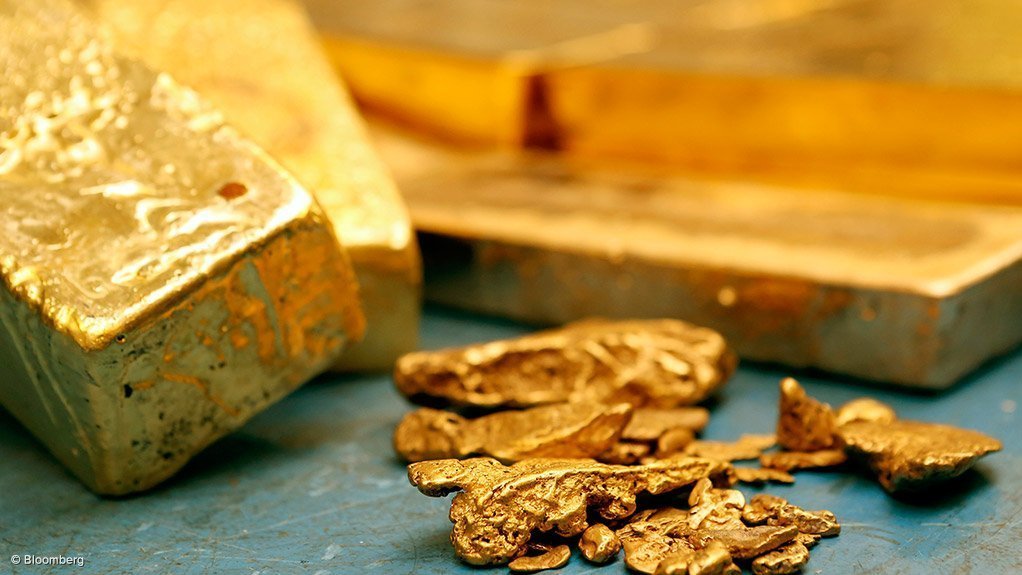



As news of a potential agreement at a permanent end to the conflict between the US and Iran broke on May 6, oil prices fell, prompting rallies of stocks and precious metals, says metals refinery services provider Heraeus.
Newswire Reuters, however, reported on May 11 that US President Donald Trump did not agree to Iran’s response to the US’s peace proposal. Uncertainty thus remains as two whether the conflict will come to an end soon.
In its latest ‘Precious Appraisal’ report published on May 11, Heraeus explains that it is unclear whether the agreement proposed by the US would be final or a precedent to further talks once the Strait of Hormuz is open and the US blockade of Iranian ports is lifted.
If further talks were part of this negotiation, the company says they would likely revolve around Iran’s nuclear programme.
The report points out that Brent Crude fell 6.2% as the S&P 500 rose 1%, while the gold and silver prices rallied by 2.7% and 5.1%, respectively.
It notes that the correlation between precious metals, often viewed as safe havens, and stocks, often viewed as higher risk, is owing to what impact a prolonged conflict would have on interest rates.
“If prices are to rise significantly, markets expect interest rates to also rise. This affects both gold, which earns no yield, and stocks which are sensitive to the cost of money rising”.
Banks in India have been unable to import gold and silver since the start of the new Indian tax year on April 1.
This is owing to India’s trade ministry delaying the publication of its list of banks eligible to import precious metals until April 17. Since then, imports have not resumed owing to officials in ports and airports lacking clearance orders.
There has also been a lack of clarity as to whether gold and silver are included in India’s Integrated Goods and Services Tax.
Gold imports into India in April were 660 000 oz, down from 940 000 oz in April 2025. India is the second largest jewellery market after China and has little domestic gold production and therefore has to import most of its gold.
China’s central bank gold reserves show an eighteenth consecutive month of accumulation. The People’s Bank of China (PBOC) declared that it had bought 8 t of gold in April.
This purchase is large, compared to recent months, constituting nearly one-third of its total purchases of 26.1 t since the end of April 2025 and taking the bank’s declared reserves to 2 321.5 t as of the end of April.
China’s reserves are the fifth-largest in the world, behind the US, Germany, Italy and France.
Regarding silver, Heraeus notes that Pan American Silver has reported attributable silver production of 6.44-million ounces in the first quarter of this year, up by 29% year-on-year from five-million ounces in the first quarter of 2025.
The report explains that the increase was supported by consistent operational performance and a greater contribution of lower-cost ounces from the Juanicipio mine.
These factors helped to reduce Pan American’s silver segment all-in sustaining cost (AISC) for the quarter to $6.63/oz from $13.88/oz in the first quarter of 2025.
Heraeus warns that these reductions in AISC for the first quarter of this year could meet headwinds as the conflict in the Middle East feeds through from higher fuel prices to higher mining costs.
Pan American reiterated its financial year 2026 silver production guidance of between 25-million to 27-million ounces.
Mexico is the company’s largest silver-producing jurisdiction. Mexico produced 203-million ounces in 2025, and output is expected to be stable to slightly lower this year.
Additionally, the report notes that Endeavour Silver has reported silver production of 1.88-million ounces in the first quarter of this year, up by 56% year-on-year.
The increase was primarily driven by the contribution from the newly ramped-up Terronera and Kolpa mines.
Endeavour Silver’s AISC increased by 51% year-on-year to $37.03/oz, reflecting higher royalties, mining duties and the inclusion of higher-cost operations, though its AISC declined from $41.19/oz in the fourth quarter of 2025.
The company stated it remained well-positioned to achieve its production goals for the remainder of this year. The great majority of Endeavour’s silver production comes from Mexico, with its largest mine outside of Mexico being Kolpa in Peru.
PLATINUM
Meanwhile, Heraeus points out that mining and metals company Sibanye-Stillwater reported solid platinum production in the first quarter of this year.
Across its South African operations, the report notes that Sibanye-Stillwater reported platinum production of 240 000 oz in the quarter, up by 2.6% year-on-year.
Unit costs increased during the quarter, with AISC rising to $1 507/4E oz from $1 331/4E oz in the first quarter of 2025.
The report indicates that the stronger South African production performance was supported by improved operational stability and throughput at Rustenburg and Marikana.
It notes that cost pressures across both mines were driven by ongoing cost inflation, including higher labour and electricity costs.
In its US operations, Sibanye-Stillwater reported platinum production of 15 100 oz in the first quarter of this year (and 53 000 oz of palladium), down by 6.8% year-on-year.
Over the same period, unit costs increased, with AISC rising to $1 291/2E oz from $1 137/2E oz in the first quarter of 2025.
Additionally, the report notes that Sylvania Platinum reported slightly lower platinum production in the first quarter of this year.
The company produced 11 500 oz of platinum during the quarter, down by 7%
from 12 300 oz in the previous quarter.
This was primarily owing to lower feed grades and weaker recovery rates following the seasonal slowdown typically seen at the start of the year.
Despite this, both the eastern and western limb operations exceeded their targets during the quarter, and Sylvania stated it was likely to achieve its 2026 production guidance range of 45 000 oz to 47 000 oz of platinum.
PALLADIUM
Heraeus also notes that China’s electric vehicle (EV) exports continued to expand rapidly in March.
The report explains that China exported 206 777 battery EVs (BEVs) in March, up by 42% year-on-year, with strong growth across Europe and Latin America.
It also notes that exports to the EU in March more than doubled to 52 897 units, while shipments to Brazil surged by 418% year-on-year to 23 850 vehicles, making it China’s largest EV export destination during the month.
At the end of the first quarter of this year, BEVs made up 6.8% of Brazilian market share, up 3.4 percentage points from the end of the first quarter of 2025.
“China is producing more affordable cars that many markets are open to receiving including gasoline and hybrid vehicles which are also being exported from China in increasing numbers.
“However, overall BEVs are gaining market share globally which is gradually reducing automotive demand for palladium,” the report says.
Additionally, Heraeus notes that Europe imported 76 062 Chinese EVs in March, an increase of 116% year-on-year, highlighting the growing competitiveness of Chinese manufacturers in overseas markets despite increasing trade tensions and protectionist
measures.
Year-to-date, Chinese EV exports have risen by 53% to 615 951 units, strengthening China’s position as a dominant exporter of BEVs. In the first quarter of this year, BEVs made up 19.4% of EU market share (roughly 547 000 cars), up 4.2 percentage points from the first quarter of 2025.
Moreover, Heraeus notes that the US stands out as a large market that is not moving towards greater BEV sales.
The report explains that Nissan has cancelled its planned US EV expansion amid weakening US BEV demand.
It notes that Nissan has abandoned plans to invest $500-million into EV production at its Canton, Mississippi, plant, instead pivoting back towards internal combustion engine (ICE) and hybrid-based trucks and sport utility vehicles (SUVs).
The automaker had previously intended the site to become a major EV manufacturing hub producing multiple battery-powered Nissan and Infiniti models, targeting combined yearly sales of 200 000 EVs in the US by 2028.
Nissan cited changing market conditions and weaker customer demand for EVs following the removal of the US federal Clean Vehicle Tax Credit last year.
Heraeus says the company will now focus on a new range of body-on-frame vehicles, including a revived Xterra SUV and next-generation Frontier pickup, reflecting a broader industry shift away from full BEVs and towards hybrid and conventional powertrains as US EV sales weaken.
The report notes that BEVs made up 6.3% of the US light-vehicle market share in March, down from 7.4% in March 2025.
Meanwhile, in terms of rhodium, ruthenium and iridium, Heraeus points out that Western Digital sees strong hard disk drive (HDD) demand in the first quarter of this year.
The report indicates that HDD demand rose to 222 exabyte (EB), up 34% year-on-year, with about 90% of that demand coming from data centres. Most of Western Digital’s shipped exabytes come from perpendicular magnetic recording and shingled magnetic recording HDDs.
Both of these types of HDD use ruthenium as a spacing layer, allowing for greater areal density and, therefore, disk storage capacity.
Alongside these conventional HDDs, Heraeus notes that computer drive manufacturer and data storage company Western Digital is developing heat-assisted magnetic recording (HAMR) in qualification with four customers.
HAMR HDDs currently use low to no ruthenium and Heraeus says Western Digital is expecting to ramp up commercial production in 2027, although no specific EB timeline was given.
Article Enquiry
Email Article
Save Article
Feedback
To advertise email advertising@creamermedia.co.za or click here
Research Reports

Projects


Latest Multimedia

Latest News

Showroom
Multotec, recognised industry leaders in metallurgy and process engineering help mining houses across the world process minerals more efficiently,...
VISIT SHOWROOM
Goodwin Submersible Pumps Africa is sole distributors for Goodwin electrically driven, submersible, abrasion resistance slurry pumps.
VISIT SHOWROOM



Press Office
Announcements
What's On
Subscribe to improve your user experience...
Option 1 (equivalent of R125 a month):
Receive a weekly copy of Creamer Media's Engineering News & Mining Weekly magazine
(print copy for those in South Africa and e-magazine for those outside of South Africa)
Receive daily email newsletters
Access to full search results
Access archive of magazine back copies
Access to Projects in Progress
Access to ONE Research Report of your choice in PDF format
Option 2 (equivalent of R375 a month):
All benefits from Option 1
PLUS
Access to Creamer Media's Research Channel Africa for ALL Research Reports, in PDF format, on various industrial and mining sectors
including Electricity; Water; Energy Transition; Hydrogen; Roads, Rail and Ports; Coal; Gold; Platinum; Battery Metals; etc.
Already a subscriber?
Forgotten your password?
Receive weekly copy of Creamer Media's Engineering News & Mining Weekly magazine (print copy for those in South Africa and e-magazine for those outside of South Africa)
➕
Recieve daily email newsletters
➕
Access to full search results
➕
Access archive of magazine back copies
➕
Access to Projects in Progress
➕
Access to ONE Research Report of your choice in PDF format
RESEARCH CHANNEL AFRICA
R4500 (equivalent of R375 a month)
SUBSCRIBEAll benefits from Option 1
➕
Access to Creamer Media's Research Channel Africa for ALL Research Reports on various industrial and mining sectors, in PDF format, including on:
Electricity
➕
Water
➕
Energy Transition
➕
Hydrogen
➕
Roads, Rail and Ports
➕
Coal
➕
Gold
➕
Platinum
➕
Battery Metals
➕
etc.
Receive all benefits from Option 1 or Option 2 delivered to numerous people at your company
➕
Multiple User names and Passwords for simultaneous log-ins
➕
Intranet integration access to all in your organisation
