Opinion: Equitable Fossil Fuel Transitions matter for inclusive development

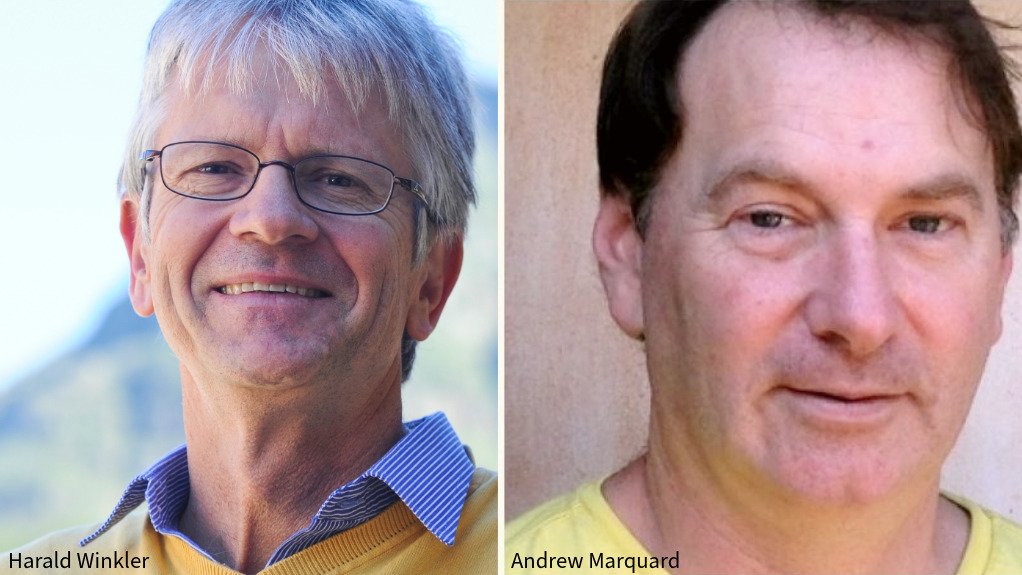


In this opinion article written jointly by Harald Winkler and Andrew Marquard, the case is made for Equitable Fossil Fuel Transitions, whereby equity and justice are structurally integrated into the transition away from fossil fuels.
A first Conference on Transitioning Away from Fossil Fuels was held in Santa Marta, Colombia, in late April, and represents a good and interesting attempt to move beyond abstract commitments and grapple with the practical challenges of transitioning away from fossil fuels (see organisers https://transitionawayconference.com/).
The TAFF1 conference is a timely reminder that the window to avoid irreversible damages is closing fast, and further delay reallocates costs. Yet the conference was not fully inclusive, but mini-lateral. And while including mention of justice, equity was not structurally included. What is required are Equitable Fossil Fuel Transitions (EFFTs). Both equity and transitions are needed in order to go far and fast.
That said, the TAFF1 conference marks progress relative to much climate discourse that remains narrowly technocratic. A Santa Marta Academic Dialogue published 12 Action Insights, some of which support EFFTs. TAFF1 made clear this is not only a question of energy substitution, but also of deep economic transformation, involving fiscal systems, employment, debt, and development pathways. The conference discussed revenue exposure, rents, and macro-fiscal vulnerability as core transition constraints.
Equally important is the recognition that managed and planned decline of fossil fuel production is necessary to avoid disorderly outcomes, social disruption, and stranded assets. Orderly EFFTs have a major benefit of greater energy security. Interventions by Nigeria at Ministerial level, in its national statement and co-chairing break-out groups, were fascinating. These insights are reinforced by the focus on expanding fiscal space and addressing debt constraints, especially for oil- and gas-exporting countries, where transitions will not be feasible without supportive international financial conditions.
The attention given to just transitions for workers and communities is another strength of the Action Insights. Labour, territorial exposure, and social protection are essential components of any credible transition strategy. Similarly, the emphasis on anticipatory governance and planning points in the right direction, even if the concept of "orderliness" would benefit from deeper engagement with political and distributional realities.
Reports from Santa Marta suggest unresolved tensions that future rounds will need to address (see reporting by Earth Negotiations Bulletin https://enb.iisd.org/transition-away-fossil-fuels-1-summary ). The main Takeaways of TAFF1 made no mention at all of CBDR&RC, in the light of different national circumstances. While equity and social justice are clearly acknowledged in the Action Insights from researchers, they remain subordinate to transition imperatives. More analysis must inform better understanding of how equity shapes the pace, sequencing, and differentiation of pathways. Assuming uniformity is not appropriate where structural differences demand differentiation.
The process is explicitly framed as a coalition of frontrunners, which creates a tension between recognising economic dependence and limiting agenda-setting to those able to move fastest. This risks marginalising countries for whom equitable fossil fuel transitions will necessarily take longer. Also efforts to align producers and consumers are a useful addition, provided that this does not reinforce existing asymmetries or undermine differentiation based on national circumstances.
There are also open questions about governance. TAFF appears intentionally mini-lateral, with the UNFCCC referenced as a source of legitimacy rather than a primary forum for oversight of implementation. TAFF appears not to hold itself accountable to the Paris Agreement and inclusiveness over time.
Instead, organisers and participants seem intent on proceeding regardless of unresolved questions about accountability, inclusiveness, and long‑term alignment with the Paris Agreement. This includes proceeding despite not inviting several countries with high levels of fossil‑fuel dependence, whose perspectives are central to EFFTs. This raises questions about whose transitions are being prioritised.
TAFF1 established new workstreams - on roadmaps, macroeconomic dependencies, and producer–consumer alignment. These may be useful platforms to confront these challenges, but they need to deliver. And their success will depend on how explicitly differentiation and equity are built in.
EFFTs must be based in science and equity. TAFF1 seems more focused on science, also in establishing a Science Panel. While the idea of providing evidence to national decision-makers is good, that evidence must be produced bottom-up and include equity.
The Panel would benefit from clearer articulation vis‑à‑vis the IPCC Seventh Assessment Report, which is reviewed by governments. In particular, early clarity on governance, review processes, and how equity and national circumstances are integrated would help ensure the panel complements existing science–policy arrangements rather than cutting across them.
The challenge is not whether to go fast or to go far: going far is unavoidable, while differences in how fast countries can move are fundamentally an equity issue.
We need EFFTs, as distinct from TAFF. Framing the task simply as transitioning away from fossil fuels therefore obscures the ways in which equity shapes feasible timing, sequencing and pathways. EFFTs make equity and justice structural to the transition itself, rather than issues to be managed within a pre‑defined trajectory.
Winkler is a professor in the PRISM research group at UCT School of Economics and Marquard is a senior researcher in UCT’s Energy Systems Research Group
Article Enquiry
Email Article
Save Article
Feedback
To advertise email advertising@creamermedia.co.za or click here
Research Reports

Projects


Latest Multimedia

Latest News

Showroom

As a reticulator, Egoli Gas provides natural gas to homes and businesses via underground pipes.
VISIT SHOWROOM
SafeQuip is a leading distributor and manufacturer of fire safety solutions, offering a comprehensive range of products designed to meet all...
VISIT SHOWROOM
Press Office
Announcements
What's On
Subscribe to improve your user experience...
Option 1 (equivalent of R125 a month):
Receive a weekly copy of Creamer Media's Engineering News & Mining Weekly magazine
(print copy for those in South Africa and e-magazine for those outside of South Africa)
Receive daily email newsletters
Access to full search results
Access archive of magazine back copies
Access to Projects in Progress
Access to ONE Research Report of your choice in PDF format
Option 2 (equivalent of R375 a month):
All benefits from Option 1
PLUS
Access to Creamer Media's Research Channel Africa for ALL Research Reports, in PDF format, on various industrial and mining sectors
including Electricity; Water; Energy Transition; Hydrogen; Roads, Rail and Ports; Coal; Gold; Platinum; Battery Metals; etc.
Already a subscriber?
Forgotten your password?
Receive weekly copy of Creamer Media's Engineering News & Mining Weekly magazine (print copy for those in South Africa and e-magazine for those outside of South Africa)
➕
Recieve daily email newsletters
➕
Access to full search results
➕
Access archive of magazine back copies
➕
Access to Projects in Progress
➕
Access to ONE Research Report of your choice in PDF format
RESEARCH CHANNEL AFRICA
R4500 (equivalent of R375 a month)
SUBSCRIBEAll benefits from Option 1
➕
Access to Creamer Media's Research Channel Africa for ALL Research Reports on various industrial and mining sectors, in PDF format, including on:
Electricity
➕
Water
➕
Energy Transition
➕
Hydrogen
➕
Roads, Rail and Ports
➕
Coal
➕
Gold
➕
Platinum
➕
Battery Metals
➕
etc.
Receive all benefits from Option 1 or Option 2 delivered to numerous people at your company
➕
Multiple User names and Passwords for simultaneous log-ins
➕
Intranet integration access to all in your organisation