



Norwegian entities unpack requirements for more investor support in African energy projects

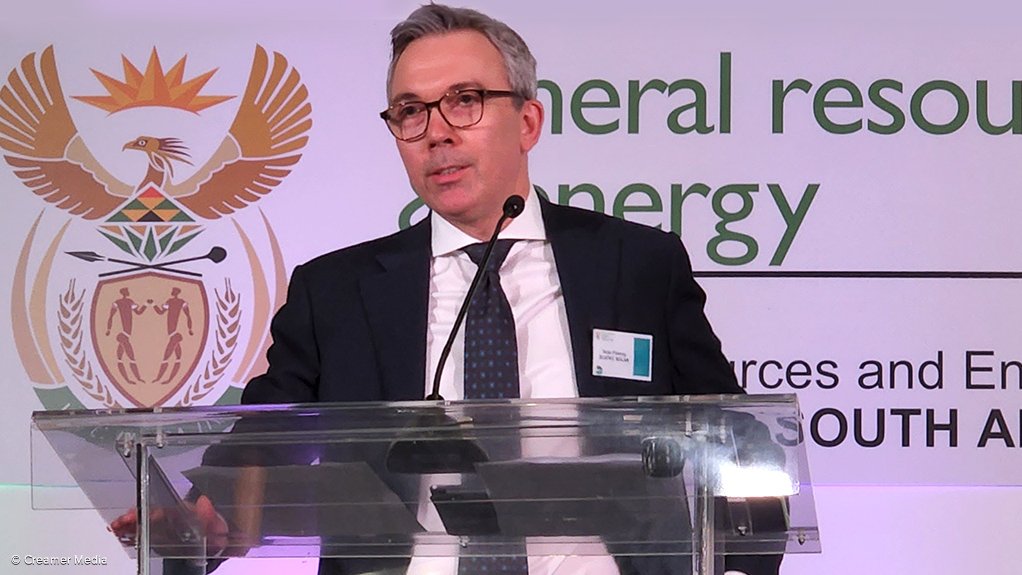


Norwegian entities, as existing investors with more than 3 GW of renewable energy projects in South Africa, are eager to facilitate more business between the two countries and further into the African continent, particularly as South Africa is undertaking regulatory reforms to liberalise its energy market.
In a panel discussion hosted by Oslo-headquartered renewable energy company Scatec on August 15, Norwegian Ambassador to South Africa Gjermund Sæther said South Africa was a leader on the African continent, showing increasing potential for business-to-business cooperation.
Scatec CEO Terje Pilskog highlighted that many things were happening in the South African market that were paving the way for renewable energy penetration, not only in South Africa but also in other African countries.
For Africa to transition to a green economy and meet climate goals, a lot of private capital is required, with many discussions globally taking place on what it will take to unlock that capital, Pilskog said, adding that there was, however, still much risk attached to investing in Africa.
He mentioned political and credit payment risks as the most prominent ones, suggesting that projects needed to be adequately guaranteed and entities properly managed to ensure high returns on capital invested.
There are guarantees for renewable energy projects available through the World Bank, for example, but they are targeted towards large infrastructure projects and are often bureaucratic to put in place. To unlock a broader scope of projects in Africa and South Africa in particular, Pilskog said it was important for investors to find more readily available guarantees for smaller projects.
He pointed to another challenge that could hinder greater investment in the African continent’s renewable energy sector as being lengthy permitting processes and getting offtake agreements in place, since most African countries only have one offtaker – a monopolised State-owned energy utility.
“Ultimately, investors need a predictable path for success with a project,” Pilskog noted.
Development finance institution (DFI) Norfund CEO Tellef Thorleifsson agreed during the panel discussion that regulatory challenges were generally an issue in Africa, particularly getting concessions and land rights in place.
He added that it was also often difficult to get co-investors on board with Africa-based projects, to which the solutions included working with local and international partners that understood the local context and had intimate links with politicians.
Thorleifsson said there were other ways for DFIs to support renewable energy development in Africa aside from funding projects, such as supporting early phase studies of project developers or supporting research undertaken by larger companies that aim to unlock more African projects.
Another manner of supporting development on the continent was through guarantees, he said, adding that Norfund had started guaranteeing smaller projects with a mechanism agreed with a fellow international financial corporation.
“There are strong arguments to actually build more of these kinds of instruments and getting more capital into the risky investment areas,” Thorleifsson said.
Nordic universal bank Nordea sustainable finance chief analyst Thina Saltvedt agreed that investment risk was higher in many African countries than in the rest of the world, adding that loans and equity had not been able to mobilise private capital as effectively as green guarantees have in recent years.
Commenting on how countries or companies could manage to collaborate with an institution such as Nordea, she said the bank preferred to scale projects where there had already been a degree of success. It also preferred working with partners that were confident and knowledgeable about investing in risky markets, with intimate experience of the local context.
Norwegian development cooperation agency Norad director-general Bård Vegar Solhjell said that, despite Africa having 60% of the world’s solar resources, the continent only has 1% of installed solar photovoltaic capacity globally.
“There is an island in the UK that has more solar capacity than the whole of Africa. This while energy use will double on the continent by 2040.
“To realise universal electricity access in Africa, about $25-billion of investment a year is needed. By getting the risks right, and working with the right institutions, this investment can be unleashed. Africa needs institutions worth investing in,” Solhjell explained.
In response, South African Ambassador to Norway Delores Kotze said South Africa was not blind to the risks of investing in the country. One major risk, she noted, was that of rising unrest over coal mines closing down and jobs being lost as the energy system transitions away for coal-fired power.
She admitted that South Africa often had lengthy and complicated bureaucratic processes to realising projects; however, the national government was focused on building agility and responsiveness into these processes.
She cited the Energy One Stop Shop launched by the Department of Trade, Industry and Competition at the end of July as an example, saying it would serve to accelerate permitting for new-build energy projects.
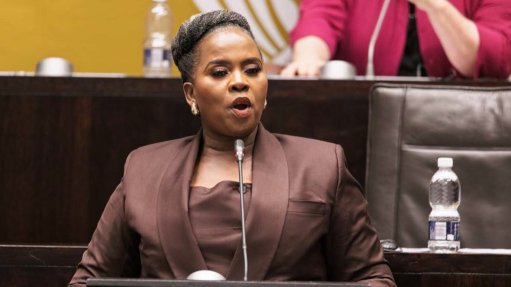
“The country is taking the historical regulatory issues seriously,” Kotze averred, pointing out that the appointment of an Electricity Minister was another example of the country’s commitment to not only end loadshedding but to ensure that other energy market issues were resolved quicker.
Article Enquiry
Email Article
Save Article
Feedback
To advertise email advertising@creamermedia.co.za or click here
Research Reports

Projects


Latest Multimedia


Latest News
Showroom
The SAIMM started as a learned society in 1894 after the invention of the cyanide process that saved the South African gold mining industry of the...
VISIT SHOWROOM
Industrial Nozzles & Systems (Pty) Ltd (Est. 2000) exclusive representative in Southern Africa for LECHLER GmbH (Est. 1879) - Europe's leading...
VISIT SHOWROOM


Announcements
What's On
Subscribe to improve your user experience...
Option 1 (equivalent of R125 a month):
Receive a weekly copy of Creamer Media's Engineering News & Mining Weekly magazine
(print copy for those in South Africa and e-magazine for those outside of South Africa)
Receive daily email newsletters
Access to full search results
Access archive of magazine back copies
Access to Projects in Progress
Access to ONE Research Report of your choice in PDF format
Option 2 (equivalent of R375 a month):
All benefits from Option 1
PLUS
Access to Creamer Media's Research Channel Africa for ALL Research Reports, in PDF format, on various industrial and mining sectors
including Electricity; Water; Energy Transition; Hydrogen; Roads, Rail and Ports; Coal; Gold; Platinum; Battery Metals; etc.
Already a subscriber?
Forgotten your password?
Receive weekly copy of Creamer Media's Engineering News & Mining Weekly magazine (print copy for those in South Africa and e-magazine for those outside of South Africa)
➕
Recieve daily email newsletters
➕
Access to full search results
➕
Access archive of magazine back copies
➕
Access to Projects in Progress
➕
Access to ONE Research Report of your choice in PDF format
RESEARCH CHANNEL AFRICA
R4500 (equivalent of R375 a month)
SUBSCRIBEAll benefits from Option 1
➕
Access to Creamer Media's Research Channel Africa for ALL Research Reports on various industrial and mining sectors, in PDF format, including on:
Electricity
➕
Water
➕
Energy Transition
➕
Hydrogen
➕
Roads, Rail and Ports
➕
Coal
➕
Gold
➕
Platinum
➕
Battery Metals
➕
etc.
Receive all benefits from Option 1 or Option 2 delivered to numerous people at your company
➕
Multiple User names and Passwords for simultaneous log-ins
➕
Intranet integration access to all in your organisation
