



News Analysis: Outcome of latest renewables round sends shockwaves across sector



Confirmation that only five solar photovoltaic (PV) projects – and potentially one other – had been appointed following the latest renewables bid window is sending shockwaves through the industry.
It is doubly shocking as the round, which was launched in April, was delayed specifically to allow for an expansion in the procurement allocation from 2 600 MW to 4 200 MW as part of interventions announced by President Cyril Ramaphosa on July 25 to tackle extreme loadshedding.
In fact, it was meant to be 5 200 MW, but was curtailed to 4 200 MW, owing to the absence of a Ministerial determination allowing for more than 1 000 MW of solar PV capacity to be procured.
In the event, projects with a combined capacity of only 860 MW have advanced to preferred-bidder status, a figure that could rise to 1 000 MW if discussions with a sixth eligible project are successful.
Most shocking of all, however, is the fact that not one of the 23 wind projects bid, with a combined capacity of more than 4 000 MW, have been appointed, even though 3 200 MW was specifically allocated for wind procurement under the sixth bid window (BW6).
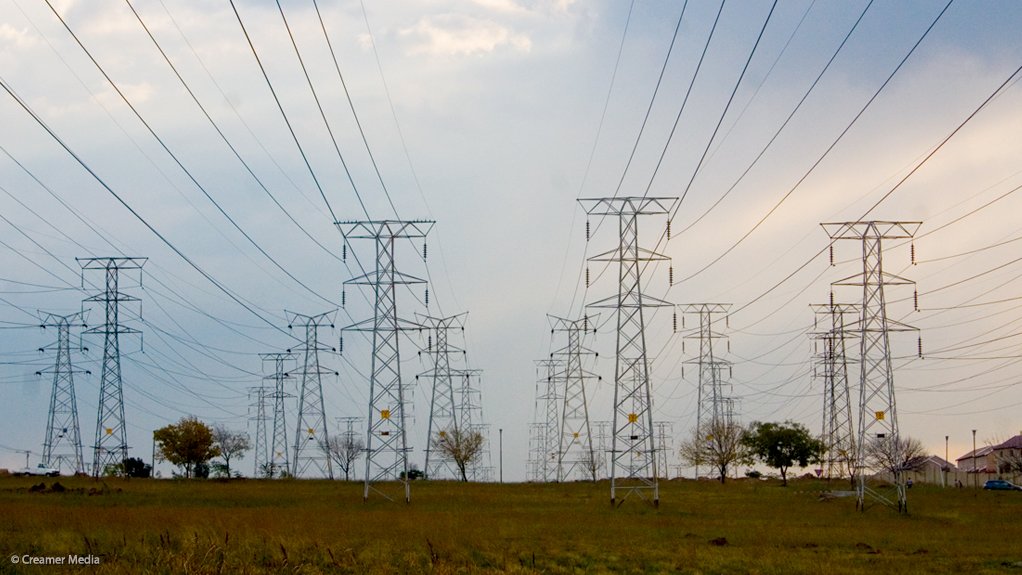
On face value this anomaly is the result of a failure of Eskom to invest in sufficient grid capacity, particularly in the high-potential Eastern, Western and Northern Cape provinces.
However, that is not the full story.
When the potential participants prepared their bids – which, it should be noted, is an extremely expensive exercise involving millions of rands – they did so based on Eskom’s most recent Generation Connection Capacity Assessment.
The document, which is updated yearly, indicated that, while the grid was constrained, there was about 9 000 MW of capacity available for BW6 projects, including about 5 000 MW in the three Cape provinces.
On this basis, most of the wind projects submitted, 16 in total, were located in the Western Cape, with the balance in the Eastern and Northern Cape provinces.
To avoid the grid-access-related delays of the previous bid window, the Department of Mineral Resources and Energy stipulated that all bidders should include a grid-connection Cost Estimate Letter (CEL) from Eskom as part of their bids.
Under the bidding rules, however, independent power producers are only allowed to secure a Budget Quote, a financial commitment for grid use, once they are appointed as preferred bidders.
In the intervening period, developers aiming to take advantage of a positive market reform allowing so-called embedded generators operating on the basis of private power purchase agreements (PPAs) to proceed without a licence (including those that will wheel through the grid) secured Budget Quotes from Eskom for the very same grid access for which BW6 bidders had received CELs.
Eskom says this was done in line with a Grid Codes stipulation that grid access be advanced on a non-discriminatory basis, which meant that it was unable to reserve any capacity, even where CELs had been issued. The utility also has no clear queuing mechanism in place for grid access.
In other words, bidders under the national programme, which are disallowed by the rules from securing Budget Quotes, were placed at a serious disadvantage relative to those developers pursuing private PPAs.
The upshot is that 3 200 MW of shovel-ready projects prepared to meet the strict requirements of a tightly governed national programme – one that includes penalties for not meeting commercial operation deadlines – have been usurped by private projects.
If these private projects proceed at pace they will indeed help to reduce the loadshedding risk. But there is currently no visibility of their state of readiness and, as with all commercial transactions, there is always some risk of failure.
As things stand, 3 200 MW of well-developed wind capacity has been sterilised, which in the context of Stage 6 loadshedding is extremely concerning as the projects would have been delivering 10 TWh of electricity yearly within the next 24 to 36 months. That is pretty significant in a context where South Africa is likely to loadshed the equivalent of 7 TWh this year.
Naturally the long-term solution lies in building more grid more quickly.
In the short term, however, the way the grid-access issue has been managed during BW6 is likely to undermine investor confidence in South Africa’s highly regarded renewables procurement programme, and could result in loadshedding being perpetuated for even longer.
Besides the immediate diesel funding issue, this is surely a matter that demands the urgent attention of the National Energy Crisis Committee (NECOM), whose activities and priorities remain worryingly opaque.
Perhaps in a context where grid constraints and energy shortages are set to remain acute for some time, NECOM should consider adopting a pragmatic approach, whereby both government programmes and private projects proceed simultaneously.
Until the grid is adequately expanded, this could mean Eskom accepting small amounts of curtailment as one possible option – not ideal, but certainly a better scenario than Stage 6 loadshedding.
Article Enquiry
Email Article
Save Article
Feedback
To advertise email advertising@creamermedia.co.za or click here
Research Reports

Projects


Latest Multimedia

Latest News

Showroom

Sika South Africa is a trusted partner for the nation’s infrastructure, commercial, residential, and industrial sectors.
VISIT SHOWROOM
Complete range of security sealing solutions including security seals bags and labels.
VISIT SHOWROOM



Announcements
What's On
Subscribe to improve your user experience...
Option 1 (equivalent of R125 a month):
Receive a weekly copy of Creamer Media's Engineering News & Mining Weekly magazine
(print copy for those in South Africa and e-magazine for those outside of South Africa)
Receive daily email newsletters
Access to full search results
Access archive of magazine back copies
Access to Projects in Progress
Access to ONE Research Report of your choice in PDF format
Option 2 (equivalent of R375 a month):
All benefits from Option 1
PLUS
Access to Creamer Media's Research Channel Africa for ALL Research Reports, in PDF format, on various industrial and mining sectors
including Electricity; Water; Energy Transition; Hydrogen; Roads, Rail and Ports; Coal; Gold; Platinum; Battery Metals; etc.
Already a subscriber?
Forgotten your password?
Receive weekly copy of Creamer Media's Engineering News & Mining Weekly magazine (print copy for those in South Africa and e-magazine for those outside of South Africa)
➕
Recieve daily email newsletters
➕
Access to full search results
➕
Access archive of magazine back copies
➕
Access to Projects in Progress
➕
Access to ONE Research Report of your choice in PDF format
RESEARCH CHANNEL AFRICA
R4500 (equivalent of R375 a month)
SUBSCRIBEAll benefits from Option 1
➕
Access to Creamer Media's Research Channel Africa for ALL Research Reports on various industrial and mining sectors, in PDF format, including on:
Electricity
➕
Water
➕
Energy Transition
➕
Hydrogen
➕
Roads, Rail and Ports
➕
Coal
➕
Gold
➕
Platinum
➕
Battery Metals
➕
etc.
Receive all benefits from Option 1 or Option 2 delivered to numerous people at your company
➕
Multiple User names and Passwords for simultaneous log-ins
➕
Intranet integration access to all in your organisation
