New technology nearing pilot-plant stage

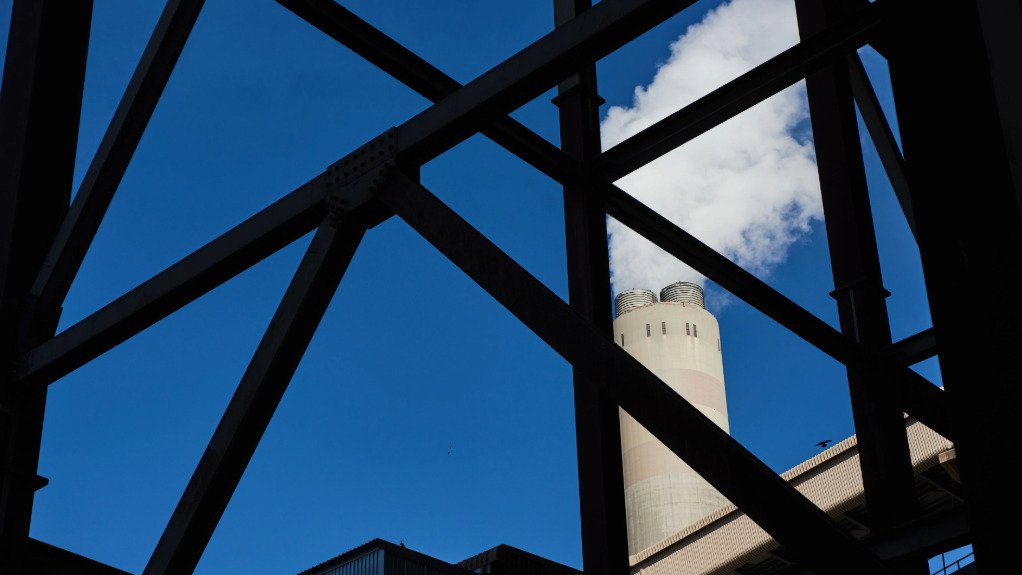
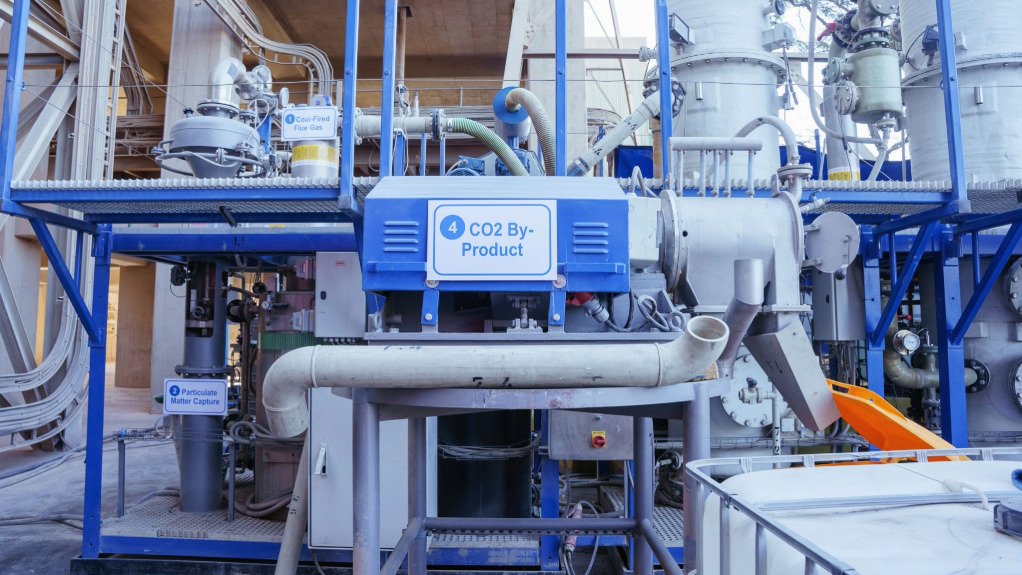
CATCHING THE FLUE GASSES The new locally tailored technology developed by EPCM Global Engineering harnesses flue gasses and through the Fischer-Tropsh process can make e-diesel
PILOT PLANT The three-phase pilot development programme being proposed will move from small-scale validation to full industrial demonstration


To advance its locally developed carbon capture and utilisation (CCU) technology, South African company EPCM Global Engineering is progressing to the next stage of development through a comprehensive pilot plant programme aimed at attracting investment from State-owned and private-sector partners.
The company seeks to address major emissions challenges with solutions capable of delivering lasting impact.
The CCU technology is a locally adapted post-combustion capture process using aqueous ammonia to absorb CO2 from flue gas streams.
The captured CO2 can then be used in downstream processes, including conversion with hydrogen through the Fischer–Tropsch process to produce e-diesel – a synthetic fuel suitable for use in vehicles. Such conversion can be integrated as a downstream add-on to the CCU system. The captured CO2 can also be applied in water treatment by utilities and in the production of e-fertiliser.
“Given the current diesel supply and cost volatility, having localised e-diesel production capacity reduces reliance on expensive imported fuel, lowering the logistics costs embedded in almost every product distributed in South Africa,” explains EPCM Global CEO Tumi Kgomo.
While ammonia-based CCU chemistry is globally established, EPCM’s solution is proprietary at the system-integration level and specifically tailored to local industrial conditions.
“It is designed to integrate with coal-fired power stations equipped with wet flue gas desulphurisation, such as those found in State-owned power utility Eskom’s plants, as well as in hard-to-abate industries, such as cement, lime and fertiliser plants,” he elaborates.
Theoretically, the CO2 emissions from any of South Africa’s larger coal-powered stations are sufficient to produce more than the country’s yearly diesel demand of about 13-billion litres, subject to successful technology validation and scale-up.
“The process would require capturing a portion of the CO2 emissions from one of these modern supercritical stations, which, individually, provide ample capacity,” notes Kgomo.
From a conversion perspective, published power-to-liquids process data indicates that 1 t of CO2 can produce between 0.31 t and 0.32 t of synthetic fuel when made to react catalytically with hydrogen, equivalent to between 375 ℓ and 380 ℓ of diesel-range fuel.
Phased Pilot Plant Development
“The development of the carbon capture test plant will be undertaken through a structured three-phase pilot development programme moving from small-scale validation to full industrial demonstration,” says Kgomo.
The first phase comprises a test facility operating at about 10 Nm2/h flue gas capacity, focused on controlled testing and validation, with a funding requirement of an estimated R42-million over about 12 months.
The second phase will comprise a mini plant phase at about 50 Nm2/h, which will be deployed across factory and industrial host sites for extended testing and optimisation.
This will require an investment of almost R74-million, also over a 12-month period, he adds.
The final phase involves a full pilot plant at 6 000 Nm2/h flue gas capacity, representing a permanent installation at an industrial site for real-world operation and performance validation.
This phase is expected to require R624-million over a two-year period, bringing the total programme to about R740-million over a planned four-year development period.
Interest has already been expressed in co-funding this phase, subject to the successful completion and validation of the earlier stages.
Developed Tech
EPCM developed the CCU system using digital-twin AI advanced chemical-engineering software that incorporates neural networks.
The system achieves high capture efficiency of between 85% and 95% for coal-fired, cement, and lime industrial flue gases, and produces a temperature-stable ammonium sulphate for e-fertiliser.
It uses a catalyst-free process relying solely on ammonia to avoid catalyst poisoning and degradation, operates at a low temperature and pressure to reduce energy intensity, and targets an operating cost of about $50/t of CO2 captured.
“The design is modular and scalable for deployment across multiple industrial sectors,” he adds.
For downstream utilisation, the required infrastructure can be readily integrated into existing facilities with minimal modification, depending on the selected utilisation pathway.
Investing in Enlit
“Events, such as the yearly Enlit Africa, are becoming increasingly important in the current global context, where geopolitical instability, energy security concerns and volatile commodity pricing are reshaping the energy and infrastructure landscape,” says EPCM project controls and specialised staffing head Leanne Carlson.
Global supply chains fragment and energy prices remain sensitive to geopolitical shocks, with platforms such as Enlit providing a critical interface among technology providers, policymakers, financiers and utilities.
In the Enlit environment, technologies, such as CCU, which convert local emissions into valuable products, such as fuels and fertilisers, are highly relevant because they directly address energy security and price volatility by localising supply chains.
EPCM, she adds, has already secured strong industry alignment – noting an expression on interest received for the acquisition of a pilot plant – and indicates that funding support for the final pilot phase is expected to follow. The investment is subject to the successful completion and validation of Phases 1 and 2, positioning the project for co-investment and commercial scale-up. “Our objective is to engage with potential industrial partners, offtakers and funding institutions that are critical to progressing through pilot and commercial phases, which can be achieved through collaboration with government, industry and academia to achieve ultimate project deployment,” concludes Carlson.
Article Enquiry
Email Article
Save Article
Feedback
To advertise email advertising@creamermedia.co.za or click here
Research Reports
Projects

Latest Multimedia

Latest News
Showroom

ZF Aftermarket is the after-sales division of the world-renowned German ZF group, a global leader in mobility technology.
VISIT SHOWROOM
Axiom Hydraulics is a trusted leader in South Africa’s hydraulic industry, delivering world-class components, systems, and engineering expertise...
VISIT SHOWROOM
Announcements
What's On
Subscribe to improve your user experience...
Option 1 (equivalent of R125 a month):
Receive a weekly copy of Creamer Media's Engineering News & Mining Weekly magazine
(print copy for those in South Africa and e-magazine for those outside of South Africa)
Receive daily email newsletters
Access to full search results
Access archive of magazine back copies
Access to Projects in Progress
Access to ONE Research Report of your choice in PDF format
Option 2 (equivalent of R375 a month):
All benefits from Option 1
PLUS
Access to Creamer Media's Research Channel Africa for ALL Research Reports, in PDF format, on various industrial and mining sectors
including Electricity; Water; Energy Transition; Hydrogen; Roads, Rail and Ports; Coal; Gold; Platinum; Battery Metals; etc.
Already a subscriber?
Forgotten your password?
Receive weekly copy of Creamer Media's Engineering News & Mining Weekly magazine (print copy for those in South Africa and e-magazine for those outside of South Africa)
➕
Recieve daily email newsletters
➕
Access to full search results
➕
Access archive of magazine back copies
➕
Access to Projects in Progress
➕
Access to ONE Research Report of your choice in PDF format
RESEARCH CHANNEL AFRICA
R4500 (equivalent of R375 a month)
SUBSCRIBEAll benefits from Option 1
➕
Access to Creamer Media's Research Channel Africa for ALL Research Reports on various industrial and mining sectors, in PDF format, including on:
Electricity
➕
Water
➕
Energy Transition
➕
Hydrogen
➕
Roads, Rail and Ports
➕
Coal
➕
Gold
➕
Platinum
➕
Battery Metals
➕
etc.
Receive all benefits from Option 1 or Option 2 delivered to numerous people at your company
➕
Multiple User names and Passwords for simultaneous log-ins
➕
Intranet integration access to all in your organisation