



New Development Bank invited to join Africa’s power push


CONNECTION AIM The African Development Bank’s New Deal on Energy for Africa advocates the ultimate objective of achieving universal access to electricity within ten years
Photo by Bloomberg



African Development Bank Group (AfDB) president Akinwumi Adesina has invited the New Development Bank (NDB) to support ‘Light up and power Africa’ – the first of five top priorities of the AfDB’s continental transformation agenda.
Speaking at the second annual meeting of the NDB in New Delhi last month, Adesina commended the speedy start and approvals of $1.5-billion for projects, some in Africa. He urged the new bank to do more for the continent, as it needed support to accelerate its growth and development.
The NDB was established in 2014 with $100-billion in share capital from Brazil, Russia, India, China and South Africa.
NDB president Kundapur Vaman Kamath announced at the meeting that it would soon establish an Africa Regional Centre. Adesina further stressed that Africa remained “a good address for business”, noting that, despite the tough global economic environment, African countries continued to post resilient growth.
African economies grew by 2.2% in 2016, with growth projected to rise by 3.4% in 2017, he said, adding that 12 African countries grew by more than 5% in 2016, while 20 other countries posted growth rates ranging between 3% and 5%.
By 2050, the continent is expected to have the same population as that of present-day China and India combined, and a growing urban middle class that would boost consumer demand, Adesina added.
For the AfDB and Africa, the greatest need for strategic partnership lay in energy infrastructure, which should be considered as an emergency on a continent where 645-million people do not have access to electricity.
Consequently, the bank launched the New Deal on Energy for Africa, which espouses the ultimate objective of achieving universal access to electricity within ten years. The bank is working on investing $12-billion in energy in the next five years and leveraging an additional $45-billion to $50-billion from the private sector.
“We plan to connect 130-million people to the grid system – 75-million people through off-grid systems – and provide 150-million people with access to clean cooking energy,” Adesina said.
Further, the AfBD is taking the lead on matters concerning renewable energy and an off-grid revolution in Africa by hosting the Africa Renewable Energy Initiative. This initiative was jointly embarked on with the African Union and has attracted $10-billion in investment commitments from G7 countries.
The bank is also tapping into domestic channels, such as pension funds, to close Africa’s $50-billion yearly infrastructure funding deficit.
Africa’s pension funds are projected to reach $1.3-trillion by 2025, while tax revenues already exceed $500-billion a year, alongside sovereign wealth funds estimated at $164-billion.
The AFDB will also launch the Africa Investment Forum this year to leverage African and global sovereign wealth funds to attract investment by institutional investors and ensure that infrastructure becomes an asset class that can endear itself to the private sector.
Adesina highlighted the Africa50, a new infrastructure entity now capitalised by African countries at more than $865-million, was established to quickly develop and finance bankable projects.
He also called for the scaling up of guarantee facilities to larger co-guarantees pooled across multilateral development banks to help accelerate infrastructure investments in Africa, noting that these instruments had been successfully used to help mitigate risks for the concentrated solar power project in Morocco, the largest in the world.
“We have done the same for the Lake Turkana wind farm, in Kenya, the largest wind farm in Africa, among several others,” he highlighted.
Article Enquiry
Email Article
Save Article
Feedback
To advertise email advertising@creamermedia.co.za or click here
Research Reports

Projects


Latest Multimedia



Showroom
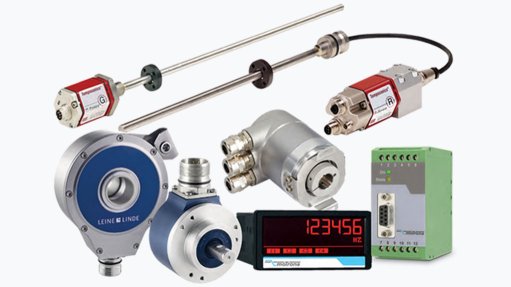
ATI systems comprises five divisions: electrical assemblies, drives and controls, feedback sensors, enclosures, and strip guiding.
VISIT SHOWROOM
Your global lifecycle technology & service partner for materials & minerals processing equipment for coal, iron ore, copper, manganese & other...
VISIT SHOWROOM



Announcements
What's On
Subscribe to improve your user experience...
Option 1 (equivalent of R125 a month):
Receive a weekly copy of Creamer Media's Engineering News & Mining Weekly magazine
(print copy for those in South Africa and e-magazine for those outside of South Africa)
Receive daily email newsletters
Access to full search results
Access archive of magazine back copies
Access to Projects in Progress
Access to ONE Research Report of your choice in PDF format
Option 2 (equivalent of R375 a month):
All benefits from Option 1
PLUS
Access to Creamer Media's Research Channel Africa for ALL Research Reports, in PDF format, on various industrial and mining sectors
including Electricity; Water; Energy Transition; Hydrogen; Roads, Rail and Ports; Coal; Gold; Platinum; Battery Metals; etc.
Already a subscriber?
Forgotten your password?
Receive weekly copy of Creamer Media's Engineering News & Mining Weekly magazine (print copy for those in South Africa and e-magazine for those outside of South Africa)
➕
Recieve daily email newsletters
➕
Access to full search results
➕
Access archive of magazine back copies
➕
Access to Projects in Progress
➕
Access to ONE Research Report of your choice in PDF format
RESEARCH CHANNEL AFRICA
R4500 (equivalent of R375 a month)
SUBSCRIBEAll benefits from Option 1
➕
Access to Creamer Media's Research Channel Africa for ALL Research Reports on various industrial and mining sectors, in PDF format, including on:
Electricity
➕
Water
➕
Energy Transition
➕
Hydrogen
➕
Roads, Rail and Ports
➕
Coal
➕
Gold
➕
Platinum
➕
Battery Metals
➕
etc.
Receive all benefits from Option 1 or Option 2 delivered to numerous people at your company
➕
Multiple User names and Passwords for simultaneous log-ins
➕
Intranet integration access to all in your organisation
