



Nene unveils R17bn in tax hikes as part of ‘fiscal rebalancing’ plan

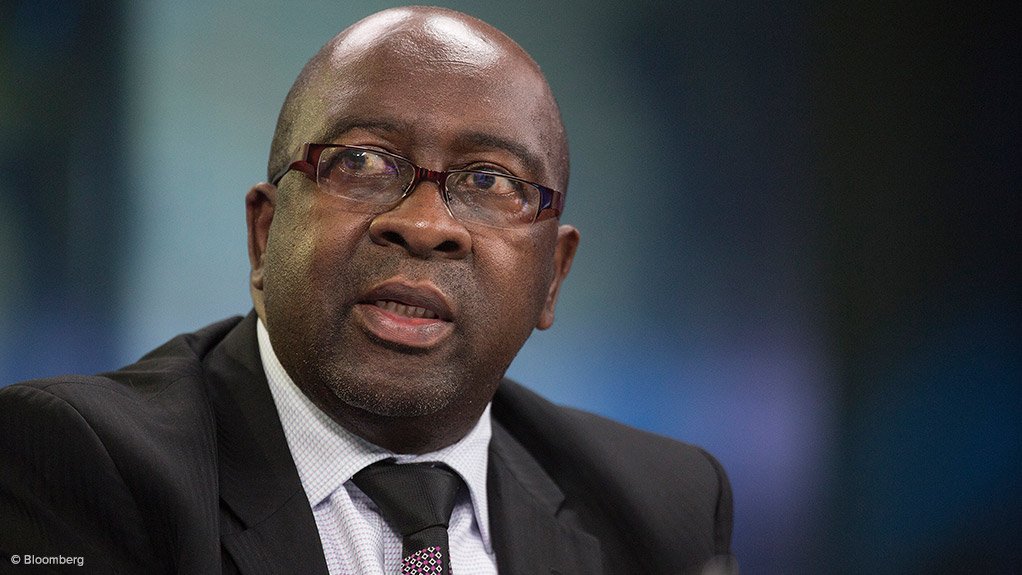


Finance Minister Nhlanhla Nene announced hikes in personal income tax rates as part of a package of tax changes designed to increase gross revenue collections by R17-billion and raise net revenue by R8.3-billion for 2015/16. He also used his 2015 Budget address to reassert the need to balance expenditure restraint with additional revenue, the growth of which had come under increasing strain as the South African economy’s performance flagged.
The economy expanded by only 1.5% in 2014, it slowest rate of growth since the recession of 2009 and below the already weak 2.3% expansion recorded in 2013 – this despite a better-than-expected 4.1% fourth-quarter performance.
The immediate outlook was also anaemic, with the National Treasury projecting that gross domestic product (GDP) would expand by only 2% in 2015, before climbing to 2.4% and 3% in 2016 and 2017 respectively.
Previously, the forecast was for 2.5% growth in 2015, 2.8% in 2016 and 3% in 2017 – all well short of the 5% aspiration set out in the National Development Plan.
In October, Nene flagged that a turning point had been reach, with insufficient revenue flows to cover expenditure and with debt levels having reached sustainability limits – the gross debt stock was expected to climb by R550-billion to R2.3-trillion by 2017/18.
Besides lowering the expenditure ceiling by R25-billion, government planned to raise additional revenue through higher taxes in the 2015/16 and 2016/17, with the changes to be guided by the Davis Tax Committee (DTC), led by Judge Dennis Davis.
In his maiden Budget address to lawmakers in Cape Town, Nene said the tax increases were designed to bridge a “structural gap” between revenue requirements and tax proceeds. But he also described as “compelling” the need to maintain the “progressivity” of the tax structure, which was probably why an increase to the value added tax (VAT) rate was eschewed in favour of other measures.
But Nene indicated that the DTC was continuing with its work and its recommendations could inform future tax proposals. Any change in the VAT rate would require further public consultation, however.
TAX HIKES
The key change for 2015/16 was the one percentage point increase in the personal income tax rates for all taxpayers earning more than R181 900 a year, together with adjustments to tax brackets and rebates to ensure that higher-income earners carried a heavier burden than lower earners.
“This raises tax by R21 a month for a taxpayer below the age of 65 with an annual income of R200 000. Those earning R500 000 would pay R271 a month more, and at R1.5-million a year, the tax increase is R1 105 a month.”
Also announced were a 30.5c/l increase in the general fuel levy from April 1, 2015, a 50 c/l increase in the Road Accident Fund levy, and an increase to a range of “sin taxes”, covering various alcoholic beverages and cigarettes.
“The net effect of these proposals on 2015/16 tax revenue is an increase of R8.3-billion, which will bring tax revenue for the year to R1 081-billion, or about 10.4% more than 2014/15 tax revenue,” Nene said.
The personal-income tax increases were not carried through to the corporate sector, where Nene even followed recommendations of the DTC for a more generous tax regime for businesses with a turnover below R1-million a year. Qualifying businesses with a turnover below R335 000 a year will pay no tax, and the maximum rate is reduced from 6% to 3%. The South African Revenue Service would also establish small business desks in its revenue offices to assist in complying with tax requirements.
In addition, the rates and brackets for transfer duties on the sale of property would be adjusted to provide relief to middle-income households. The new rates eliminate transfer duty on properties below R750 000, while the rate on properties above R2.25-million would increase.
But Nene also proposed a number of tax measures to promote energy efficiency, which he said would be discussed further with industry, the electricity regulator, Eskom and other interested parties.
“The first proposal is a temporary increase in the electricity levy, from 3.5c/kWh to 5.5c/kWh, to assist in demand management. This additional 2c/kWh will be withdrawn when the electricity shortage is over. Secondly, an increase is proposed in the energy-efficiency savings incentive from 45c/kWh to 95c/kWh, together with its extension to cogeneration projects. Other measures under consideration include enhancing the accelerated depreciation for solar photovoltaic renewable energy.”
The associated Budget Review document indicated that government was also examining loopholes that unduly favoured intensive electricity users, and would consider a levy that would apply to users and exporters of electricity who consume in excess of 800 000 MWh a year.
“To prevent the possibility of double taxation, a credit of 5.5c/kWh could be provided for users if the price they pay is above 37c/kWh. Before any measures are proposed, government will consult with industry, the electricity regulator, Eskom and other interested parties,” the review stated. For this reason, no revenue figure was ascribed to the new electricity levies.
DRAFT CARBON TAX BILL
The Minister also reaffirmed that a carbon tax would be introduced in 2016, which he said would “provide an additional tool to deal more sustainably with the current electricity shortage, while lowering the electricity levy”.
A draft Carbon Tax Bill would be introduced later this year for a further round of public consultation.
Also flagged were steps to combat “financial leakages”, which Nene said were depriving the economy of billions through eroding the tax base, profit shifting and illicit money flows.
“Drawing on advice of the Davis Tax Committee, amendments will be proposed to improve transfer-pricing documentation and revise the rules for controlled foreign companies and the digital economy.”
The National Treasury revised its gross tax revenue for the 2014/15 to R979-billion, which was R14.7-billion less than the Budget 2014 forecast, with personal income tax accounting for R350-billion of that revenue.
Overall revenue was projected at just over R1-trillion, against estimated expenditure of R1.24-trillion. The 2015/16 tax hikes would help raise collections to R1.19-trillion in 2015/16, with expenditure expected to rise to R1.35-trillion.
Nevertheless the Budget balance would remain under pressure with the deficit projected at 3.9% of GDP in 2014/15 and remaining at 3.9% in 2015/16, which was higher than the 3.6% forecast of October – the difference was ascribed primarily to a once-off R15-billion reduction in the Unemployment Insurance Fund contribution. The deficit was expected to fall to 2.6% in 2016/17 and to 2.5% in 2017/18.
Besides the tax hikes, the pace at which spending would rise had been moderated in line with the expenditure ceiling, while the freeze remained on government’s personnel headcount, partly to deal with a wage bill that had surged to R445-billion.
Negotiations for a multiyear wage agreement were currently under way and government, which was targeting increases of 6.6% a year for the coming three years, was hopeful of reaching an agreement in time for salary improvements to be implemented in April. Should it succeed, compensation as a share of expenditure will fall from 35.5% to 34.5% over the coming three years.
Nene described the 2015 Budget as having been challenging to prepare, under difficult economic circumstances. “The resources at our disposal are limited. Our economic growth initiatives have to be intensified, he said, concluding that “our collective future depends on the energy and enterprise of all of us”.
Article Enquiry
Email Article
Save Article
Feedback
To advertise email advertising@creamermedia.co.za or click here
Research Reports

Projects


Latest Multimedia


Latest News

Showroom
Multotec, recognised industry leaders in metallurgy and process engineering help mining houses across the world process minerals more efficiently,...
VISIT SHOWROOM
Iritron delivers advanced automation, control, and optimisation solutions to the Mining, Minerals & Metals, Consumer Package Goods and...
VISIT SHOWROOM


Announcements
What's On
Subscribe to improve your user experience...
Option 1 (equivalent of R125 a month):
Receive a weekly copy of Creamer Media's Engineering News & Mining Weekly magazine
(print copy for those in South Africa and e-magazine for those outside of South Africa)
Receive daily email newsletters
Access to full search results
Access archive of magazine back copies
Access to Projects in Progress
Access to ONE Research Report of your choice in PDF format
Option 2 (equivalent of R375 a month):
All benefits from Option 1
PLUS
Access to Creamer Media's Research Channel Africa for ALL Research Reports, in PDF format, on various industrial and mining sectors
including Electricity; Water; Energy Transition; Hydrogen; Roads, Rail and Ports; Coal; Gold; Platinum; Battery Metals; etc.
Already a subscriber?
Forgotten your password?
Receive weekly copy of Creamer Media's Engineering News & Mining Weekly magazine (print copy for those in South Africa and e-magazine for those outside of South Africa)
➕
Recieve daily email newsletters
➕
Access to full search results
➕
Access archive of magazine back copies
➕
Access to Projects in Progress
➕
Access to ONE Research Report of your choice in PDF format
RESEARCH CHANNEL AFRICA
R4500 (equivalent of R375 a month)
SUBSCRIBEAll benefits from Option 1
➕
Access to Creamer Media's Research Channel Africa for ALL Research Reports on various industrial and mining sectors, in PDF format, including on:
Electricity
➕
Water
➕
Energy Transition
➕
Hydrogen
➕
Roads, Rail and Ports
➕
Coal
➕
Gold
➕
Platinum
➕
Battery Metals
➕
etc.
Receive all benefits from Option 1 or Option 2 delivered to numerous people at your company
➕
Multiple User names and Passwords for simultaneous log-ins
➕
Intranet integration access to all in your organisation
