



NEC contracts provide more equality and better partnerships for contractors, says Alusani® Course Leader, Coen Snyman

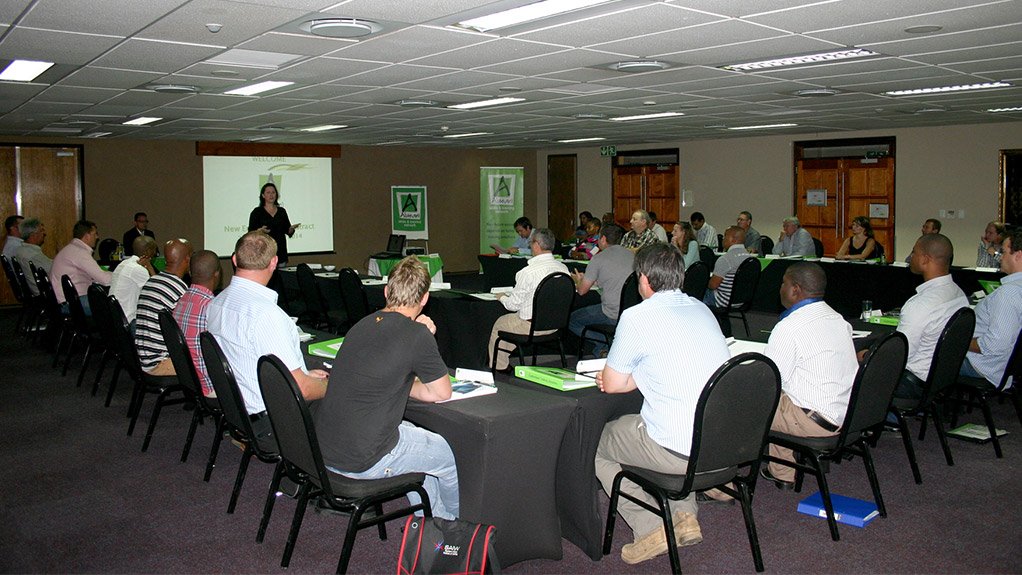


This article has been supplied.
Company Announcement - Coen Snyman, NEC Course Leader at Alusani Skills & Training Network®, says that the NEC Family of Standard Form Contracts enables more equality and more collaborative partnerships between employers and contractors. While many aspects of the NEC contracts are still largely misunderstood, the flexibility and mutual benefits that it offers contractors as well as private companies, parastatals and public sector organisations across South Africa, makes it an attractive option for professionals in the construction industry.
“One of the main drawing points of opting to use the NEC contracts for a construction project is the fact that it is very flexible in terms of the type of work that it can be used for, design responsibility allocation as well as dictating the specific type of contract that you want to enter into, such as a fixed price contract, target cost contract, bill of quantities contract and so forth. Little to no modification of the contract is needed regardless of whether you’re constructing a building, school, airport or hospital, making it an easy-to-apply contract,” explains Snyman.
The NEC contracts are also seen as a modern type of contract and widely regarded as international best practice because it enables a more collaborative partnership between clients and contractors.
“In the past, many construction industry contracts didn’t enforce an equal playing field between clients and contractors and the contracts would be used as a remedy against one another in the event of something going wrong. The NEC contracts enable a better outcome because it fosters a collaborative approach and it forces all parties to come together and address any potential challenges early on, before they become large problems,” says Snyman before adding that he is of the opinion that there are fewer disputes with legal repercussions when the NEC contracts are applied.
Certain aspects of these contracts, however, are still widely misunderstood. One of the goals when creating the NEC contracts was to provide a clear and simple construction contract, but this has led to many engineers not paying enough attention to the level of detail that are in fact involved.
“Many provisions of the contracts are actually quite complex as the approach to principles, provisions and methodology is very different to those found in traditional contracts. Many experienced engineers who have been in the industry for many years struggle to adapt to the NEC because they underestimate the complexities involved,” says Snyman.
An example of how the methodology between NEC contracts and traditional contracts differ is how additional time can be claimed. Traditionally, extension of time and cost claims were assessed and quantified retrospectively and based on actual delays that a project experienced and the subsequent costs that were incurred. The NEC contracts, however, require a forecast on the costs that you may incur to complete work.
“When you do a delay analysis retrospectively, you have got absolutes to work with. The prospective analysis that the NEC contracts require is different to the traditional approach and it requires a clear understanding of how events, time delays and costs need to be assessed,” says Snyman.
Snyman will be discussing the NEC Family of Contracts at Alusani® CPD accredited courses that are held throughout the year. For more information, visit www.alusani.co.za
Article Enquiry
Email Article
Save Article
Feedback
To advertise email advertising@creamermedia.co.za or click here
Research Reports

Projects


Latest Multimedia


Latest News

Showroom
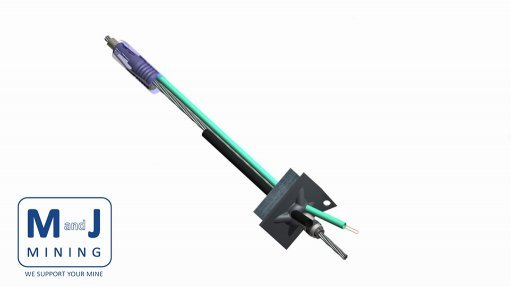
M and J Mining are leading suppliers of physical support systems as used by the underground mining industry. Our selection of products are not...
VISIT SHOWROOM

Announcements
What's On
Subscribe to improve your user experience...
Option 1 (equivalent of R125 a month):
Receive a weekly copy of Creamer Media's Engineering News & Mining Weekly magazine
(print copy for those in South Africa and e-magazine for those outside of South Africa)
Receive daily email newsletters
Access to full search results
Access archive of magazine back copies
Access to Projects in Progress
Access to ONE Research Report of your choice in PDF format
Option 2 (equivalent of R375 a month):
All benefits from Option 1
PLUS
Access to Creamer Media's Research Channel Africa for ALL Research Reports, in PDF format, on various industrial and mining sectors
including Electricity; Water; Energy Transition; Hydrogen; Roads, Rail and Ports; Coal; Gold; Platinum; Battery Metals; etc.
Already a subscriber?
Forgotten your password?
Receive weekly copy of Creamer Media's Engineering News & Mining Weekly magazine (print copy for those in South Africa and e-magazine for those outside of South Africa)
➕
Recieve daily email newsletters
➕
Access to full search results
➕
Access archive of magazine back copies
➕
Access to Projects in Progress
➕
Access to ONE Research Report of your choice in PDF format
RESEARCH CHANNEL AFRICA
R4500 (equivalent of R375 a month)
SUBSCRIBEAll benefits from Option 1
➕
Access to Creamer Media's Research Channel Africa for ALL Research Reports on various industrial and mining sectors, in PDF format, including on:
Electricity
➕
Water
➕
Energy Transition
➕
Hydrogen
➕
Roads, Rail and Ports
➕
Coal
➕
Gold
➕
Platinum
➕
Battery Metals
➕
etc.
Receive all benefits from Option 1 or Option 2 delivered to numerous people at your company
➕
Multiple User names and Passwords for simultaneous log-ins
➕
Intranet integration access to all in your organisation
