



Proposed mining law amendments could hamper South Africa’s capital raising capability


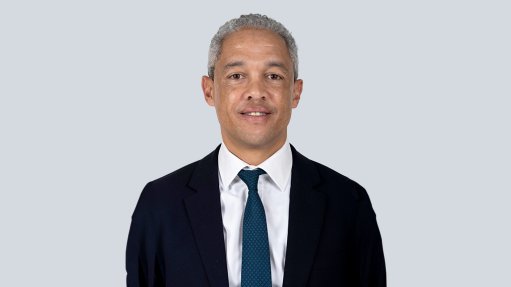
The Mineral and Petroleum Resources Development Act Amendment Bill, published in December, could severely hamper South Africa’s capital raising capability, law firm Edward Nathan Sonnenbergs (ENS) director and head of mining law Otsile Matlou tells Mining Weekly.
Matlou expresses his concern about the amendments to Section 11 of the Mineral and Petroleum Resources Development Act (MPRDA), which deals with asset and share transactions.
“The Amendment Bill proposes that the Minister’s consent will be required for the sale of any shares, even one share, on the stock market, which will, in effect, make public shares untradeable and have disastrous consequences for the capital market,” Matlou explains.
In the original MPRDA, Section 11 was designed to deal with asset transactions and share transactions and there is an exemption for listed companies to facilitate capital raisings on the stock exchange, he says.
The Amendment Bill proposes that Section 11 be changed from only applying to transactions involving a change of control to covering the acquisition or disposal of any interest or share. It also goes a step further by proposing to remove the listed company exemption, which creates some difficulty, Matlou adds.
“The wording of the Amend- ment Bill is badly drafted. The policy changes proposed are not always clearly articulated in the Amendment Bill and this should be dealt with,” he says.
Further, the Amendment Bill proposes a free carried interest by the State in petroleum projects, which means that if a party applies for a right to produce oil and/or gas, the State will automatically have a free carried interest in that project, Matlou says.
“This is a new idea that is regarded as problematic by the industry and, according to the industry, should be taken out of the Amendment Bill,” he suggests.
The Amendment Bill is also unclear about the concept of strategic minerals, Matlou adds.
It simply introduces a definition of strategic minerals, but it is not used anywhere in the Amendment Bill, making the State’s intentions unclear, he explains.
“This also makes it difficult to comment on the Amendment Bill as it is not clear what exactly is being proposed.”
Another case of problematic legislative drafting applies to the issue imposing administrative fines. While the concept of impos- ing administrative fines is well known in South Africa, with many Acts imposing these fines, it has been badly articulated in the Amendment Bill, creating uncertainty, he says.
The question of the subdivision of rights should also be attended to, Matlou suggests.
“While the mining industry agrees with the concept of the subdivision of rights, as set out in the Amendment Bill, we believe that the proposed wording in the Amendment Bill is wrong.
“The Amendment Bill in effect makes it impossible to subdivide rights as it states that any person who wants to buy a portion of another’s right has to apply to the Department of Mineral Resources (DMR) as of applying for a new right. However, if this is done, the DMR must realise that it would have to reject the application, as the right being applied for already exists.”
Matlou proposes that the subdivision of a right should be handled like any other transfer of real rights, with some specific administrative steps introduced to cater for the DMR administration processes. The parties must enter into a sale agreement and a cession of part of the right. The party acquiring the right excised from the principal right can, for instance, execute a standard mining right and register it at the DMR. The DMR can easily revise its systems so that the holder of this new right is allocated a DMR reference number.
The issue of old-order mine dumps is not dealt with adequately in the MPRDA or its Amendment Bill, Matlou states.
When the MPRDA was passed in 2002, old-order mine dumps were not included in the Act, he says.
However, in 2007 there was a case in which the Mineral Resources Minister had granted empowerment firm Ataqua Mining a prospecting right in respect of a mine dump owned by diamond major De Beers. De Beers took Ataqua to court and the court ruled in favour of De Beers, stating that old-order mine dumps were not subject to the MPRDA and that the Minister, therefore, could not grant rights over such dumps.
The Amendment Bill attempts to deal with this issue by making it clear that the MPRDA does apply to old-order mine dumps. However, the problem with this amendment is that mine dumps are moveable assets that belong to the mining companies that created them, he says.
These dumps can be seen as a storage facility, Matlou states, adding that the mining company that owns the dump has mined the minerals and has put them into storage. It would, therefore, be inconsistent with the MPRDA should the Minister grant those minerals to another company.
As a result of South Africa’s geological formation, one rarely finds individual minerals in a reef, Matlou says.
“For example, a company targeting the mining of gold will potentially also find other minerals during its mining process. However, these minerals might lawfully belong to another mining company and this is something that the MPRDA should deal with.
“The Minerals Act of 1991 stated that should a company mining gold, for example, find additional minerals in the same reef, it could also mine and sell those other minerals, as long as it accounted to the person that held the right to those additional minerals,” Matlou explains.
However, when the MPRDA was passed in 2002, it did not address this issue. Section 102 of the MPRDA simply states that a company has the right to apply for the Minister’s consent to add minerals to its right, but it has not dealt with the situation where different companies hold the rights to various minerals within the same seam, he says.
The Amendment Bill also does not deal with this issue – it only focuses on what is referred to as the ‘Lonmin situation’ – a case where a major mining company has a right to mine a certain area and smaller companies apply for prospecting rights on certain minerals within that same area, knowing that they will never mine there but that the major mining company will mine, and that the major mining company would have to account for the minerals to which smaller companies have the right, Matlou adds.
Article Enquiry
Email Article
Save Article
Feedback
To advertise email advertising@creamermedia.co.za or click here
Research Reports

Projects


Latest Multimedia


Latest News
Showroom

Sulzer South Africa, established in 1922, partners with critical industries like power, oil & gas, water, mining, and chemicals to boost...
VISIT SHOWROOM
Leading condition monitoring specialists, WearCheck, help boost machinery lifespan and reduce catastrophic component failure through the scientific...
VISIT SHOWROOM



Press Office
Announcements
What's On
Subscribe to improve your user experience...
Option 1 (equivalent of R125 a month):
Receive a weekly copy of Creamer Media's Engineering News & Mining Weekly magazine
(print copy for those in South Africa and e-magazine for those outside of South Africa)
Receive daily email newsletters
Access to full search results
Access archive of magazine back copies
Access to Projects in Progress
Access to ONE Research Report of your choice in PDF format
Option 2 (equivalent of R375 a month):
All benefits from Option 1
PLUS
Access to Creamer Media's Research Channel Africa for ALL Research Reports, in PDF format, on various industrial and mining sectors
including Electricity; Water; Energy Transition; Hydrogen; Roads, Rail and Ports; Coal; Gold; Platinum; Battery Metals; etc.
Already a subscriber?
Forgotten your password?
Receive weekly copy of Creamer Media's Engineering News & Mining Weekly magazine (print copy for those in South Africa and e-magazine for those outside of South Africa)
➕
Recieve daily email newsletters
➕
Access to full search results
➕
Access archive of magazine back copies
➕
Access to Projects in Progress
➕
Access to ONE Research Report of your choice in PDF format
RESEARCH CHANNEL AFRICA
R4500 (equivalent of R375 a month)
SUBSCRIBEAll benefits from Option 1
➕
Access to Creamer Media's Research Channel Africa for ALL Research Reports on various industrial and mining sectors, in PDF format, including on:
Electricity
➕
Water
➕
Energy Transition
➕
Hydrogen
➕
Roads, Rail and Ports
➕
Coal
➕
Gold
➕
Platinum
➕
Battery Metals
➕
etc.
Receive all benefits from Option 1 or Option 2 delivered to numerous people at your company
➕
Multiple User names and Passwords for simultaneous log-ins
➕
Intranet integration access to all in your organisation
