



Motsoaledi says National Health Insurance is about equality, not votes

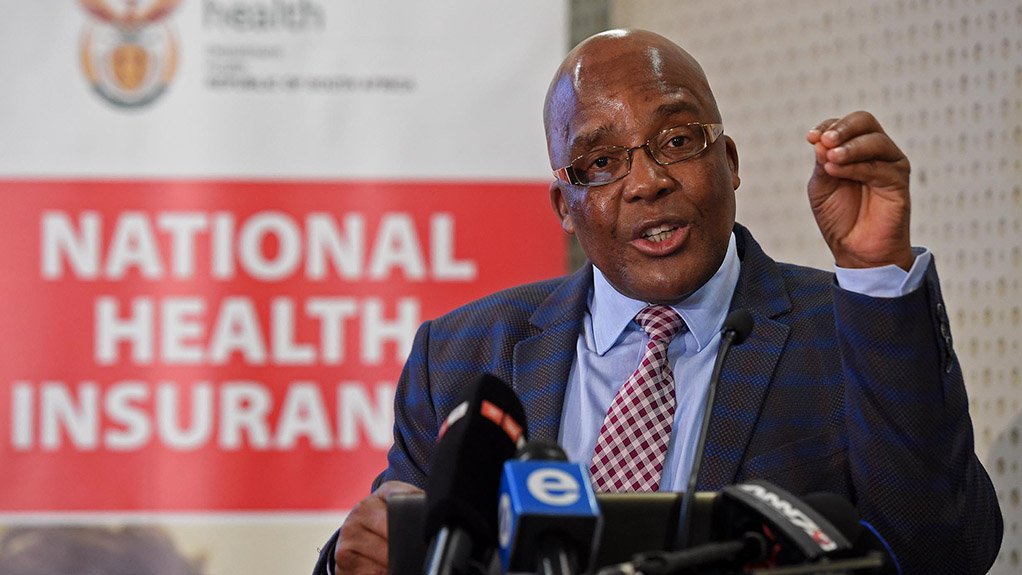


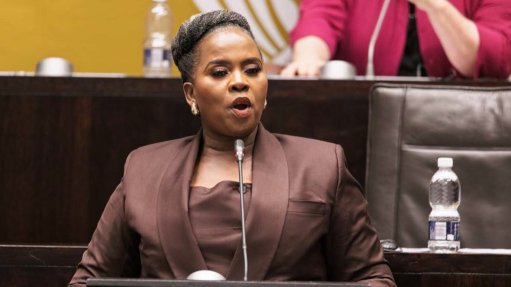
Government is not trying to solicit votes through the implementation of National Health Insurance (NHI), Health Minister Aaron Motsoaledi told a University of Stellenbosch Business School event in Cape Town on Thursday.
In June government gazetted the NHI bill as well as the Medical Schemes Amendment Bill for public comment. NHI is a proposed state-run health financing system that aims to pool funds to provide access to quality health services for all South Africans regardless of their economic status. The Medical Schemes Bill is aligned to the NHI Bill seeking to achieve universal health care.
President Cyril Ramaphosa previously said that all South Africans will be covered by NHI by 2025.
Motsoaledi on Thursday argued that, in his experience of attending the World Health Assembly – an annual gathering of global health ministers in Geneva, Switzerland, none of the countries present had used universal health coverage as an "election ticket".
The minister added that, in his opinion, 90% of South Africa's healthcare system is designed for "well-to-do" people, and not poor people.
No medical textbooks would prescribe different treatments for diseases like cancer based on the socio-economic status of a patient, said the minister.
Speaking of the world's first heart transplant performed by Dr Chris Barnard in 1967 in Cape Town, Motsoaledi said that economic status of the patient Louis Washkansky's did not determine whether he could get a heart or not. "All he [Washkansky] knew was that he is sick and he knew he needed a new heart. It was not a question of whether he had medical aid, his bank balance or if he had a farm to mortgage."
It was simply a question of his health, which no one debated, said Motsoaledi.
Today, however, socio-economic status determines the quality of healthcare people have access to, he said.
In addition, he said that people have been conditioned to believe that quality healthcare must be expensive.
One of the findings of the Health Market Inquiry's report, released earlier this year, is that there is "something wrong" with the cost of private healthcare in SA, said the minister. "People associate good healthcare to exorbitant pricing. That is unrealistic," he said.
And while there is mismanagement and corruption in the healthcare system, he argued that these problems are secondary to the primary problem of inequality.
Two-tier system
The minister supported his argument around healthcare inequality by noting that SA spends 8.7% of GDP on health. Of this, he said private sector spends 4.5% of the country's GDP to provide care for 16% of the population, while the public sector spends 4.2% to provide healthcare for 84% of the population.
People believe that by "some miracle" without corruption and mismanagement the state can provide quality healthcare for 86% of the population on 4.2% of GDP, when 16% of the population receives healthcare on 4.5% of GDP, he said. "This is gross inequality."
Motsoaledi also said that, between 2015 and 2018, state subsidies and medical tax credits provided by the SA Revenue Service to private healthcare users grew by R11-billion from R46.8-billion to R57-billion. Meanwhile, Treasury had made cuts of R9-billion to the public health sector given the economic downturn, he said.
Motsoaledi ended his address by saying that NHI could not be costed. On the question of affordability, the minister rather asked if the country could afford not to provide healthcare. He said that, in 1996, if HIV treatment had to be priced, it would have not rolled out. "It would have been billions that scare you."
Article Enquiry
Email Article
Save Article
Feedback
To advertise email advertising@creamermedia.co.za or click here
Research Reports

Projects


Latest Multimedia


Latest News
Showroom
Iritron delivers advanced automation, control, and optimisation solutions to the Mining, Minerals & Metals, Consumer Package Goods and...
VISIT SHOWROOM
ISO-certified Condra manufactures overhead cranes, portal cranes, cantilever cranes and crane components: hoists, drives, end-carriages, brakes and...
VISIT SHOWROOM


Announcements
What's On
Subscribe to improve your user experience...
Option 1 (equivalent of R125 a month):
Receive a weekly copy of Creamer Media's Engineering News & Mining Weekly magazine
(print copy for those in South Africa and e-magazine for those outside of South Africa)
Receive daily email newsletters
Access to full search results
Access archive of magazine back copies
Access to Projects in Progress
Access to ONE Research Report of your choice in PDF format
Option 2 (equivalent of R375 a month):
All benefits from Option 1
PLUS
Access to Creamer Media's Research Channel Africa for ALL Research Reports, in PDF format, on various industrial and mining sectors
including Electricity; Water; Energy Transition; Hydrogen; Roads, Rail and Ports; Coal; Gold; Platinum; Battery Metals; etc.
Already a subscriber?
Forgotten your password?
Receive weekly copy of Creamer Media's Engineering News & Mining Weekly magazine (print copy for those in South Africa and e-magazine for those outside of South Africa)
➕
Recieve daily email newsletters
➕
Access to full search results
➕
Access archive of magazine back copies
➕
Access to Projects in Progress
➕
Access to ONE Research Report of your choice in PDF format
RESEARCH CHANNEL AFRICA
R4500 (equivalent of R375 a month)
SUBSCRIBEAll benefits from Option 1
➕
Access to Creamer Media's Research Channel Africa for ALL Research Reports on various industrial and mining sectors, in PDF format, including on:
Electricity
➕
Water
➕
Energy Transition
➕
Hydrogen
➕
Roads, Rail and Ports
➕
Coal
➕
Gold
➕
Platinum
➕
Battery Metals
➕
etc.
Receive all benefits from Option 1 or Option 2 delivered to numerous people at your company
➕
Multiple User names and Passwords for simultaneous log-ins
➕
Intranet integration access to all in your organisation
