



Motsoaledi assures SA has robust surveillance systems in place amid new Covid variant



This article has been supplied.
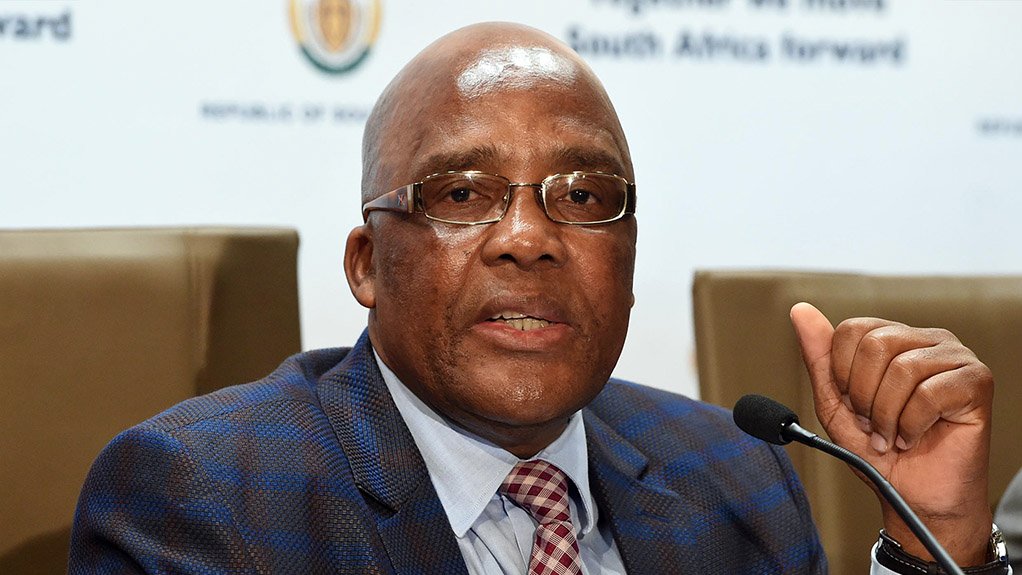
Health Minister Dr Aaron Motsoaledi on Tuesday assured that South Africa is actively monitoring the emergence of a new Covid-19 variant, known as Nimbus or NB.1.8.1, which has been linked to a resurgence of cases in parts of Asia.
Motsoaledi was delivering a keynote address during the opening of the fourth G20 Health Working Group meeting taking place in Johannesburg, where he pointed out that the World Health Organisation had designated Nimbus as a Variant Under Monitoring, owing to its growing presence.
The distinctive symptom is characterised by a sharp, stabbing pain when swallowing, often at the back of the throat.
Other symptoms linked to the strain include redness in the back of the mouth and swollen neck glands, as well as established common Covid symptoms such as fever, muscle aches and congestion.
“I wish to reassure this esteemed gathering that South Africa has robust surveillance systems in place. Our National Institute for Communicable Diseases manages a comprehensive Sentinel Surveillance programme that systematically tests for key respiratory viruses, including SARS-CoV-2, influenza, and RSV [Respiratory Syncytial Virus]. Currently, our data shows very low SARS-CoV-2 activity,” he said.
Health experts have reported that 13 cases have already been found in the UK, following a surge in cases in China, Singapore and Hong Kong.
Motsoaledi noted that while South Africa is observing a seasonal increase in influenza, it is well prepared to manage the new variant.
He pointed out that crucially, the new variant remains a descendant of the Omicron lineage noting that this means that current recommendations for updated SARS-CoV-2 vaccines are still effective.
“Therefore, at this stage, no specific new public health actions are required from the public. We continue to advocate for maintaining good hygiene practices – such as handwashing, covering coughs, and staying home when unwell. These simple measures are effective in reducing the spread of all respiratory illnesses,” he said.
He said the health department would continue to monitor the situation closely through its established networks and would report any significant changes.
COLLECTIVE COMMITMENT
Meanwhile, Motsoaledi called for the “elevated political will” of all G20 members and global partners to overcome what he calls "entrenched commercial interests and diplomatic hurdles", noting that finalising a robust and equitable Pathogen Access and Benefit-Sharing (PABS) Annex is the ultimate litmus test of collective commitment.
He pointed to the adoption of the Pandemic Agreement, which he said was a landmark achievement for global health governance, noting that the stark lessons of the Covid-19 crisis fuelled the collective resolve to forge a more “robust and equitable” framework, one that ensured international cooperation and protected all nations from the impacts of future pandemics.
The Pandemic Agreement was adopted with the overwhelming support of 124 member States, which Motsoaledi said was a clear global consensus for a need for a new path forward.
“…this agreement is a crucial step towards rectifying the deep-seated imbalances in access to life-saving pandemic products that were so painfully exposed during the recent crisis,” he said.
He noted that the finalisation of the PABS Annex was no longer just a technical negotiation, but a political test.
“…it is a test of our collective will to move beyond rhetoric and deliver tangible results. It is the essential next step to transform the Pandemic Agreement from a document of principles into a functional, life-saving tool for justice and our shared global health security,” he explained.
He further noted that the PABS system would require pharmaceutical manufacturers to contribute 20% of their production during pandemic emergencies in return for access to pathogen data.
“It is the very heart of our commitment to ensuring that the benefits of scientific progress are shared by all of humanity,” he said.
Motsoaledi highlighted that the detailed negotiations on the PABS system annexure would commence immediately through an Intergovernmental Working Group, pointing out that the first meeting to elect the Bureau for this group must take place before July 15.
He said it was rightly anticipated that the leadership would reflect a balance between the Global North and the Global South.
Article Enquiry
Email Article
Save Article
Feedback
To advertise email advertising@creamermedia.co.za or click here
Research Reports

Projects


Latest Multimedia


Latest News


Showroom

Leading condition monitoring specialists, WearCheck, help boost machinery lifespan and reduce catastrophic component failure through the scientific...
VISIT SHOWROOM



Announcements
What's On
Subscribe to improve your user experience...
Option 1 (equivalent of R125 a month):
Receive a weekly copy of Creamer Media's Engineering News & Mining Weekly magazine
(print copy for those in South Africa and e-magazine for those outside of South Africa)
Receive daily email newsletters
Access to full search results
Access archive of magazine back copies
Access to Projects in Progress
Access to ONE Research Report of your choice in PDF format
Option 2 (equivalent of R375 a month):
All benefits from Option 1
PLUS
Access to Creamer Media's Research Channel Africa for ALL Research Reports, in PDF format, on various industrial and mining sectors
including Electricity; Water; Energy Transition; Hydrogen; Roads, Rail and Ports; Coal; Gold; Platinum; Battery Metals; etc.
Already a subscriber?
Forgotten your password?
Receive weekly copy of Creamer Media's Engineering News & Mining Weekly magazine (print copy for those in South Africa and e-magazine for those outside of South Africa)
➕
Recieve daily email newsletters
➕
Access to full search results
➕
Access archive of magazine back copies
➕
Access to Projects in Progress
➕
Access to ONE Research Report of your choice in PDF format
RESEARCH CHANNEL AFRICA
R4500 (equivalent of R375 a month)
SUBSCRIBEAll benefits from Option 1
➕
Access to Creamer Media's Research Channel Africa for ALL Research Reports on various industrial and mining sectors, in PDF format, including on:
Electricity
➕
Water
➕
Energy Transition
➕
Hydrogen
➕
Roads, Rail and Ports
➕
Coal
➕
Gold
➕
Platinum
➕
Battery Metals
➕
etc.
Receive all benefits from Option 1 or Option 2 delivered to numerous people at your company
➕
Multiple User names and Passwords for simultaneous log-ins
➕
Intranet integration access to all in your organisation
