Monetary policy, Joburg financial constraints weigh on South Africa’s outlook – BMI

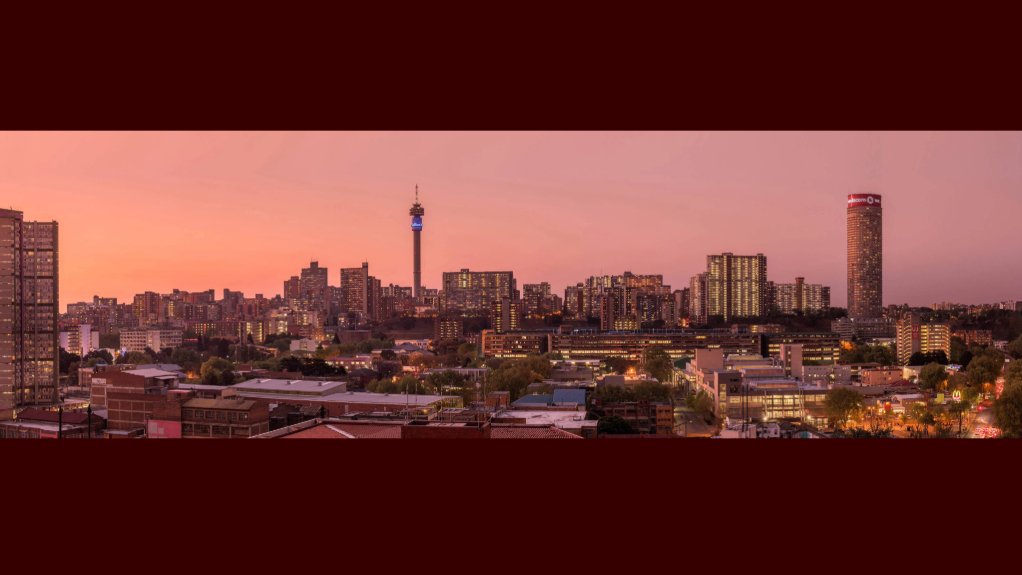
The City of Johannesburg’s financial difficulties pose economic risks to the country owing to the city’s outsized role in the economy.



Given the recent uptick in the US-Iran military exchange and BMI’s shift to a ‘messy negotiation scenario’, the research unit will be reviewing its forecasts over the coming week, but does not anticipate making “significant revisions” to its South African ones for the year.
This was highlighted by research firm BMI sub-Saharan Africa country risk senior analyst Lara Wolfe, speaking in the company’s “Sub-Saharan Africa Macroeconomic Update: Resilience Despite Challenging Global Environment”, webinar on July 21.
“At 1.1%, our forecast is already below consensus and, in addition, the stronger-than-expected first-quarter growth, provides some buffer against a modest deterioration in external shifts,” she said.
Wolfe pointed out that the main forecast changes will likely be monetary policy and inflation, with the prominent risk stemming from oil prices.
“Our oil and gas team are likely to revise up our annual price forecast and our expectations for when oil prices will peak – this will likely push on our own expectations of when South Africa’s domestic inflation will peak, which we previously anticipated was going to be in June,” Wolfe explained. She added that this would, in turn, impact on BMI’s monetary policy forecast.
“While, previously, we held the view that the South African Reserve Bank would hold at its July meeting, which is on Thursday, elevated price pressures for longer increase the likelihood of a second 25-bit hike, which would bring the policy rate to 7.25%,” Wolfe hypothesised.
Elevated oil prices also pose downside risks to BMI’s forecasts for trade and the rand.
However, Wolfe pointed out that the country’s currency has remained relatively resilient throughout recent geopolitical tensions, and, provided that the conflict does not escalate into a more sustained period of high-intensity warfare, BMI continues to expect support from precious metal prices and improved domestic fundamentals to help limit downside pressure on the rand.
Wolfe also highlighted that South Africa has made notable progress in strengthening its fiscal position in recent years, with government recording primary budget surpluses since the 2022/23 fiscal years as a result.
However, she warned that, while BMI expects the direct fiscal impact on the national government to remain relatively contained, the City of Johannesburg’s financial difficulties pose broader economic risks owing to the city’s outsized role in the economy.
“Johannesburg's financial difficulties are particularly concerning because they risk creating a self-reinforcing cycle that weighs on economic activity. High non-revenue losses mean that the city fails to collect revenue on a significant share of the services it provides, and to compensate, the city has increasingly relied on above inflation tariff increases, contributing to higher administered price inflation and rising costs on households and businesses,” Wolfe explained.
Concurrently, growing arrears to service providers such as State-owned power utility Eskom and water utility Rand Water, alongside rising debt servicing costs, are diverting resources away from infrastructure maintenance and capital investment, she lamented.
“While an agreement with National Treasury has been announced, the measure primarily addresses symptoms rather than the causes of the city’s financial difficulties, and unless Johannesburg improves revenue collection and reduces water and electricity distribution losses, the gap between service provision costs and revenue generation will likely persist, increasing the likelihood of further above-inflation tariff increases and constraining investment in critical infrastructure,” Wolfe stressed.
She emphasised that, owing to Johannesburg’s role as South Africa’s primary financial and commercial hub, accounting for about 16% of GDP, weakening municipal finances in the city risk weighing on investment, productivity, growth and business confidence nationwide, while undermining investor perceptions, the country’s broader growth prospects and its operating environment.
Johannesburg’s deteriorating service delivery also poses a political risk to the African National Congress ahead of the 2026 municipal elections, Wolfe noted, adding that the party has yet to announce its mayoral candidate, while opposition party the DA has put forward Helen Zille as its choice.
Wolfe said Johannesburg’s fragmented political landscape and South Africa’s proportional representation system make a coalition government a likely outcome, and as a result, governance and infrastructure reforms would likely continue to progress slowly.
She mentioned that BMI also expects anti-immigrant protests to remain a feature of South Africa’s political landscape over the coming months, with migration and population risks remaining high.
However, it does not anticipate unrest reaching the scale of the July 2021 riots.
“Elevated unemployment, crime, persistent service delivery failures and strong price pressures-for example, in the case of an extension of the US-Iran conflict, will continue to fuel public frustration, ensuring that support for anti-immigrant movements remains elevated, and that further demonstrations are likely,” she posited.
Wolfe pointed out that previously, protest activity in South Africa has struggled to maintain momentum, especially in the absence of centralised leadership or clearly defined political demands.
In this case, grievances are widespread and could increasingly be channelled through formal political and institutional processes rather than sustained nationwide mobilisation, she predicts.
Further demonstrations are likely to remain localised, in densely populated urban areas and key commercial districts, particularly Johannesburg, Pretoria and Durban, where economic pressures, migrant populations and media visibility are highest, Wolfe explained.
She warned that the wider risk is that recurring unrest undermines the improvement in investor confidence that South Africa has achieved in recent years, with bond yields falling, ratings agencies improving the country’s credit outlooks and progress on both energy and logistics reforms.
“This recovery does remain vulnerable to renewed instability,” Wolfe cautioned.
Beyond South Africa, she noted that rising violence against foreign nationals risks creating diplomatic tensions, both with the country’s neighbours, as well as key regional partners such as Nigeria and Ghana.
The return of migrants to an already fragile labour market could add to social pressures elsewhere in Southern Africa, Wolfe pointed out.
BROADER VIEW
This webinar also provided an update on how BMI’s previously communicated six themes it anticipated playing out in SSA this year are unfolding.
With the year halfway done, BMI has assessed that three have played out thus far, while three have partially played out, even as the US-Iran conflict has generated considerable global economic and political uncertainty.
The theme of whether domestic demand would hold up despite global trade uncertainty has partially played out.
Regional growth has held up better than expected despite the US-Iran conflict, supported by stronger-than expected first quarter growth prints, relatively robust macroeconomic fundamentals and stronger oil revenues among producers, BMI pointed out.
However, the conflict has interrupted the disinflation and monetary-easing cycle that formed a key part of our original thesis, it adds.
The theme of sub-Saharan African governments exploring more innovative ways of financing fiscal shortfalls has played out.
Governments have increasingly turned to sukuk, environment, social and governance-linked financing, diaspora bonds and alternative-currency borrowing as fiscal pressures, debt-servicing costs, and limited concessional financing keep funding needs elevated, BMI averred.
For example, South Africa announced this year that it will use its existing rand-denominated sukuk.
The theme of mainland China-sub-Saharan Africa economic relationships evolving has played out partially.
Ties have deepened through zero-tariff access, critical minerals, infrastructure and financial links. However, underlying trade dynamics remain largely unchanged, with sub-Saharan Africa still exporting commodities and importing higher-value goods, BMI explained.
For example, South Africa’s exports to China remain concentrated in raw materials, while China continues to export higher value finished goods to the continent.
The theme of US-SSA ties being tested by a transactional ‘America First’ approach is playing out thus far.
US engagement has become more bilateral and transactional, while cuts to traditional development support and uncertainty over African Growth and Opportunity Act have pushed sub-Saharan African governments to diversify external partnerships, BMI noted.
The theme of the shine coming off of sub-Saharan Africa’s foreign exchange story this year has partially played out this year.
SSA currencies have lost some momentum relative last year, but depreciation pressures have been less broad-based than expected as strong gold and copper prices, reserve accumulation and active central bank intervention support several major currencies, BMI said.
Lastly, the theme of political temperatures rising amid insecurity, social tensions and elections has played out.
Political risks have risen across sub-Saharan Africa, driven by constitutional disputes, governance tensions, insecurity, and elections, although there has not been a broad region-wide protest wave, BMI indicated.
In South Africa, anti-immigrant protests have intensified amid weak service delivery, high unemployment, crime concerns and elevated living costs, it was noted.
Over the remainder of the year, BMI believes that in certain regions, including South Africa’s municipal election on November 4, will sustain tensions across sub-Saharan Africa.
Article Enquiry
Email Article
Save Article
Feedback
To advertise email advertising@creamermedia.co.za or click here
Research Reports
Projects


Latest Multimedia

Latest News

Showroom

Supplier & Distributor of the Widest Range of Accurate & Easy-to-Use Alcohol Breathalysers
VISIT SHOWROOM
ROSOND provides fast, efficient, safe, and cost-effective drilling and grouting services to mining and exploration industries throughout Africa.
VISIT SHOWROOM

Press Office
Announcements
What's On
Subscribe to improve your user experience...
Option 1 (equivalent of R125 a month):
Receive a weekly copy of Creamer Media's Engineering News & Mining Weekly magazine
(print copy for those in South Africa and e-magazine for those outside of South Africa)
Receive daily email newsletters
Access to full search results
Access archive of magazine back copies
Access to Projects in Progress
Access to ONE Research Report of your choice in PDF format
Option 2 (equivalent of R375 a month):
All benefits from Option 1
PLUS
Access to Creamer Media's Research Channel Africa for ALL Research Reports, in PDF format, on various industrial and mining sectors
including Electricity; Water; Energy Transition; Hydrogen; Roads, Rail and Ports; Coal; Gold; Platinum; Battery Metals; etc.
Already a subscriber?
Forgotten your password?
Receive weekly copy of Creamer Media's Engineering News & Mining Weekly magazine (print copy for those in South Africa and e-magazine for those outside of South Africa)
➕
Recieve daily email newsletters
➕
Access to full search results
➕
Access archive of magazine back copies
➕
Access to Projects in Progress
➕
Access to ONE Research Report of your choice in PDF format
RESEARCH CHANNEL AFRICA
R4500 (equivalent of R375 a month)
SUBSCRIBEAll benefits from Option 1
➕
Access to Creamer Media's Research Channel Africa for ALL Research Reports on various industrial and mining sectors, in PDF format, including on:
Electricity
➕
Water
➕
Energy Transition
➕
Hydrogen
➕
Roads, Rail and Ports
➕
Coal
➕
Gold
➕
Platinum
➕
Battery Metals
➕
etc.
Receive all benefits from Option 1 or Option 2 delivered to numerous people at your company
➕
Multiple User names and Passwords for simultaneous log-ins
➕
Intranet integration access to all in your organisation