



Mining, manufacturing contribute to 3.1% GDP growth in Q2


South Africa’s gross domestic product (GDP) expanded by 3.1% in the second quarter of the year.
This follows on the 3.1% contraction recorded for the first quarter.
On a year-on-year basis, GDP expanded by 0.9%.
Statistics South Africa head and statistician-general Risenga Maluleke announced last week that the mining industry had made a significant contribution to GDP growth in the second quarter. The mining industry grew by 14.4% quarter-on-quarter, contributing one percentage point to GDP growth.
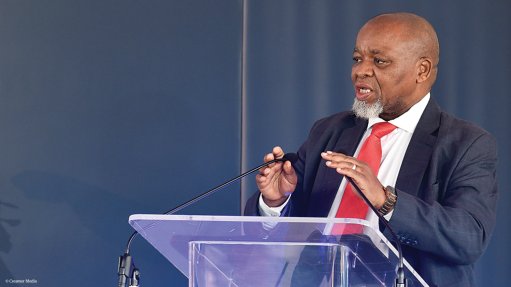
The Ministry of Mineral Resources and Energy commented that the mining sector’s performance in the second quarter had been encouraging and attested to the work undertaken together with the department’s social partners to turn the industry around.
Holistic LookIncreased production was reported for iron-ore, manganese, coal and platinum. The Ministry noted, however, that a holistic look needed to be taken at the mining industry, beyond the minerals that had been dominant over a long time and which were now declining.
Manufacturing grew by 2.1% in the second quarter, while electricity grew by 3.2%.
Agriculture, forestry and fisheries, however, had a negative impact on overall growth. The industry contracted 4.2%, contributing minus one percentage point to GDP.
Construction contracted by 1.6%, contributing minus one percentage point to GDP.
Maluleke stated that nominal GDP had been estimated at R1.26-trillion in the second quarter, which was R60-billion more than in the first quarter of the year.
According to Statistics South Africa’s data, the largest industry in South Africa in the second quarter had been finance and business services, which contributed 19% to nominal GDP, followed by government with an 18% contribution.
Trade contributed 15% to nominal GDP; manufacturing 13%; transport 9%; mining 8%; personal services 6%; electricity, gas and water 5%; construction 4%; and agriculture 3%.
North-West University business school economist Professor Raymond Parsons said in a statement last week that the better-than- expected GDP figures in the second quarter were good news for the economy, as they confirmed that South Africa had avoided a technical recession.
However, he pointed out that the latest growth figures were, nonetheless, off a low base and included the one-off highly disruptive impact of load-shedding in the first quarter.
Parsons noted that GDP growth was unlikely to exceed 0.6% for the year and that greater policy certainty was needed to boost investor confidence.
“The outcomes needed from the possible implementation of the latest National Treasury growth strategy have the potential to either enhance or reduce policy certainty.
“The growth plan, if broadly supported, could facilitate [assist in] turning the economy around. It is essential now to provide the necessary leadership and to forge sufficient consensus around what needs to be urgently done to strengthen the South African economy,” Parsons explained.
Nedbank noted that agriculture should fare better, given the lifting of the ban on meat exports and a strong rebound for the winter crops, following good rains.
Nedbank expected more improvement in mining and manufacturing, but the upside will be constrained by softer global demand and stagnant commodity prices.
“Services should benefit from moderate growth in consumer spending, propped up by subdued inflation and slightly lower interest rates, but also kept in check by high unemployment, weak income growth and fragile confidence levels.
“Given the underlying lack of confidence and subdued growth prospects, expansionary fixed investment activity is not expected to recover this year, although spending on modernisation and automation is likely to continue. The country’s net export position is likely to be steady, with some pressure on exports countered by weak demand for imports.”
Nedbank maintained a growth forecast of 0.5% for the calendar year.
Investec said GDP was unlikely to be higher than 0.7% for the year, adding that South Africa still risked losing Moody’s investment grade rating.
Article Enquiry
Email Article
Save Article
Feedback
To advertise email advertising@creamermedia.co.za or click here
Research Reports

Projects


Latest Multimedia


Latest News

Showroom

EIMS is an independent specialised environmental consulting firm offering the full spectrum of environmental management services across all sectors...
VISIT SHOWROOM
The Beneficiation Academy is a certified training institution that follows all compliance legislation and is accredited with various Sector...
VISIT SHOWROOM



Announcements
What's On
Subscribe to improve your user experience...
Option 1 (equivalent of R125 a month):
Receive a weekly copy of Creamer Media's Engineering News & Mining Weekly magazine
(print copy for those in South Africa and e-magazine for those outside of South Africa)
Receive daily email newsletters
Access to full search results
Access archive of magazine back copies
Access to Projects in Progress
Access to ONE Research Report of your choice in PDF format
Option 2 (equivalent of R375 a month):
All benefits from Option 1
PLUS
Access to Creamer Media's Research Channel Africa for ALL Research Reports, in PDF format, on various industrial and mining sectors
including Electricity; Water; Energy Transition; Hydrogen; Roads, Rail and Ports; Coal; Gold; Platinum; Battery Metals; etc.
Already a subscriber?
Forgotten your password?
Receive weekly copy of Creamer Media's Engineering News & Mining Weekly magazine (print copy for those in South Africa and e-magazine for those outside of South Africa)
➕
Recieve daily email newsletters
➕
Access to full search results
➕
Access archive of magazine back copies
➕
Access to Projects in Progress
➕
Access to ONE Research Report of your choice in PDF format
RESEARCH CHANNEL AFRICA
R4500 (equivalent of R375 a month)
SUBSCRIBEAll benefits from Option 1
➕
Access to Creamer Media's Research Channel Africa for ALL Research Reports on various industrial and mining sectors, in PDF format, including on:
Electricity
➕
Water
➕
Energy Transition
➕
Hydrogen
➕
Roads, Rail and Ports
➕
Coal
➕
Gold
➕
Platinum
➕
Battery Metals
➕
etc.
Receive all benefits from Option 1 or Option 2 delivered to numerous people at your company
➕
Multiple User names and Passwords for simultaneous log-ins
➕
Intranet integration access to all in your organisation
