



Mining cost pressures to have negative impact on employment – lawyer


Cost pressures put on the mining indus-try in the form of wage increases, high transport and electricity costs and low commodity prices would ultimately impact negatively on employment, Webber Wentzel head of Africa mining and energy projects Peter Leon said last week.
Speaking at the Mandela Institute’s second yearly international economic law update, he pointed out that mining wage increases averaged about 12.3% this year, which was close to double the current rate of consumer inflation – about 6.5%.
“When this increase in wages is added to other cost pressures, the mining industry is put in a situation where something will have to give, and this will be employment. As cost pressures increase, mines will move increas-ingly towards mechanisation, at the expense of mineworkers,” Leon said, adding that the mining industry could not afford double-digit wage increases as labour already made up 50% of mining companies’ costs.
Further, he noted that administered prices for electricity and transport put further pres-sure on mining companies.
Electricity costs had added R7-billion to the expenses of gold and platinum companies between 2007 and 2012, while transport costs were also high, he noted.
“The mining industry is compelled to use Transnet’s rail services even while the capacity is constrained and the cost high,” Leon said, questioning why access to electricity and trans-port in South Africa had to be monopolised by the State.
“Would it not make sense to let the mining companies build and operate their own infra- structure as is being done by Vale in Mozam-bique?” Leon asked.
Meanwhile, the events that took place at Marikana last year marked the beginning of the most serious labour unrest that South Africa has faced in generations, Leon stated, adding that, since Marikana, South Africa had upward of 13 violent protests a day at times.
“The mining industry has seen a significant number of violent protests over the past year, such as the protest that took place at Harmony Gold, in December, and that which took place at Anglo American Platinum, in February, that led to the injury of 13 people,” he explained.
Leon further stated that these protests were mainly as a result of interunion rivalry and the turf war between the National Union of Mine- workers (NUM) and the Association of Mine-workers and Construction Union (AMCU).
“This violence has plagued the industry since August, and was confirmed again last week when an NUM branch chairperson was shot,” he said.
Also speaking at the event, Chamber of Mines VP Mike Teke added that mining labour relations were facing a significant challenge since Marikana, with AMCU having changed the labour space.
Leon further pointed out that, while mining only contributed 5% of the country’s gross domestic product (GDP), it did contribute 60% of the country’s export revenue, as well as R21-billion in taxes and another R3.5-billion in royalties.
From June 2012 to June 2013, mining pro-duction had dropped 4.5% as result of labour unrest, and the R12-billion drop in production as a result of the labour disruptions had led to a decline in the country’s GDP, which con-tributed to the country’s current account deficit and, in turn, also contributed to the rand depreciation.
Currently, South Africa’s current account deficit is the second-highest of the G20 countries, Leon said.
He also pointed out that the Fraser Institute had recently downgraded South Africa to sixty-fourth out of 96 countries with regard to its investor friendliness, compared with a ranking of fifty-four in 2012.
This came at a time when international investors were, more and more, starting to differentiate between emerging markets as potential investment destinations.
“South Africa has a lesson to learn from this. If you are not properly governed and if there is corruption, it will affect you,” Teke said, adding that South Africa was now faced with the challenge of getting its mining industry to function properly.
To successfully revive the industry, the country and its mining companies firstly had to acknowledge that the game had changed after Marikana, he stated.
Article Enquiry
Email Article
Save Article
Feedback
To advertise email advertising@creamermedia.co.za or click here
Research Reports

Projects


Latest Multimedia


Latest News
Showroom
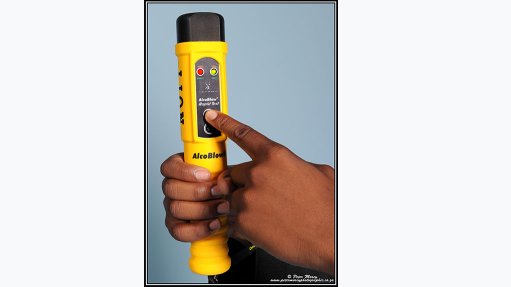
Developed to exceed the latest EN 15964 standards for police breathalysers proving that it will remain accurate and reliable for many years to come.
VISIT SHOWROOM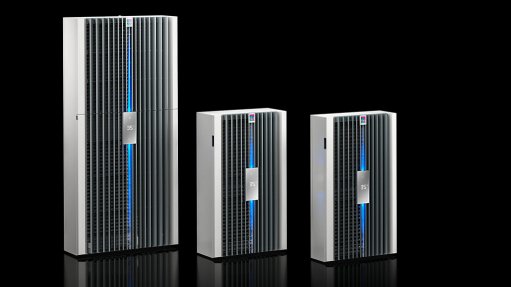
Rittal is a world leading provider of top-quality integrated systems for enclosures, power distribution, climate control, IT infrastructure and...
VISIT SHOWROOM



Announcements
What's On
Subscribe to improve your user experience...
Option 1 (equivalent of R125 a month):
Receive a weekly copy of Creamer Media's Engineering News & Mining Weekly magazine
(print copy for those in South Africa and e-magazine for those outside of South Africa)
Receive daily email newsletters
Access to full search results
Access archive of magazine back copies
Access to Projects in Progress
Access to ONE Research Report of your choice in PDF format
Option 2 (equivalent of R375 a month):
All benefits from Option 1
PLUS
Access to Creamer Media's Research Channel Africa for ALL Research Reports, in PDF format, on various industrial and mining sectors
including Electricity; Water; Energy Transition; Hydrogen; Roads, Rail and Ports; Coal; Gold; Platinum; Battery Metals; etc.
Already a subscriber?
Forgotten your password?
Receive weekly copy of Creamer Media's Engineering News & Mining Weekly magazine (print copy for those in South Africa and e-magazine for those outside of South Africa)
➕
Recieve daily email newsletters
➕
Access to full search results
➕
Access archive of magazine back copies
➕
Access to Projects in Progress
➕
Access to ONE Research Report of your choice in PDF format
RESEARCH CHANNEL AFRICA
R4500 (equivalent of R375 a month)
SUBSCRIBEAll benefits from Option 1
➕
Access to Creamer Media's Research Channel Africa for ALL Research Reports on various industrial and mining sectors, in PDF format, including on:
Electricity
➕
Water
➕
Energy Transition
➕
Hydrogen
➕
Roads, Rail and Ports
➕
Coal
➕
Gold
➕
Platinum
➕
Battery Metals
➕
etc.
Receive all benefits from Option 1 or Option 2 delivered to numerous people at your company
➕
Multiple User names and Passwords for simultaneous log-ins
➕
Intranet integration access to all in your organisation
