



Metal and engineering wage negotiations start, ‘big increases’ may be demanded

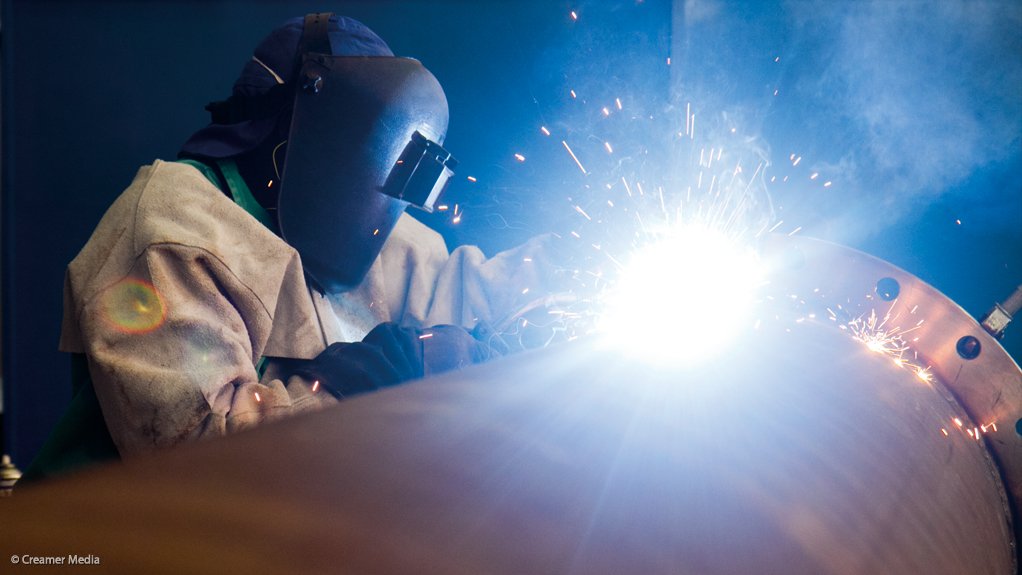


The Metal and Engineering Industries Bargaining Council (MEIBC) started its 2014 industry wage negotiation process on Wednesday with the aim of having a new agreement in place by July 1.
The current three-year wage agreement – which had been contested in court by the National Employers Association of South Africa (Neasa) for being detrimental to small business and not being valid, as it believed that the bargaining council did not represent the substantial industry majority required by law – would expire on June 30.
This agreement provided for staggered wage increases, from 8% to 10% for skilled and unskilled employees respectively.
MEIBC general secretary Thulani Mthiyane explained that the first part of the wage negotiation process was the prebargaining conference, which was taking place on Wednesday and Thursday, where employers and unions had the opportunity to motivate their demands.
“[This is to ensure that] when we start with the negotiations, [on April 16], both parties understand what each demand means and [thereby] provide a proper response to that demand,” he said.
Mthiyane pointed out that one of the sessions at the conference specifically dealt with South Africa’s and the global economic outlook, and how various wage increases would impact on the economy.
He added that while the industry was nearing the end of a three-year wage agreement, the new agreement could potentially have a different timeframe if the parties so agreed.
“There are a lot of demands [associated with] a one-year agreement, [therefore] some employers are talking about a three-year deal. This gives them the peace required in the industry for that period, as you can plan things without the threat of a strike.
“[However] the ultimate agreement on the period will depend on how the negotiations go,” Mthiyane explained.
Further, he stated that, with this year’s negotiations, the MEIBC was finding that some employers were of the opinion that the bargaining council, along with the industry that it serviced, "was expensive".
Therefore, there were employers that wanted to use this round of negotiations to arrive at an agreement that would allow them to pay a lower entry-level salary, he stated, adding that, should the unions have an appetite for this, it would contribute to smooth and quick negotiations.
“However, the unions [believe] that, in the light of [the] economic hardship experienced by the workers, the workers in this industry deserve a big increase. This will contribute to slowing down the process of negotiations, [possibly taking] us beyond July 1 and to a strike,” he told Engineering News Online.
Earlier this month, the Steel and Engineering Industries Federation of Southern Africa (Seifsa), which would negotiate with labour on behalf of its employer associations, had appealed for the adoption of a “realistic approach” ahead of the wage negotiation season.
This followed an earlier comment by National Union of Metalworkers of South Africa (Numsa) deputy general-secretary Karl Cloete to the media that the union would demand a double-digit increase for its members.
“We caution that it is very important for all stakeholders to be realistic in their approach to the negotiations. We cannot operate as though there is no context, as though we live in a vacuum,” Seifsa CEO Kaizer Nyatsumba said.
He noted that the context in which negotiations would take place was a “very somber” one, dominated by an underperforming economy that had forced the closure of several producers in the metals and engineering sector, leading to deindustrialisation in certain parts of the country.
Nyatsumba said Seifsa, as a federation representing 27 associations in the metals and engineering industries, would approach the upcoming wage negotiations with South Africa’s “best interests in mind”.
“We will remain conscious of the fact [that] our country still has a long way to go to be internationally competitive, to maintain existing jobs and to create much-needed new ones,” he commented.
Meanwhile, Mthiyane explained that the new agreement would come into effect for MEIBC affiliates from July 1, irrespective of whether the agreement was signed by then.
“[The agreement] would become effective from July 1. Even if it is signed after [this date], it will be back-dated to July 1,” he said.
However, to make this agreement applicable to the entire industry, the Minister of Labour would first have to gazette it, which would take about three months, Mthiyane said, adding that employers who were not affiliated with the MEIBC could, however, decide to start implementing the wage increases from July 1 if they believed that not granting the increase would affect their businesses’ productivity.
Article Enquiry
Email Article
Save Article
Feedback
To advertise email advertising@creamermedia.co.za or click here
Research Reports

Projects


Latest Multimedia


Latest News
Showroom
Roytec Global is an international company specializing in liquid / solid and mineral separation technologies for the Mining and Industrial sectors.
VISIT SHOWROOM
Virtual Gas Network supplies compressed natural gas via a virtual gas distribution network.
VISIT SHOWROOM



Announcements
What's On
Subscribe to improve your user experience...
Option 1 (equivalent of R125 a month):
Receive a weekly copy of Creamer Media's Engineering News & Mining Weekly magazine
(print copy for those in South Africa and e-magazine for those outside of South Africa)
Receive daily email newsletters
Access to full search results
Access archive of magazine back copies
Access to Projects in Progress
Access to ONE Research Report of your choice in PDF format
Option 2 (equivalent of R375 a month):
All benefits from Option 1
PLUS
Access to Creamer Media's Research Channel Africa for ALL Research Reports, in PDF format, on various industrial and mining sectors
including Electricity; Water; Energy Transition; Hydrogen; Roads, Rail and Ports; Coal; Gold; Platinum; Battery Metals; etc.
Already a subscriber?
Forgotten your password?
Receive weekly copy of Creamer Media's Engineering News & Mining Weekly magazine (print copy for those in South Africa and e-magazine for those outside of South Africa)
➕
Recieve daily email newsletters
➕
Access to full search results
➕
Access archive of magazine back copies
➕
Access to Projects in Progress
➕
Access to ONE Research Report of your choice in PDF format
RESEARCH CHANNEL AFRICA
R4500 (equivalent of R375 a month)
SUBSCRIBEAll benefits from Option 1
➕
Access to Creamer Media's Research Channel Africa for ALL Research Reports on various industrial and mining sectors, in PDF format, including on:
Electricity
➕
Water
➕
Energy Transition
➕
Hydrogen
➕
Roads, Rail and Ports
➕
Coal
➕
Gold
➕
Platinum
➕
Battery Metals
➕
etc.
Receive all benefits from Option 1 or Option 2 delivered to numerous people at your company
➕
Multiple User names and Passwords for simultaneous log-ins
➕
Intranet integration access to all in your organisation
