



Mayoko-Moussondji project demonstrates value in iron-ore junior market

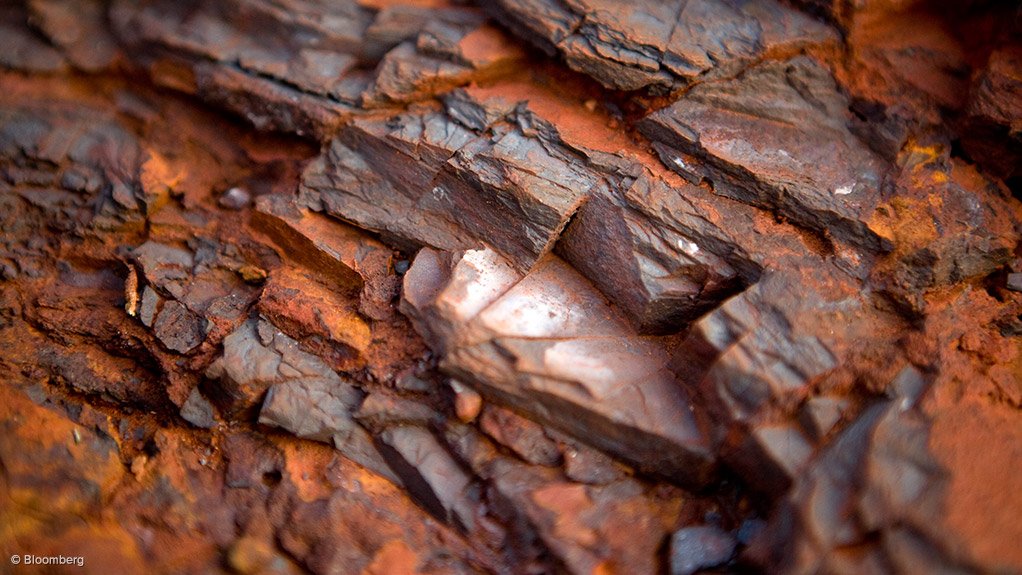



JOHANNESBURG (miningweekly.com) – ASX-listed Equatorial Resources had a “massive opportunity” to demonstrate value in its Mayoko-Moussondji iron-ore project in the Republic of Congo (ROC), in a market which many of the company’s junior iron-ore producer peers had found difficult, Equatorial MD and CEO John Welborn told Mining Weekly Online.The company had on Monday received the mining licence for the project following the completion of a detailed technical feasibility study and environmental- and social-impact assessments, community development plans and technical reviews by relevant government agencies.
“The iron-ore price today is more than $115/t, it is a great environment to produce iron-ore when you can get it on a ship for $40/t: – which is what we have demonstrated in our study, and our project team is looking forward to demonstrating the value of the project,” Welborn said.
He also told Mining Weekly Online that he believed Equatorial was benefitting from being the “second mover” in the ROC iron-ore market, which was speeding up the project’s approval processes.
“[Our project is situated] alongside [that of] mining major Exxaro Resources, which has an almost identical iron-ore project, [and is] looking to use identical rail and port solutions. They had their mining licence approved a year ago and so the process [the approval of the mining licence] has been assisted by having a blueprint to operate on and [therefore] all the issues that we are asking the government to consider, they have already considered in relation to the approval of Exxaro’s project,” Welborn explained.
Following the mining licence approval, Equatorial would now negotiate with the ROC government on the Mining Convention Agreement, which was required before project development could begin.
Welborn explained that in the ROC, the mining licence gave the company an exclusive right to mine the area, but that all the fiscal terms of operation, such as tax holidays, exoneration of import rates, the payment of government royalties and the commercial terms of the company’s access to government infrastructure were included in the Mining Convention Agreement, which operated alongside the mining licence.
“We have had the advantage of discussing our mining convention with government over a long time and, again, we also have the blueprint of the companies who have gone before us, such as Australian miner Sundance and Exxaro. So, we are looking forward to a continued speedy process,” he said.
He stated that as Equatorial’s project was similar to that of Exxaro and the ROC government had been consistent in offering companies similar fiscal terms, Equatorial was optimistic that it could negotiate the mining convention by the middle of this year.
The company was also already in discussions with potential project finance partners.
Following a financial investment decision, the company was confident that it could reach first production within 15 months, Welborn said.
He said Equatorial had not yet put a specific start date for the project on record but added that, given the expected 15-month timeline and the company’s aim to have the convention agreement in place by mid-year, “if you were to [suggest] that we are hopeful to get into production by the end of next year, it is not something that I would strongly disagree with”.
Welborn further explained that the Mayoko-Moussondji project had the added benefit of having access to the market through the availability of a railway.
The project would use an existing railway line that had been used by the Comilog manganese project to move three-million tons a year of manganese from 1960 to 1990.
“So, all we need to do is construct the mining fleet and the processing facility in the Mayoko region, refine the rail corridor and build some infrastructure at the port to enable the loading of iron-ore ships, all of which Exxaro is also working on,” Welborn said.
He added that Equatorial supported the ROC government’s position on open-user infrastructure and, therefore, working with the other companies operating in the area made sense.
Article Enquiry
Email Article
Save Article
Feedback
To advertise email advertising@creamermedia.co.za or click here
Research Reports

Projects

Latest Multimedia
Latest News

Showroom

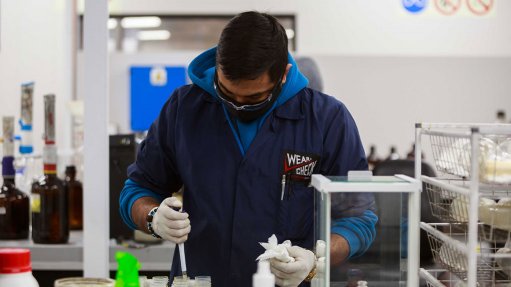
Leading condition monitoring specialists, WearCheck, help boost machinery lifespan and reduce catastrophic component failure through the scientific...
VISIT SHOWROOM

Announcements
What's On
Subscribe to improve your user experience...
Option 1 (equivalent of R125 a month):
Receive a weekly copy of Creamer Media's Engineering News & Mining Weekly magazine
(print copy for those in South Africa and e-magazine for those outside of South Africa)
Receive daily email newsletters
Access to full search results
Access archive of magazine back copies
Access to Projects in Progress
Access to ONE Research Report of your choice in PDF format
Option 2 (equivalent of R375 a month):
All benefits from Option 1
PLUS
Access to Creamer Media's Research Channel Africa for ALL Research Reports, in PDF format, on various industrial and mining sectors
including Electricity; Water; Energy Transition; Hydrogen; Roads, Rail and Ports; Coal; Gold; Platinum; Battery Metals; etc.
Already a subscriber?
Forgotten your password?
Receive weekly copy of Creamer Media's Engineering News & Mining Weekly magazine (print copy for those in South Africa and e-magazine for those outside of South Africa)
➕
Recieve daily email newsletters
➕
Access to full search results
➕
Access archive of magazine back copies
➕
Access to Projects in Progress
➕
Access to ONE Research Report of your choice in PDF format
RESEARCH CHANNEL AFRICA
R4500 (equivalent of R375 a month)
SUBSCRIBEAll benefits from Option 1
➕
Access to Creamer Media's Research Channel Africa for ALL Research Reports on various industrial and mining sectors, in PDF format, including on:
Electricity
➕
Water
➕
Energy Transition
➕
Hydrogen
➕
Roads, Rail and Ports
➕
Coal
➕
Gold
➕
Platinum
➕
Battery Metals
➕
etc.
Receive all benefits from Option 1 or Option 2 delivered to numerous people at your company
➕
Multiple User names and Passwords for simultaneous log-ins
➕
Intranet integration access to all in your organisation
