



Labour stability, preferential procurement key to growth, says Whitfield

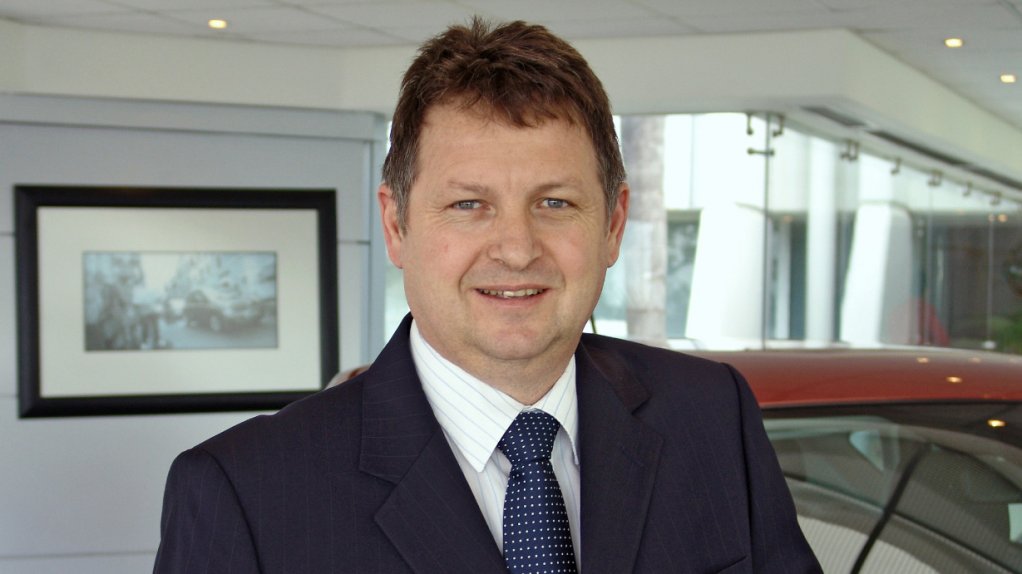



The South African automotive industry was unlikely to see wage settlements at a level lower than the 8% to 10% increases a year agreed to in a range of three-year wage deals signed in the retail, component and assembly sectors in 2013, said Nissan South Africa MD and Nissan Africa (South) president Mike Whitfield on Tuesday.
Speaking at the launch of the KPMG Global Auto Executive Survey in Johannesburg, he said wages in the local automotive industry were “significantly higher” than in other competing developing countries, but that the social imperative in South Africa to “close the wage gap” would probably see future wage increases continue to “run ahead of inflation”.
The auto sector was scheduled to thrash out a new wage deal with labour unions in 2016.
Whitfield also emphasised that wage discussions should be less disruptive, as well as “more predictable and proactive”.
The 2013 strike in the assembly industry continued for four weeks.
Whitfield added that wage increases, such as those seen in the South African automotive industry, should lead to increased productivity, which was not always the case.
He viewed a stable labour environment as one of the key drivers in achieving the combined goal of industry and government to sell and produce 1.2-million vehicles a year in South Africa by 2020, however remote it might seem in 2015.
The local automotive industry last year produced 566 083 units, and sold 644 523 units in the domestic market.
Another key driver to achieve growth in production and sales was a stable automotive policy. Whitfield said this was available in South Africa in the form of government's Automotive Production and Development Programme (APDP).
Currently the subject of a review, it was expected that the APDP would remain largely unchanged, and be extended beyond its current end-date of 2020.
Whitfield said another driver to increase domestic vehicle production and sales was trade policy that would expand the local industry’s reach into Africa, allowing it to capitalise on the economic growth seen in many African markets.
Yet another driver was access to finance for the large number of potential car buyers in South Africa.
Preferential procurement for locally produced vehicles was also essential, noted Whitfield.
He added that it would be wrong to think that global vehicle manufacturers would not pull out of South Africa owing to exorbitant exit costs.
The costs of manufacturers exiting Australia were higher than it would be to exit South Africa, said Whitfield.
Australia’s automotive assembly industry was set to close down by 2017, largely owing to rising costs, diminishing government support and shrinking volumes.
Article Enquiry
Email Article
Save Article
Feedback
To advertise email advertising@creamermedia.co.za or click here
Research Reports

Projects


Latest Multimedia


Latest News
Showroom

Established in 1933, EKATO is the world leader in agitation technology, supplying agitators for processes and applications such as chemicals and...
VISIT SHOWROOM
From batteries for boats and jet skis, to batteries for cars and quad bikes, SABAT Batteries has positioned itself as the lifestyle battery of...
VISIT SHOWROOM



Announcements
What's On
Subscribe to improve your user experience...
Option 1 (equivalent of R125 a month):
Receive a weekly copy of Creamer Media's Engineering News & Mining Weekly magazine
(print copy for those in South Africa and e-magazine for those outside of South Africa)
Receive daily email newsletters
Access to full search results
Access archive of magazine back copies
Access to Projects in Progress
Access to ONE Research Report of your choice in PDF format
Option 2 (equivalent of R375 a month):
All benefits from Option 1
PLUS
Access to Creamer Media's Research Channel Africa for ALL Research Reports, in PDF format, on various industrial and mining sectors
including Electricity; Water; Energy Transition; Hydrogen; Roads, Rail and Ports; Coal; Gold; Platinum; Battery Metals; etc.
Already a subscriber?
Forgotten your password?
Receive weekly copy of Creamer Media's Engineering News & Mining Weekly magazine (print copy for those in South Africa and e-magazine for those outside of South Africa)
➕
Recieve daily email newsletters
➕
Access to full search results
➕
Access archive of magazine back copies
➕
Access to Projects in Progress
➕
Access to ONE Research Report of your choice in PDF format
RESEARCH CHANNEL AFRICA
R4500 (equivalent of R375 a month)
SUBSCRIBEAll benefits from Option 1
➕
Access to Creamer Media's Research Channel Africa for ALL Research Reports on various industrial and mining sectors, in PDF format, including on:
Electricity
➕
Water
➕
Energy Transition
➕
Hydrogen
➕
Roads, Rail and Ports
➕
Coal
➕
Gold
➕
Platinum
➕
Battery Metals
➕
etc.
Receive all benefits from Option 1 or Option 2 delivered to numerous people at your company
➕
Multiple User names and Passwords for simultaneous log-ins
➕
Intranet integration access to all in your organisation
