



Iron-ore output poised to grow globally up to 2030

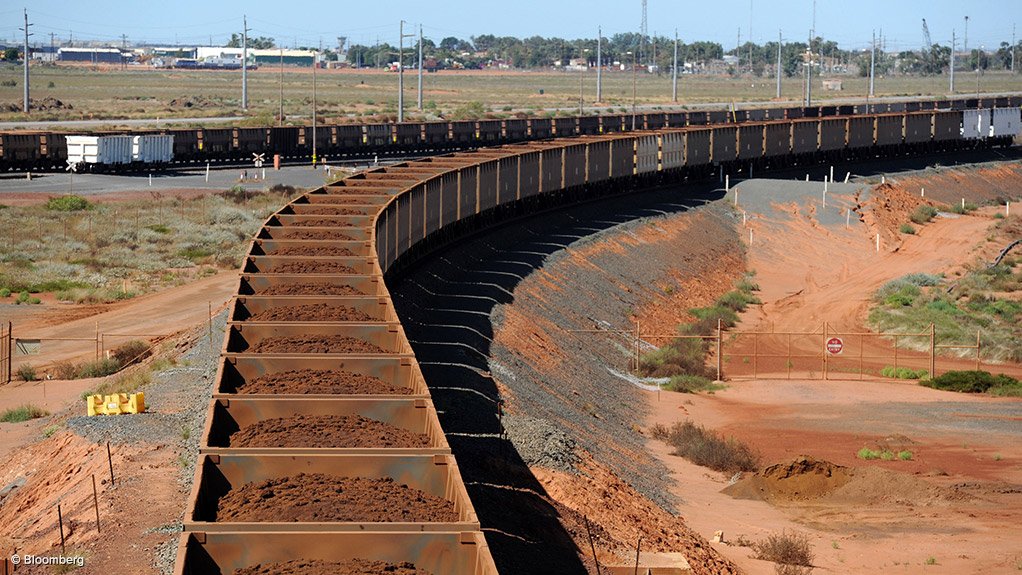


Research agency Fitch Solutions Country Risk & Industry Research believes global iron-ore production is likely to accelerate between 2022 and 2026, after stagnating somewhat over the past five years.
The agency forecasts global iron-ore mine output to grow by 2.7% on average over the period, compared with a –1.3% growth rate over 2017 to 2021.
This would lift yearly production by 361-million tonnes by 2026, compared with 2022 levels.
The agency says supply growth will be driven by Brazil and Australia, since Vale, in Brazil, has made aggressive expansion commitments, while BHP Billiton, Rio Tinto and Fortescue, in Australia, plan to use currently buoyant profits to increase production.
In China, iron-ore production will rise once again in the next three to four years as the country works to increase its self- sufficiency and reduce reliance on Australian iron-ore imports.
However, as Chinese miners operate at the higher end of the iron-ore cost curve and the domestic ore grades continue to decline, Fitch Solutions expects Chinese companies to prioritise investment in overseas iron-ore mines, including the Simandou deposit, in Guinea.
Looking ahead, Fitch Solutions expects lower prices to eventually slow production growth rates. It forecasts a yearly iron-ore production growth rate average of 1.1% over 2026 to 2030.
The agency is confident that iron-ore output levels will stagnate by the end of the decade.
Fitch forecasts iron-ore production in Australia to grow at an average yearly rate of 0.4% between 2022 and 2026.
The significant slowdown compared with the previous five years comes from the launch of limited new sources of supply from new projects. This would lift yearly output by just 19.3- million tonnes in 2026, compared with 2022 levels.
“We believe Australia’s seating at the lowest end of the global iron-ore cost curve will provide a healthy buffer against falling prices in the coming years despite the slowdown.
“On average, the cost of producing iron-ore in Australia is $30/t, compared with between $40/t and $50/t in West Africa and $90/t in China.
Production growth will stagnate over the longer term and Fitch Solutions anticipates production to peak mid-decade, at just under one-billion tonnes.
This production slowdown will be due to the mothballing of mines by junior miners and a pullback in capital expenditure by larger firms as iron-ore prices decline.
Majors will continue to decrease costs and increase production in the longer term, focusing on higher-quality ores as much as possible to improve margins and supply ‘green’ steel production.
In Brazil, iron-ore production will rebound in coming years following contraction and stagnation over 2018 to 2020, partly because of Vale’s Bumadinho dam collapse, which sparked a flurry of investigations into Vale’s operations and idling operations.
Low operating costs, a solid project pipeline and Brazil’s high-quality iron-ore, which is increasingly favoured by Chinese steel producers, will all contribute to higher output.
Fitch Solutions forecasts Brazil’s iron-ore production to increase at a yearly average rate of 2.6% between 2022 and 2026, from 409.6-million tonnes this year to 473.5-million tonnes in 2026.
Production growth will slow over the longer term and the agency forecasts an average yearly growth rate of 1.2% over 2026 to 2031, which would take yearly output to 502-million tonnes by 2031.
India’s iron-ore output growth will be supported by the removal of export taxes in the Union Budget for low-grade ores and the country’s mining regulations, which will soon streamline licensing and reopen closed mines.
Although India’s regulations will support iron-ore output growth, the royalties included in the Mines and Minerals Development and Regulation Act will limit the sector’s overall growth potential.
Fitch Solutions forecasts India’s iron-ore output growth to average 0.9% a year, from 179-million tonnes in 2022 to 195.5-million tonnes in 2031.
Article Enquiry
Email Article
Save Article
Feedback
To advertise email advertising@creamermedia.co.za or click here
Research Reports

Projects
Latest Multimedia
Latest News
Showroom
M and J Mining are leading suppliers of physical support systems as used by the underground mining industry. Our selection of products are not...
VISIT SHOWROOM

Announcements
What's On
Subscribe to improve your user experience...
Option 1 (equivalent of R125 a month):
Receive a weekly copy of Creamer Media's Engineering News & Mining Weekly magazine
(print copy for those in South Africa and e-magazine for those outside of South Africa)
Receive daily email newsletters
Access to full search results
Access archive of magazine back copies
Access to Projects in Progress
Access to ONE Research Report of your choice in PDF format
Option 2 (equivalent of R375 a month):
All benefits from Option 1
PLUS
Access to Creamer Media's Research Channel Africa for ALL Research Reports, in PDF format, on various industrial and mining sectors
including Electricity; Water; Energy Transition; Hydrogen; Roads, Rail and Ports; Coal; Gold; Platinum; Battery Metals; etc.
Already a subscriber?
Forgotten your password?
Receive weekly copy of Creamer Media's Engineering News & Mining Weekly magazine (print copy for those in South Africa and e-magazine for those outside of South Africa)
➕
Recieve daily email newsletters
➕
Access to full search results
➕
Access archive of magazine back copies
➕
Access to Projects in Progress
➕
Access to ONE Research Report of your choice in PDF format
RESEARCH CHANNEL AFRICA
R4500 (equivalent of R375 a month)
SUBSCRIBEAll benefits from Option 1
➕
Access to Creamer Media's Research Channel Africa for ALL Research Reports on various industrial and mining sectors, in PDF format, including on:
Electricity
➕
Water
➕
Energy Transition
➕
Hydrogen
➕
Roads, Rail and Ports
➕
Coal
➕
Gold
➕
Platinum
➕
Battery Metals
➕
etc.
Receive all benefits from Option 1 or Option 2 delivered to numerous people at your company
➕
Multiple User names and Passwords for simultaneous log-ins
➕
Intranet integration access to all in your organisation
