



Minister bemoans fall-off in mining sector’s innovation push

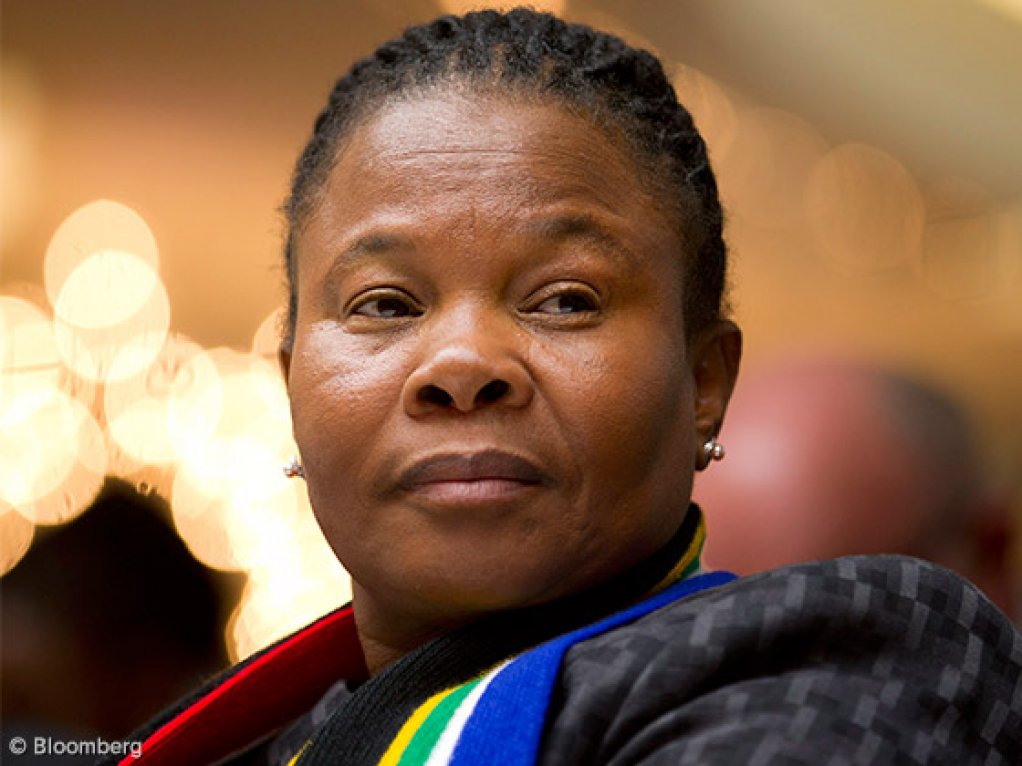
SUSAN SHABANGUResearch innovation is not static and more investment is needed
Photo by Bloomberg


The South African mining industry has contributed substantially towards innovation but, over time, the industry decided to import innovations instead, which has led to the current backlog in the innovation sphere of the local mining industry.
This is according to Mineral Resources Minister Susan Shabangu, who spoke at the Students Mining Engineering Society’s yearly mining conference, held at the University of Witwatersrand last month.
“As government, we are funding our research institutions to look into this issue. We have also called on mining companies to further invest as they did in the past. If we look at our gold sector, we are mining 5 km below the surface, therefore, we developed our own technology to mine here,” she stated.
She added that research innovation was not static and that more investment, as well as participation by universities, was needed.
Shabangu noted there was a reduction in the funding of research after 1994 and added that the industry needed to reoccupy that space or it would continue to expect international innovation to be implemented.
Further, she stated that South Africa produced 80% of the world’s platinum, while Russia produced 70% of the world’s palladium, and that the needs of both countries had to be identified so that collaboration could take place in terms of research and innovation, especially to dispel any cartel activity.
“We need to improve and add value to our commodities. Platinum is facing various challenges. In terms of products in the platinum industry, 20% of platinum used in the world is recycled. That has an impact on South Africa because that means the country loses 20% in the market. It slows down production and reduces employment and our gross domestic product,” she said.
Meanwhile, when asked what government was doing to address the educational challenges related to maths and science to allow for innovation in South Africa to thrive, Shabangu highlighted that those were some of the issues that the Minister of Education and Training was grappling with. She conceded that, while it was a challenge for the industry to compete globally, education was key and that the maths and science challenges in education needed to be addressed.
Further, universities were one of the critical aspects in terms of enhancing mining research in South Africa.
Shabangu advised higher education institutions, government and the private sector to work closely together, as it was important for mining companies to partner with those types of institutions.
“South Africa is part of the global environment and for any country to be successful, it has to be competitive in its economy. Our mining industry is currently not properly positioned for the future and it puts us under pressure to move towards ensuring that we have skilled people in the industry.
“The mining industry was built on the back of illiteracy and we have many social challenges within the mining industry because we are stuck in the past but operate in a modernised environment,” Shabangu highlighted.
She said that, the mining industry not only contributed to industrialisation and urbanisation and created modern cities, such as Johannesburg, but also created places of poverty, as it was built against the backdrop of migrant labour systems.
“What we saw at Marikana are some of the fringes of the past. We need a game changer to compete or we will not be successful. We need to ensure we have the right skills, research and innovation, which are all part of the mining industry’s future. We have a lot of potential . . . We need to transform the mining industry,” she asserted.
Further, while the South African mining industry continued to attract investment, there were issues that needed to be addressed, as they hindered investment.
The country needed to be stabilised in terms of labour to attract more investment and South Africans needed to show confidence in their own situation and invest in their own country more to grow the economy, Shabangu stated.
The country needed to create new industries on the back of the mining industry, as the industry was finite. With these new industries, South Africa could contribute and compete globally.
She added that Africa looked to South Africa to contribute to its growth and many African countries hoped that South Africa could contribute to their own developments.
“We need to ensure that when other African countries look to us, we must be [prepared] to assist. If we don’t contribute to the development of Africa, we create a situation where other Africans begin to enter South Africa seeking opportunities and this is when we have issues such as xenophobia. Mining is the core driver of the economies of Africa.”
Article Enquiry
Email Article
Save Article
Feedback
To advertise email advertising@creamermedia.co.za or click here
Research Reports

Projects


Latest Multimedia

Latest News

Showroom

Iritron delivers advanced automation, control, and optimisation solutions to the Mining, Minerals & Metals, Consumer Package Goods and...
VISIT SHOWROOM
At Airshrink - CiP, we surpass customer expectations with innovative MV and LV cable accessories, including heat shrink joints, terminations,...
VISIT SHOWROOM



Press Office
Announcements
What's On
Subscribe to improve your user experience...
Option 1 (equivalent of R125 a month):
Receive a weekly copy of Creamer Media's Engineering News & Mining Weekly magazine
(print copy for those in South Africa and e-magazine for those outside of South Africa)
Receive daily email newsletters
Access to full search results
Access archive of magazine back copies
Access to Projects in Progress
Access to ONE Research Report of your choice in PDF format
Option 2 (equivalent of R375 a month):
All benefits from Option 1
PLUS
Access to Creamer Media's Research Channel Africa for ALL Research Reports, in PDF format, on various industrial and mining sectors
including Electricity; Water; Energy Transition; Hydrogen; Roads, Rail and Ports; Coal; Gold; Platinum; Battery Metals; etc.
Already a subscriber?
Forgotten your password?
Receive weekly copy of Creamer Media's Engineering News & Mining Weekly magazine (print copy for those in South Africa and e-magazine for those outside of South Africa)
➕
Recieve daily email newsletters
➕
Access to full search results
➕
Access archive of magazine back copies
➕
Access to Projects in Progress
➕
Access to ONE Research Report of your choice in PDF format
RESEARCH CHANNEL AFRICA
R4500 (equivalent of R375 a month)
SUBSCRIBEAll benefits from Option 1
➕
Access to Creamer Media's Research Channel Africa for ALL Research Reports on various industrial and mining sectors, in PDF format, including on:
Electricity
➕
Water
➕
Energy Transition
➕
Hydrogen
➕
Roads, Rail and Ports
➕
Coal
➕
Gold
➕
Platinum
➕
Battery Metals
➕
etc.
Receive all benefits from Option 1 or Option 2 delivered to numerous people at your company
➕
Multiple User names and Passwords for simultaneous log-ins
➕
Intranet integration access to all in your organisation
