



ICC unveils rules for open-account trade


On April 17, the International Chamber of Commerce (ICC) launched the Uniform Rules for Bank Payment Obligation (URBPO), a twenty-first-century standard in supply chain finance that will facilitate international trade. The rules were carefully developed over a period of 18 months by the Banking Commission of the ICC in partnership with financial messaging services provider the Society for Worldwide Interbank Financial Telecommunication (Swift) to take into account the legitimate expectations of all relevant sectors.
Set to revolutionise trade finance transactions, the Bank Payment Obligation (BPO) is an irrevocable commitment made by one bank to another that payment will be made on a given date after a specified event has taken place. It is an alternative instrument for trade settlement and is designed to complement existing solutions and not to replace them. Reflecting industry consensus, the rules were unanimously adopted during a meeting of the ICC Banking Commission, in Lisbon, Portugal, during week starting April 15. The new instrument will enable importers and exporters to involve their preferred banking partners in their trade transactions and get flexible risk and financing services. Based on standardised messaging and advanced transaction matching operated by Swift, this new instrument will accelerate the financial supply chain in support of ever-accelerating physical supply chains.
The BPO provides the benefits of a letter of credit in an automated and secured environment, and enables banks to offer flexible risk mitigation and enhanced financing services to their corporate customers.
“This is a golden age for trade finance. All banks wish to better engage in open account transactions and the BPO will make it happen. It is vital that the industry aligns on enhanced rules and tools, and by benefiting from ICC and Swift standards, banks will be better equipped to carry out their trade business,” says Kah Chye Tan, chairperson of the ICC Banking Commission and global head of trade and working capital at Barclays. “The ICC Banking Commission views the development of the BPO rules and the related ISO 20022 messaging standards as strong foundations for banks to provide modern risk and financing services aligned with today’s technology evolution,” he adds.
Says Swift CEO Gottfried Leibbrandt: “The BPO, with the underlying ISO 20022 standards, is shaping the future of the trade industry and is a key opportunity for banks to innovate in the services they offer their corporate customers.”
ICC senior policy manager and Banking Commission executive secretary Thierry Senechal adds: “The landscape of world trade has changed dramatically during the past decade. Borders and barriers have been broken down through widespread liberalisation in emerging markets. The market has demanded new solutions to help deal with increasing cost pressures and changing risk dynamics. The URBPO is a solution provided by the ICC to respond to these new market needs.”
URBPO will be implemented from July 1. An official ICC URBPO launch and training event will take place in Paris, France, on May 17. The training will provide valuable insight from experts from the ICC URBPO drafting group, present the detailed rules, explore the corporate perspective on the URBPO, teach participants how to get started on the URBPO and the ISO 20022 standard and describe the main issues.
Pro Forma Agreements and Bonds
On April 19, the South African Revenue Service (Sars) published amendments to the rules of the Customs and Excise Act relating to pro forma (standard) agreements, bonds and advice, and the DA185 form and some of its annexures, namely DA 185.4A2, DA 185.4B1, DA 185.4B2, DA 185.4B3, DA 185.4B4, DA 185.4B5, DA 185.4B7, DA 185.4B8, DA 185.4B9, and DA 185.4B10. The amendments are effective from April 19.
Tariff Applications
The International Trade Administration Commission of South Africa (Itac) informed of three tariff applications on April 19. The first application relates to a proposed increase in the rate of customs duty on self-adhesive plates, sheets, film, foil, tape and other flat shapes, of plastics, whether or not in rolls, of polyethylene terephthalates, classifiable in tariff subheading 3919.90.03, from 10% ad valorem to free of duty.
The second application relates to the creation of rebate items for other woven fabric (5407.61), other textile fabrics (5903.20.90) and textile fabric (5907.00.90) for the manufacture of backed suede and upholstered furniture.
The third application relates to the creation of a rebate item for palm oil, refined, bleached and deodorised but not fractioned, classifiable in tariff subheading 1511.90, for the manufacture of edible fats or oils, classifiable in tariff subheading 1517.90.
Comments are due by May 17.
Ropes and Cables Interim Review
On April 19, Itac published a notice pertaining to the initiation of an interim review of the antidumping duties on ropes and cables, classifiable under tariff subheading 7312.10.40, manufactured by Casar Drahtseilwerk Saar and originating in or imported from Germany.
Comments are due by May 27.
Scrap Metal Export Control
On April 19, the Department of Economic Development and Itac informed interested parties, including scrap metal merchants, recyclers and industrial users of scrap metal for further processing that Itac is considering the recommendation of a price preference system – in essence, a price preferential rate – to the extent of 20% below the London Metal Exchange benchmark spot price for the published types and grades of scrap metal to ensure that domestic foundries and mills have access to supply of affordable scrap.
Comment due by May 3.
Import Control
On April 19, Economic Development Minister Ebrahim Patel informed of the addition of asbestos, classifiable in tariff heading 25.24, and the addition of paragraph (p) – new and used second-hand goods, excluding used and second-hand motor vehicles imported in terms of rebate item 412.03 of schedule 4 to the Customs and Excise Act, 1964 (Act 91 of 1964). There were also the substitution for Schedule 4, which relate to tariff headings 49.01, 49.02, 49.03, 49.04, 49.05, 49.06, 49.09, 49.10, 49.11, 92.01, 92.02, 92.05, 92.06, 92.07, 92.08, and 92.09.
Article Enquiry
Email Article
Save Article
Feedback
To advertise email advertising@creamermedia.co.za or click here
Research Reports

Projects


Latest Multimedia


Latest News

Showroom
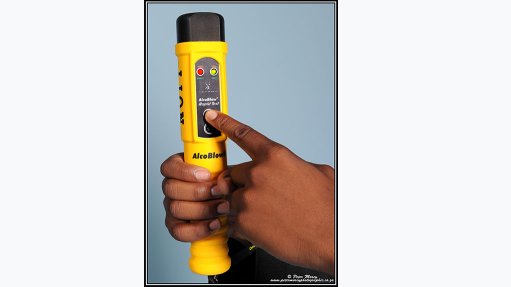
Developed to exceed the latest EN 15964 standards for police breathalysers proving that it will remain accurate and reliable for many years to come.
VISIT SHOWROOM
As a reticulator, Egoli Gas provides natural gas to homes and businesses via underground pipes.
VISIT SHOWROOM



Announcements
What's On
Subscribe to improve your user experience...
Option 1 (equivalent of R125 a month):
Receive a weekly copy of Creamer Media's Engineering News & Mining Weekly magazine
(print copy for those in South Africa and e-magazine for those outside of South Africa)
Receive daily email newsletters
Access to full search results
Access archive of magazine back copies
Access to Projects in Progress
Access to ONE Research Report of your choice in PDF format
Option 2 (equivalent of R375 a month):
All benefits from Option 1
PLUS
Access to Creamer Media's Research Channel Africa for ALL Research Reports, in PDF format, on various industrial and mining sectors
including Electricity; Water; Energy Transition; Hydrogen; Roads, Rail and Ports; Coal; Gold; Platinum; Battery Metals; etc.
Already a subscriber?
Forgotten your password?
Receive weekly copy of Creamer Media's Engineering News & Mining Weekly magazine (print copy for those in South Africa and e-magazine for those outside of South Africa)
➕
Recieve daily email newsletters
➕
Access to full search results
➕
Access archive of magazine back copies
➕
Access to Projects in Progress
➕
Access to ONE Research Report of your choice in PDF format
RESEARCH CHANNEL AFRICA
R4500 (equivalent of R375 a month)
SUBSCRIBEAll benefits from Option 1
➕
Access to Creamer Media's Research Channel Africa for ALL Research Reports on various industrial and mining sectors, in PDF format, including on:
Electricity
➕
Water
➕
Energy Transition
➕
Hydrogen
➕
Roads, Rail and Ports
➕
Coal
➕
Gold
➕
Platinum
➕
Battery Metals
➕
etc.
Receive all benefits from Option 1 or Option 2 delivered to numerous people at your company
➕
Multiple User names and Passwords for simultaneous log-ins
➕
Intranet integration access to all in your organisation
